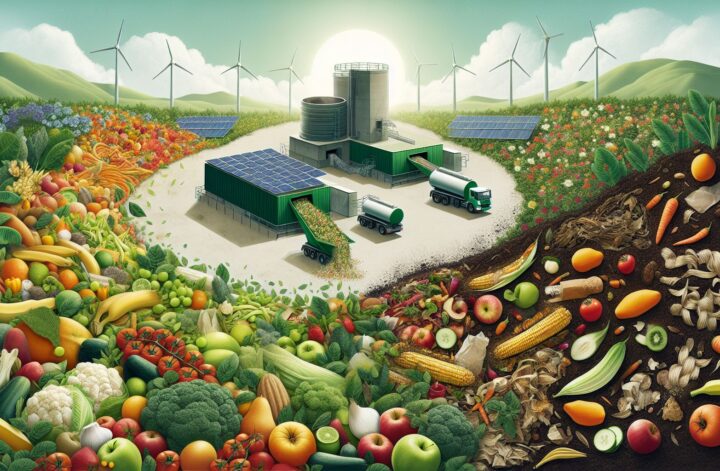
Our efforts to harness renewable sources of energy have led us to a point where we can turn almost any type of waste into energy. One of these methods is through a process called “Anaerobic Digestion.” This article seeks to delve into the intricate process of anaerobic digestion, focusing on its various stages, and how it contributes to methane production and organic waste treatment, leading to renewable energy and biosolids formation.
Understanding Anaerobic Digestion
Anaerobic Digestion, often referred to as AD, is a series of biological processes in which microorganisms break down biodegradable material in an oxygen-free environment [^1^]. The output of this process is mainly biogas—a mixture of methane (around 60%) and carbon dioxide (around 40%)—and biosolids that can be utilized as fuel and fertilizer respectively [^2^].
[^1^]: “Anaerobic Digestion Basics.” US EPA. https://www.epa.gov/anaerobic-digestion/anaerobic-digestion-basics
[^2^]: “Anaerobic Digestion.” Biomass Energy Centre. [http://www.biomassenergycentre.org.uk/portal/page?_pageid=75,163182&_dad=portal&_schema=PORTAL] (http://www.biomassenergycentre.org.uk/portal/page?_pageid=75,163182&_dad=portal&_schema=PORTAL)
AD can process a wide range of organic matters, including manure, sewage sludge, municipal solid waste, and crop residues. The overall process is quite complex and can be broken down into four main stages: hydrolysis, acidogenesis, acetogenesis, and methanogenesis[^3^].
[^3^]: “Anaerobic Digestion.” Water Environment Federation. http://www.wef.org/globalassets/assets-wef/2—resources/for-the-public/sustainability/anaerobic-digestion-2017.pdf
The Four Stages of Anaerobic Digestion
1. Hydrolysis
In this initial phase, complex organic materials—such as fats, proteins, and carbohydrates—are broken down into simpler compounds by hydrolytic bacteria. This makes the organic material easier for other bacteria to consume in the subsequent stages[^4^].
2. Acidogenesis
Next, fermentative bacteria convert these simpler compounds into volatile fatty acids, along with alcohol, hydrogen, and carbon dioxide[^4^].
3. Acetogenesis
Obligate hydrogen-producing acetogens then convert the products from the previous stage into acetic acid, CO2, and hydrogen[^4^].
4. Methanogenesis
Finally, methanogens—the most critical group of microbes in the anaerobic digestion process—transform the acetic acid and gasses produced in the prior stage into methane, CO2, and water[^4^].
[^4^]: “Anaerobic Digestion of Waste.” University of Southampton. https://www.southampton.ac.uk/~ceb/AD%20of%20waste.pdf
Methane Capture and Renewable Energy
The biogas produced through anaerobic digestion serves two primary purposes: as a renewable energy source and as a greenhouse gas mitigation strategy.
Methane, one of the primary constituents of biogas, is a potent greenhouse gas—significantly more potent than carbon dioxide. Capturing methane through anaerobic digestion and converting it into usable energy not only reduces methane emissions but also displaces conventional fossil fuels, contributing to overall greenhouse gas reductions[^5^].
Furthermore, after additional treatment and purification—or biogas upgrading—biogas can be utilized to generate electricity and heat in combined heat and power (CHP) systems, can be used as a vehicle fuel, or can be injected into the gas grid[^6^].
[^5^]: “Anaerobic Digestion and Climate Change.” IPCC. https://www.ipcc.ch/report/srccl/anaerobic-digestion-and-climate-change/
[^6^]: “Upgrading of Biogas to Biomethane.” IEA Bioenergy. https://www.ieabioenergy.com/wp-content/uploads/2018/03/Task37-Biogas-upgrading-to-biomethane.pdf
Organic Waste Treatment and Biosolids
The other by-product of anaerobic digestion is a nutrient-rich solid often referred to as biosolids. After additional treatment, this solid residue can be safely used as a soil amendment, adding organic matter and valuable nutrients to improve soil health and boost crop growth[^2^].
AD thus not only reduces the amount of waste that would otherwise go to landfill but also provides a valuable resource in the form of biosolids—creating a truly sustainable circle of organic waste management.
In conclusion, anaerobic digestion is a brilliant example of how we can turn waste into wealth. Notwithstanding its complex stages, the biogas process is consistently proving to be an effective method for managing organic wastes, providing renewable energy, and contributing to sustainable agriculture.
[^2^]: “Biosolids and AD.” Anaerobic Digestion & Bioresources Association. https://adbioresources.org/about-ad/faqs/

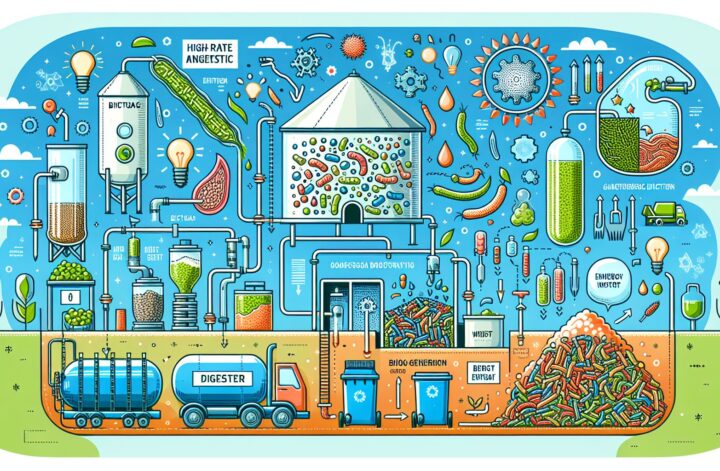



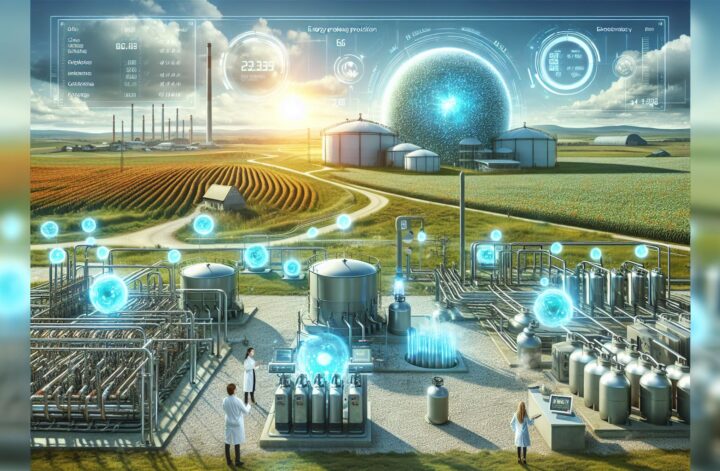

 Four steps in biogas production[^3^]