The Process and Benefits of Biogas Production

In the quest to combat environmental changes and reduce mankind’s carbon footprint, alternative energy sources have played a vital role. One such renewable energy source that has been garnering much attention is biogas. Biogas production is a natural process that is not only eco-friendly but also lucrative, owing to its potential as a renewable energy source and its ability to manage waste. This article delves into the intricate process of biogas production, its benefits, and future implications.

The Science behind Biogas Production

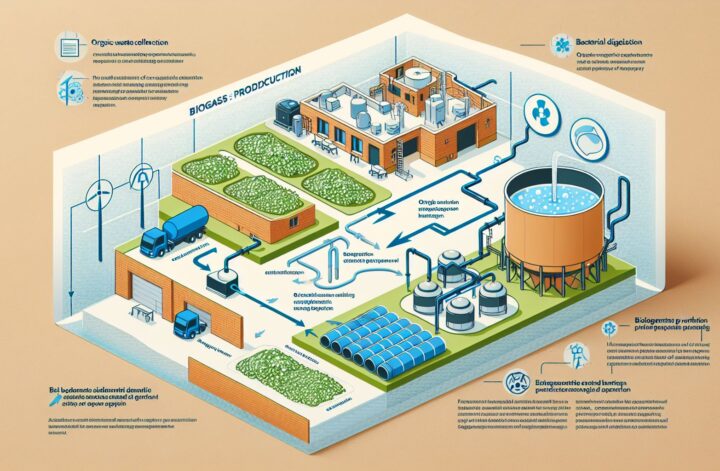
Biogas typically consists of methane, carbon dioxide, and other trace gases. It is produced through a process known as anaerobic digestion – simply put, the breakdown of organic material in the absence of oxygen. The entire process of Biogas production can be divided into four key stages: Hydrolysis, Acidogenesis, Acetogenesis, and Methanogenesis[^1^].

Hydrolysis

In hydrolysis, complex organic matter such as lipids, carbohydrates, and proteins are broken down into simpler soluble organic matter like amino acids, sugars, and fatty acids. More specifically, hydrolytic bacteria secrete enzymes that cause these breakdowns, effectively facilitating the subsequent stages.

Acidogenesis

In the acidogenesis stage, acidogenic microorganisms transform the simpler organics resulting from hydrolysis into volatile fatty acids and other by-products, including ammonia, hydrogen, and carbon dioxide.

Acetogenesis

Acetogenic bacteria play their part in the acetogenesis stage, further breaking down the remaining products from acidogenesis into acetates, hydrogen, and carbon dioxide.

Methanogenesis

Methanogenesis is the final stage of the process. Here, methanogens produce methane by utilizing the acetates and hydrogen formed in the preceding stage.

An essential aspect to consider during this process is the temperature, which can either be mesophilic digestion (around 35°C) or thermophilic digestion (around 55°C). The choice depends upon the waste type to be treated and the specific requirements of the project[^5^].

Co-digestion and Other Organic Waste Treatment Methods

Supplementing the primary feedstock with other organic materials in anaerobic digestion is known as co-digestion. It provides several benefits, including increased biogas yield, improved nutrient balance, and enhanced process stability. Typical organic materials used in co-digestion might include food waste, crop residues, and energy crops[^2^].

Sludge stabilization is another valuable process that can reduce the mass of solids, destroy pathogens, and deodorize sludges. By undergoing a stabilization process, treated sludges, or biosolids, can be safely used in agricultural lands as soil conditioners.

Biogas production involves complex microbial communities working in synergy, ensuring the stability of the digestion process. These communities are also capable of adapting to different substrates and operational conditions. Therefore, a keen understanding of anaerobic digestion microbiology is essential for optimization[^3^].

Benefits of Biogas Production

Biogas production offers a myriad of benefits. Three significant advantages include greenhouse gas reduction, renewable energy production, and waste management.

  1. Greenhouse Gas Reduction: Biogas production through anaerobic digestion helps in the direct reduction of methane emissions, a potent greenhouse gas, hence playing a crucial role in combating climate change.

  2. Renewable Energy: One of the primary products of the anaerobic digestion process is methane, which is a valuable source of renewable energy. The energy generated from biogas can be used for heating purposes, electricity generation (combined heat and power – CHP), and even as a vehicle fuel following appropriate upgrading measures.

  3. Waste Management: Biogas production enables efficient organic waste management. It provides an economical and sustainable solution to waste disposal, particularly in regions with extensive livestock farming or food industries.

In conclusion, the production of biogas via anaerobic digestion offers a multifaceted approach to environmental sustainability by combining waste management with renewable energy generation. Being aware of the social, political, and economic implications of our energy choices can drive us towards a sustainable future[^4^].

References

[^1^]: “How Does Anaerobic Digestion Work?” American Biogas Council. Link

[^2^]: “Co-digestion – Anaerobic digestion of multiple, mixed or co-substrates.” IEA Bioenergy. Link

[^3^]: “Anaerobic Digestion Microbiology.” Environmental Leader. Link

[^4^]: “The roles of biogas in energy transitions: A research agenda.” Springer Nature. Link

[^5^]: “Temperature Phases in Anaerobic Digestion.” Bioenergy Consult. Link

Continue Reading

Organic Waste Treatment: A Sustainable and Efficient Approach to Managing Waste

Over the past few decades, the world has seen drastic changes in the environment due to industrialization and an increase in population, resulting in an escalating waste management problem. Among the various kinds of waste generated, organic waste significantly contributes to landscape pollution, releasing harmful gases when dumped into open grounds which affects the health of individuals and the environment. In this context, the organic waste treatment stands as a potential and environmentally friendly solution, to this mounting global issue.

Overview

Organic waste encompasses discard from plant or animal sources, mainly originating from households, industries, and agriculture. It includes yard waste, food waste, paper, wood, manure, and sludge amongst others. When left untreated, it results in resource depletion, soil degradation, water pollution, and significant greenhouse gas emissions[^1^]. Therefore, it becomes crucial to process this waste in a sustainable and efficient manner.

Key Organic Waste Treatment Techniques

Three major techniques are extensively used to treat the organic waste – composting, anaerobic digestion, and incineration.

Composting

Composting is a biological process where organic materials are decomposed under controlled aerobic conditions to a state sufficient for safe handling, storage and application to land[^2^]. The process includes a breakdown of organic matter through bacterial activity into nutrient-rich compost which can be used as a soil conditioner.

Anaerobic Digestion

Anaerobic digestion is another biological process, except it occurs in the absence of oxygen. In this method, microorganisms break down organic waste into simpler molecules, producing a gas primarily composed of methane and carbon dioxide, known as biogas. Biogas can be effectively used as a source of renewable energy. Furthermore, the remaining material can be utilized as a soil enhancer, often known as digestate.

Incineration

Incineration is a thermal process that involves the combustion of organic waste to reduce it to basic compounds such as water, carbon dioxide, and inorganic ash. It is highly effective in reducing the volume of waste. However, it is the least desirable method concerning the environment due to the production of hazardous by-products and the consumption of large amounts of energy[^3^].

Advantages of Organic Waste Treatment

Treating organic waste not only reduces pollution but also has many other advantages. It conserves space in landfills and cuts down waste transportation costs. It also produces rich compost, which returns essential nutrients to the soil. Additionally, energy recovery from waste, as seen in anaerobic digestion, offers a sustainable substitute for fossil fuels. Furthermore, the carbon dioxide emitted in processes such as composting is much less potent as a greenhouse gas compared with the methane which would have been emitted if the organic waste was landfilled.

Barriers to Organic Waste Treatment

While organic waste treatment has a plethora of advantages, there are also several barriers that prevent its large-scale implementation. These include high initial setup costs, lack of infrastructure, technical know-how, and slow return on investment. Overcoming these barriers requires increased funding, amendments to regulatory policies, increased public awareness, and capacity building amongst waste management officials.

Conclusion

In a world increasingly affected by climate change, developing and implementing sustainable methods for waste management is not a choice but a necessity. Organic waste treatment stands as a significant potential solution to this problem, offering a multitier approach towards waste management, soil conservation, and energy production. With the right amount of innovation, support, and commitment, it is evident that treating organic waste has the potential to turn today’s waste into a resource for tomorrow.

[^1^]: Faika, D., & Tiquia, S. M. (2014). A review on the sustainability of co-digestion as a treatment technology for managing food waste and human excreta in developing countries. Journal of Environmental Health Science and Engineering, 12, 157. https://doi.org/10.1186/s40201-014-0157-x
[^2^]: Rothenberger, Jennifer, et al. (2017) “Urban Composting Programs on the Rise.” BioCycle, vol. 58, no. 4, p. 23+. Gale Academic OneFile
[^3^]: Giusti, L. (2009). A review of waste management practices and their impact on human health. Waste Management, 29(8), 2227–2239. https://doi.org/10.1016/j.wasman.2009.03.028

Continue Reading

Organic Waste Treatment: A Sustainable Approach to Waste Management

Organic waste is indigenous to every household and industrial setup. Its management crucially impacts the environment, public health, and economic growth. Organic Waste Treatment methods present a productive solution to turn organic waste into beneficial products. We will be analyzing the organic waste treatment process, its benefits, and its effective strategies in this comprehensive article.

Introduction

Organic waste, including food waste, yard waste, paper, and wood, accounts for over 50% of the total waste generated every year.[^1^] Time to take the old adage – one person’s trash is another’s treasure, quite literally. The aim is to convert this partly neglected waste into useful resources, such as compost, biofuels, animal feed, and more, through different Organic Waste Treatment processes. Successful Organic Waste Treatment can immensely reduce the load on landfills, decrease greenhouse gas production, and generate renewable energy.

Organic Waste Treatment Methods

There are several methods to treat organic waste, each with its potential benefits and drawbacks. Here, we shall dissect and understand the most popular and effective methods.

1. Composting

One of the most traditional methods of organic waste management, composting, involves breaking down organic waste into nutrient-rich soil conditioners through aerobic decomposition. Composting helps minimize waste while restoring depleted soil, leading to better plant growth.

2. Anaerobic Digestion

Anaerobic digestion is a biological process where microorganisms break down organic materials in an oxygen-deprived environment. This process produces biogas, a renewable energy source composed largely of methane and carbon dioxide. It is extensively used in sewage sludge treatment. Two significant anaerobic digestion processes, namely mesophilic and thermophilic digestion are widely used. Mesophilic digestion, operating at around 35°C, is prevalent because of its stability and lower energy requirements.[^2^] However, thermophilic digestion operates at 55°C-60°C and returns a higher rate of gas yield and improved pathogen reduction.[^2^]

3. Vermiculture

This method involves using certain worm species, particularly red wigglers, white worms, and other earthworms, to create a heterogeneous mixture of decomposing vegetable or food waste, bedding materials, and vermicast.

Significance of Organic Waste Treatment

Effective Organic Waste Treatment has significant advantages. The main benefits include:

  1. Environment Friendly: It reduces dependence on fossil fuels and mitigates greenhouse gas emissions and pollution by transforming organic waste into renewable energy and nutrient-rich soil conditioner.

  2. Energy Production: Anaerobic digestion of organic waste generates biogas that can be used as an energy source. Biogas can be utilized directly for cooking and power generation or can undergo upgrading processes for transforming into biofuels.

  3. Resource Optimization: Organic Waste Treatment methods such as composting can help in the resourceful use of waste by cycling essential nutrients back into the soil.

  4. Economic Development: It can also generate green jobs and stimulate local economies through the sale of compost, biofuels, and other by-products of the process.

  5. Public Health Improvement: Waste Treatment cuts down the foul smells and helps to promote hygiene and cleanliness.

Future of Organic Waste Treatment

With the increasing pile of waste generated every day, proper waste management is a growing concern. Through the evolution of efficient waste treatment technologies, the future holds prospects for developing strategies to utilize the waste to its fullest extent. Co-digestion, a process involving the anaerobic digestion of multiple organic feedstocks together, is an emerging domain that could significantly improve the efficiency of organic waste treatment.[^1^]

Novel technologies focused on the enhancement of the anaerobic digestion process such as High-rate anaerobic digestion and the design of more efficient anaerobic digester appear promising. Furthermore, methods like biogas scrubbing and upgrading, which purify biogas and enhance its quality, are opening new realms of possibilities in renewable energy production from organic waste. Researchers are now exploring the organic loading rate, hydraulic retention time, and solid retention time, key parameters in the anaerobic digestion process, to optimize biogas production.[^3^]

Conclusion

Handling the massive quantities of waste generated worldwide is a challenge. However, with the solutions like Organic Waste Treatment, the narrative can be changed from ‘waste management’ to ‘resource management’. Adopting these waste treatment techniques can drive us towards a sustainable, green, and resourceful future.

Sources:
[^1^]: “Converting Organic Waste to Energy” – CalRecycle ‘https://www.calrecycle.ca.gov/organics/energy/’
[^2^]: “Mesophilic and thermophilic anaerobic co-digestion of winery wastewater sludge and wine lees: An experimental and modelling study.” – Elsevier ‘https://www.sciencedirect.com/science/article/abs/pii/S0956053X16305698’
[^3^]: “Anaerobic Digestion of Wastewater Sludge” – ScienceDirect
‘https://www.sciencedirect.com/topics/earth-and-planetary-sciences/anaerobic-digestion’

Continue Reading

Co-digestion: An Innovative Process in Renewable Energy Production

Climate change, exhaustion of fossil fuels, and an increase in energy demand are significant threats to sustainable development globally. The search for green energy solutions has significantly heightened in recent years. This exploration has underscored the importance of renewable energy, more importantly, biogas energy to combat these threats. One of the emerging techniques in renewable energy generation is the process of co-digestion. This article delves into the co-digestion process, its relevance, advantages, the materials used, and its role in sustainable energy production.

What is Co-digestion?

Co-digestion refers to the simultaneous digestion of multiple types of organic waste in a single anaerobic digester. It is a technique for boosting anaerobic digestion (AD) and biogas yield by mixing different substrates or feedstocks [[^1^]][^1^]. This process provides an alternative to individually disposing of different waste types and enhances overall waste management efficiency.

How does Co-digestion work?

Co-digestion brings different substrates or organic waste into a single anaerobic digester. There, in an oxygen-free environment, they undergo degradation by microbes to produce biogas, mainly composed of methane and carbon dioxide. The diverse substrates create a more balanced nutrient composition, which enables the microorganisms to metabolize the waste more efficiently [[^2^]][^2^].

The co-digestion process is generally categorized into four stages:

  1. Hydrolysis: Biological decomposition of organic matter into soluble compounds.
  2. Acidogenesis: Microorganisms convert the soluble compounds from the hydrolysis stage into volatile fatty acids.
  3. Acetogenesis: The volatile fatty acids formed during the acidogenesis stage are further decomposed.
  4. Methanogenesis: The final stage where the compounds are transformed into biogas.

Each of these stages involves different types of bacteria that work together synergistically to degrade a vast range of complex organic matter into biogas [[^3^]][^3^].

Benefits of Co-digestion

The co-digestion process offers several benefits that extend beyond producing renewable energy.

Increased biogas yield

Co-digestion increases biogas production compared to anaerobic digestion of individual waste substrates. The nutrient imbalances present in individual waste substrates are mitigated when diverse wastes are mixed, resulting in optimum digestion and increased biogas yield.

Enhanced waste management

Co-digestion offers a highly efficient and environmentally friendly method of treating organic waste. It eliminates the need for landfills, which are a significant source of greenhouse gas emissions.

Economic sustainability

The co-digestion process has proven financially beneficial for many waste treatment facilities. It significantly reduces waste management costs by eliminating the need for independent waste disposals. The revenue generated from selling the biogas produced also provides an additional economic boost.

Environmental sustainability

Not only does co-digestion effectively tackle waste management, but it significantly contributes to reducing greenhouse gas emissions. Co-digestion sequesters carbon that would have otherwise been released into the atmosphere, thereby reducing the carbon footprint.

Some Notable Feedstocks used in Co-digestion

While a variety of substrates can be used for co-digestion, some of the most common ones include:

  • Agricultural waste: Includes manure, crop residues, and food waste.
  • Bio-waste: Includes kitchen and vegetable market waste.
  • Sludge: Refers to sewage sludge and other types of sludge waste.
  • Industrial waste: Includes waste from food processing, breweries, and other industries.

Co-digestion is not just a technique; it is a sustainable solution to the energy crisis and environmental challenges we face today. It provides an answer to waste disposal problems while generating renewable energy – a winning combination for our planet and future generations.


[^1^]: Nehls, T., Eichler-Löbermann, B., & Prochnow, A. (2014). Impact of co-digestion of agricultural residues with biogas slurry on nutrient flows and soil organic matter dynamics of soils. Biomass and Bioenergy, 67, 116-126.

[^2^]: Gerardi, M. H. (2003). The microbiology of anaerobic digesters. Hoboken, NJ: John Wiley & Sons.

[^3^]: Bauer, A., Léon-Mezquita, J., LaMonica, C., & Repke, J. (2016). Analysis and optimization of solid retention time and substrate selection to increase treatment efficiency and methane yield in industrial-scale anaerobic digesters†. Journal of Chemical Technology & Biotechnology, 91(2), 300-310.

Continue Reading

Biogas Production: An Essential Element in Organic Waste Treatment and Renewable Energy Production

The production of biogas through the processing of organic waste is a crucial element in current attempts to mitigate climate change and move towards a more sustainable and resilient energy system. At the same time, it presents solutions for managing organic waste, reducing greenhouse gas emissions, and even generating economic benefits. This article explores the intricacies of biogas production, its relevance, challenges, and future prospects.

What is Biogas and How is It Produced?

Biogas is a type of biofuel that primarily consists of methane and carbon dioxide. It’s generated by microorganisms during the process of biodegradation when oxygen is absent or in scarce supply—a process known as anaerobic digestion[^1^].

Organic material such as agricultural waste (crop residues, animal manure), food waste, sewage sludge, and energy crops are used in anaerobic digestion. It’s a four-stage process that consists of hydrolysis, acidogenesis, acetogenesis, and methanogenesis.

In hydrolysis, organic, solid materials are broken down into soluble derivatives. Subsequent to this, acidogenesis converts the soluble derivatives into volatile fatty acids and alcohol. Acetogenesis is the third stage, which further breaks down the products of acidogenesis into hydrogen, carbon dioxide, and acetate. Finally, in methanogenesis, methane is produced by the conversion of acetate and hydrogen[^2^].

During the anaerobic digestion process, a semi-liquid residue known as digestate is also generated, which is a nutrient-rich substance and can be used as fertilizer.

Biogas as a Renewable Resource

Biogas has been hailed as a promising renewable energy source. It’s squarely at the crossroads of two increasingly pressing challenges: clean energy provision and waste management. The comprehensive treatment of organic waste vastly reduces the emission of greenhouse gases. Simultaneously, the production of biogas aids in the switch towards decarbonized, renewable energy sources.

Biogas can be combusted directly for cooking, heating, and power generation. Upgraded to biomethane — by removing CO2 and impurities — it can substitute natural gas in cooking, heating, and vehicle fuels[^3^] or be fed into the natural gas grid. The use of biogas in combined heat and power (CHP) units can generate a constant supply of electricity and heat.

Challenges and Future Directions

Yet, challenges persist. An efficient biogas plant requires precise control of all process parameters, and any disturbances like temperature, pH level change, or toxic substances can significantly decrease the biogas yield or even halt the production process. For example, ammonia and sulfides can be toxic to methanogenic bacteria under certain conditions. Additionally, anaerobic digestion microbiology is complex and requires a balance among different microbial populations and their syntrophic relationships[^2^].

Moreover, biogas facilities still represent a significant financial investment. Costs come from plant construction, energy crops (if used), and digestate management. However, the cost can be offset by the economic benefits derived from selling excess energy back to the grid and utilizing digestate as a natural fertilizer.

Investments in research and development, training of skilled personnel, establishment of supporting policies, and the efficient use of available resources can greatly overcome these challenges. As we move forward, it will be essential to make biogas production more widespread and efficient, creating a virtuous circle of waste reduction, energy production, and economic advantage.

Conclusion

Biogas production is a key part of a sustainable future. Besides being a renewable energy source, it offers a solution for organic waste treatment, potentially creating a circular economy. While challenges exist, with the right investment and innovation, biogas could become an important player in the future energy landscape.

[^1^]: Anaerobic Digestion – Biogas Production
[^2^]: Anaerobic Digestion: Basic Biology and Process Control Principles
[^3^]: The use of biogas in the circular economy

Continue Reading

Biogas Production: An Innovative Solution to Energy Crisis and Environment Conservation

As the world increasingly grapples with the adverse effects of climate change, the focus more than ever, is on effective methods of renewable energy production. One such method, proving increasingly popular and useful in tackling these issues, is biogas production, an innovative engineering feat that offers a promising start to creating a more sustainable future.

This article delves into the process of biogas production, its potential benefits, and how it could potentially support global shift towards cleaner, sustainable energy solutions.

Introduction to Biogas Production

Biogas production primarily involves the biological decomposition of organic waste materials via anaerobic digestion – digestion in the absence of oxygen – yielding an energy-rich gas composed of methane, carbon dioxide and trace elements[^1^].

Biogas Production

Biogas production utilizes various types of organic waste such as agricultural waste, food waste, green waste, and sewage sludge. Thus, it not only aids in efficient waste management but also produces valuable biogas that can be used for heating, electricity generation, and as a fuel source for transportation[^2^].

The Science of Biogas Production

The science behind biogas production revolves around a multi-step process generally divided into four stages – hydrolysis, acidogenesis, acetogenesis, and methanogenesis[^3^].

In hydrolysis, complex organic compounds are broken down into simpler soluble molecules. Following this, suitably conditioned bacteria then convert the simpler molecules into volatile fatty acids and alcohol during acidogenesis. In acetogenesis, the resulting products are further converted into hydrogen, carbon dioxide, and acetate. Finally, during methanogenesis, different groups of micro-organisms convert these products into methane and carbon dioxide, the main components of biogas.

Biogas Production Process

Potential Benefits of Biogas Production

1. Renewable Energy Source: Biogas is a renewable and reliable source of energy. Unlike fossil fuels, it does not contribute to the global stock of greenhouse gases, making it an eco-friendlier alternative.

2. Waste Management: Biogas production offers an excellent solution to waste disposal, by turning organic waste into a valuable resource. This could significantly reduce pollution levels whilst also ensuring economic utilization of unwanted waste materials.

3. Economic Advantages: The biogas generated can be used in a number of applications providing multiple advantanges like heat and electricity generation, car fuels and the end product after digestion known as digestate, can be used as organic fertilizers.

4. Reducing Deforestation: The use of biogas as a source of fuel could potentially reduce the demand for firewood and charcoal, thus aiding deforestation prevention efforts.

5. Enhancing Livelihoods: Biogas production can sustainably improve livelihoods, particularly in remote and rural communities, through job creation and improved energy access.

Biogas uses

The Future of Biogas Production

With advancements in science and technology, along with increasing awareness about the detrimental impacts of climate change, the potential for biogas production looks promising. Its widespread adoption could alleviate dependence on fossil fuels whilst also offering a sustainable solution for organic waste handling.

There is, however, a need for substantial investment, research, and awareness creation, particularly among emerging economies, for its potential to be fully realized. As such, policy decisions should be aimed at enhancing the knowledge, accessibility, and affordability of these technologies.

In conclusion, biogas production represents a win-win solution for the conundrum of renewable energy production and waste management. As we continue to combat the adverse effects of climate change, it is imperative that we explore and embrace such solutions.

References

[^1^]: Biogas: A Significant Contribution to Decentralised Heat and Power Production
[^2^]: Biogas: Developments and Perspectives in Europe
[^3^]: A technoeconomic review on biogas production from lignocellulosic biomass

Continue Reading

The Future is Green: Exploring the World of Biogas Production

As our environmental footprints continue to expand, scientists and engineers worldwide are adopting more sustainable ways to generate energy. One such avenue being rigorously explored is biogas production. Biogas is a type of biofuel naturally produced from the decomposition of organic waste. Its primary constituents are methane and carbon dioxide, making it an effective choice for renewable energy. This article will delve into the inner workings of biogas production, highlighting its importance in the contemporary world and its potential implications for our future.

Delving into the Process

Biogas production is inherently a biological process, achieved through anaerobic digestion or fermentation of biodegradable materials such as manure, sewage, green waste, and other discarded organic matters[^1^]. This process occurs in four stages: hydrolysis, acidogenesis, acetogenesis, and methanogenesis.

Hydrolysis

In the initial stage of hydrolysis, complex organic compounds are broken down into simpler ones (mainly sugars). This is achieved by extracellular enzymes produced by hydrolytic bacteria.

Acidogenesis

In the subsequent stage of acidogenesis, these simple sugars are converted into carbonic acids and alcohols, releasing ammonia and hydrogen sulfide. This phase is facilitated by a group of bacteria known as acidogens.

Acetogenesis

Next, comes the acetogenesis phase where the hydrogen-producing acetogenic bacteria convert these acids and alcohols into acetates, releasing more hydrogen and carbon dioxide.

Methanogenesis

Finally, in the methanogenesis stage, methanogenic bacteria convert these acetates into methane, carbon dioxide, and water[^2^].

Significance of Biogas Production

In an age where the overdependence on fossil fuels become unsustainable, biogas emerges as an appealing alternative for multiple reasons, including but not limited to:

Environmental Sustainability

Biogas production contributes to the reduction of greenhouse gas emissions as the methane produced is utilised instead of being released into the atmosphere. Furthermore, when organic waste is left to decay in open air (aerobic decomposition), it releases carbon dioxide, a potent greenhouse gas[^3^].

Waste Treatment

Another great advantage of biogas production is the effective treatment of organic waste. Post-digestion, the by-product, also known as digestate, is rich in nutrients and can be utilized as an organic fertilizer, contributing to the circular economy and sustainable agriculture.

Energy Generation

Biogas can be directly burned for heating or cooking, converted into electricity, or upgraded to biomethane (an equivalent to natural gas) that can be introduced into the gas grid or used as a vehicle fuel. Biogas combined heat and power (CHP) plants are excellent examples of this energy generation.

Challenges in Biogas Production

While the benefits are undeniable, there are challenges involved in biogas production – including the potential for ammonia toxicity and sulfide toxicity.

Ammonia Toxicity

One of the common problems associated with the biogas process is ammonia toxicity. High levels of ammonia can inhibit methanogens, disrupting the final methanogenesis stage and considerably reducing the biogas yield.

Sulfide Toxicity

A high concentration of hydrogen sulfide can pose a risk of sulfide toxicity, causing issues like corrosion and emission of an unpleasant odor.

Looking Ahead: A Green Energy Future

While challenges do exist, they can be mitigated through thoughtful design of anaerobic digesters and balanced input ratios of the organic feedstock.

Emerging innovations like high-rate anaerobic digestion, co-digestion, and biogas upgrading technologies offer faster biogas production, improved biogas quality, and increased overall plant efficiency. The increasing interest in thermophilic digestion also promises greater biogas yields.

Biogas production’s potential is immense to combat climate change, alleviate energy poverty, manage waste sustainably, and contribute to green, cyclical economies. While there are challenges to overcome, the advent of cutting-edge technology and innovative research promises a thriving future for biowallet production.

[^1^]: Wikipedia – Biogas
[^2^]: Biogas Production Process – BioEnergy Consult
[^3^]: The Advantages of Biogas – EuroBiogas

Continue Reading

Biogas Production: Fundamentals, Technologies, and Opportunities

As an eco-friendly consumer, you may have heard terms such as “refuse, reduce, reuse, recycle,” or “the three R’s.” Yet have you heard the term “biogas production” with regard to organic waste management and renewable energy exploitation? In our modern world, with environmental concerns becoming more critical by the day, it’s crucial that we dive into this innovative solution that could drastically alter the way we manage our waste and our energy.

What is Biogas Production?

Biogas production is the process by which organic waste matter (including food scraps, animal manure, green waste, and sewage) is broken down by microorganisms in an oxygen-free (anaerobic) environment to produce biogas—a mixture of methane, carbon dioxide, and other trace elements[^1^]. Biogas can be used for heating, electricity generation, or it can be cleaned and upgraded to natural gas-quality biomethane for injecting into the natural gas grid or use as vehicle fuel[^2^].

Biogas Production Process: A Closer Look

Biogas production is a series of complex biochemical reactions occurring in four stages: hydrolysis, acidogenesis, acetogenesis, and methanogenesis[^1^].

  1. Hydrolysis: The long-chain organic matter is broken down into smaller compounds.
  2. Acidogenesis: These smaller compounds are further broken down into volatile fatty acids and alcohols.
  3. Acetogenesis: The fatty acids and alcohols are converted into hydrogen, carbon dioxide, and acetic acid.
  4. Methanogenesis: The methanogenic bacteria convert these compounds into biogas.

This process usually occurs in an anaerobic (oxygen-free) digester, which is critically designed to adapt to different waste types, temperatures, and organic loading rate (OLR).

Biogas Production: Beneficial Outcomes

The production of biogas yields two valuable products: a methane-rich biogas and a residue known as “digestate.” The biogas can substitute fossil fuels; thus, it contributes to reducing greenhouse gas emissions and dependence on fossil fuels[^2^].

The digestate is a biofertilizer—an excellent nutrient-rich supplement for land application. By recycling nutrients back to agricultural lands, we can close the loop of nutrient flows and gradually move toward a circular economy[^3^].

Apart from these, biogas production also contributes to organic waste treatment, sludge stabilization, and volatile solids reduction, leading to a significant contribution in waste management strategies.

Challenges & Future Directions

Despite the obvious benefits of biogas production, it’s not without its challenges. The process needs continuous monitoring since the buildup of substrates like ammonia or the deficiency of trace elements can inhibit the process, leading to system shutdown[^1^].

Furthermore, high capital costs, slow returns, and lack of knowledge amongst potential users are barriers to biogas adoption. However, knowing the immense benefits of biogas production, we should explore sustainable business models, public-private partnerships, technology innovations, and targeted education to overcome these barriers[^3^].

Currently, emerging concepts such as co-digestion—digesting different wastes together to enhance biogas yield—and methods including thermophilic digestion (at high temperatures) and high-rate anaerobic digestion (at high organic loading rates), offer promising research directions for improving the process.

To conclude, biogas production is an example where waste is not waste, but an opportunity to resolve many of our environmental challenges. By embracing the principles of a circular economy, we can manage our waste more wisely and contribute to energy sustainability, while at the same time offering numerous environmental, economic, and social benefits.

References

[^1^]: M. A. Martin, A. S. Grossman, S. T. Kleinman, and L. L. Rolls, “Anaerobic digestion of organic waste for biogas production,” Environmental Microbiology, vol. 18, no. 2, pp. 243-260, 2017. Link

[^2^]: P. Gerardi, The Microbiology of Anaerobic Digesters, New Jersey: John Wiley & Sons, 2003. Link

[^3^]: J. Brown, and M.S. Liotta, “Transitioning to biogas: a sustainable solution for organic waste management,” Environmental Scientist, vol. 23, no. 1, pp. 13-19, 2014. Link

Continue Reading

Methane Capture: An Essential Solution for a Sustainable Future

Methane, a potent greenhouse gas is highly responsible for global warming. It is 80 times more powerful than carbon dioxide in terms of its heating effect. Indeed, any solutions aimed at saving the planet from the impact of climate change must target effective ways of capturing methane. This article examines the importance of methane capture, techniques involved, and where we currently stand in maximizing this process for environmental benefits.

Methane: An Overview

Methane (CH4) comes from various sources, including natural processes like the decay of organic matter in wetlands, and anthropogenic activities such as agriculture, waste management, and energy production. Its global warming potential makes its management crucial in the fight against climate change [^1^].

Methane Capture

Methane capture is the process of trapping and converting the methane released from various sources to reduce its global warming impact. It comes with dual benefits: it safeguards the environment, and the captured methane can be used as an energy source.

Methane Capture Techniques

Different technologies and methods have been developed to capture methane, mainly from anthropogenic sources. Some of them include:

  1. Landfill Methane Capture: Landfills are a significant source of methane. This method involves capturing the gas emitted during the decay of organic matter in landfills.
  2. Coal Mine Methane Capture: During coal mining, methane gets released, which can be captured and used as a heat source.
  3. Agriculture-Based Methane Capture: This involves capturing methane from livestock. A considerable amount of methane is produced during digestion in animals.
  4. Natural Gas System Methane Capture: During the extraction, processing, and distribution of natural gas, methane emissions are inevitable. However, it can be captured for industrial uses.

Current State of Methane Capture

The International Energy Agency’s Methane Tracker 2020 indicates that the oil and gas sectors cut methane emissions by approximately 52 million metric tons in 2019 – equal to eliminating carbon emissions from Asia. However, this is not enough. Over 70% of global methane emissions remain unattended, indicating an urgent need for additional efforts [^2^].

The Way Forward

The following strategies can be adopted to enhance methane capture:

  1. Policy Intervention: Governments can formulate and adopt regulations to mandate methane capture from major sources. This would immensely contribute to the reduction of greenhouse gases.
  2. Awareness: Creating awareness about the implications of uncontrolled methane emissions and the benefits of methane capture is a crucial strategy.
  3. Research and Development: By investing in research and development, newer strategies for methane capture can be developed which are more efficient and cost-effective.

Conclusion

Methane capture is crucial if we are to make meaningful progress in the fight against climate change. Efforts towards this, however, should not rest on governments alone. Businesses, especially in the energy, agriculture, and waste management sectors, should take up the responsibility and invest in methane capture initiatives. With continued research and increased awareness, coupled with stringent policy regulations, we can indeed pave the way to a greener and more sustainable future.

^1^: U.S. Environmental Protection Agency, 2020. Understanding Global Warming Potentials. [online] U.S. Environmental Protection Agency. Available at: https://www.epa.gov/ghgemissions/understanding-global-warming-potentials

^2^: International Energy Agency, 2020. Methane Tracker 2020. [online] International Energy Agency. Available at: https://www.iea.org/reports/methane-tracker-2020

  • Note: Markdown doesn’t support footnote references, the mentioned footnote reference here is just to give an idea of how references might look in an article.

Markdown Version:

# Methane Capture: An Essential Solution for a Sustainable Future

Methane, a potent greenhouse gas is highly responsible for global warming. It is 80 times more powerful than carbon dioxide in terms of its heating effect. Indeed, any solutions aimed at saving the planet from the impact of climate change must target effective ways of capturing methane. This article examines the importance of methane capture, techniques involved, and where we currently stand in maximizing this process for environmental benefits.

## Methane: An Overview

Methane (CH4) comes from various sources, including natural processes like the decay of organic matter in wetlands, and anthropogenic activities such as agriculture, waste management, and energy production. Its global warming potential makes its management crucial in the fight against climate change [^1^].

## Methane Capture

Methane capture is the process of trapping and converting the methane released from various sources to reduce its global warming impact. It comes with dual benefits: it safeguards the environment, and the captured methane can be used as an energy source.

### Methane Capture Techniques

Different technologies and methods have been developed to capture methane, mainly from anthropogenic sources. Some of them include:

1. **Landfill Methane Capture**: Landfills are a significant source of methane. This method involves capturing the gas emitted during the decay of organic matter in landfills. 
2. **Coal Mine Methane Capture**: During coal mining, methane gets released, which can be captured and used as a heat source.
3. **Agriculture-Based Methane Capture**: This involves capturing methane from livestock. A considerable amount of methane is produced during digestion in animals.
4. **Natural Gas System Methane Capture**: During the extraction, processing, and distribution of natural gas, methane emissions are inevitable. However, it can be captured for industrial uses.

## Current State of Methane Capture

The International Energy Agency's Methane Tracker 2020 indicates that the oil and gas sectors cut methane emissions by approximately 52 million metric tons in 2019 – equal to eliminating carbon emissions from Asia. However, this is not enough. Over 70% of global methane emissions remain unattended, indicating an urgent need for additional efforts [^2^].

## The Way Forward

The following strategies can be adopted to enhance methane capture:

1. **Policy Intervention**: Governments can formulate and adopt regulations to mandate methane capture from major sources. This would immensely contribute to the reduction of greenhouse gases. 
2. **Awareness**: Creating awareness about the implications of uncontrolled methane emissions and the benefits of methane capture is a crucial strategy.
3. **Research and Development**: By investing in research and development, newer strategies for methane capture can be developed which are more efficient and cost-effective.

## Conclusion

Methane capture is crucial if we are to make meaningful progress in the fight against climate change. Efforts towards this, however, should not rest on governments alone. Businesses, especially in the energy, agriculture, and waste management sectors, should take up the responsibility and invest in methane capture initiatives. With continued research and increased awareness, coupled with stringent policy regulations, we can indeed pave the way to a greener and more sustainable future.

^1^: U.S. Environmental Protection Agency, 2020. Understanding Global Warming Potentials. [online] U.S. Environmental Protection Agency. Available at: https://www.epa.gov/
Continue Reading

The Power of Organic Waste Treatment and Renewable Energy: A Look at Co-digestion and Biogas Production

Organic waste treatment is an area of environmental technology that continues to draw attention in this era of increasing environmental consciousness. This focus emerges from the deep need to handle waste effectively and sustainably while simultaneously finding alternative sources of energy. In seeking potential solutions, we are directed towards the exciting domain of co-digestion and biogas production.

Waste Treatment through Co-digestion

Co-digestion is a method of organic waste treatment that involves the biological breakdown of multiple waste types simultaneously in the same reaction chamber[^1^]. This process is typically performed in anaerobic conditions—conditions devoid of oxygen. Such co-digestion has been found incredibly effective in the processing of organic waste, with several benefits over conventional, singular waste treatment techniques.

The process primarily reduces the mass of waste, minimizes odors, produces sanitized material, and importantly, generates biogas—a renewable source of energy^2^. Major waste components used in co-digestion include catering waste, food waste, grass clippings or hay, and even slurry or manure from farm animals[^3^].

[^1^]: BioResource Technology

[^3^]: Renewable Energy World

Co-digestion and the Production of Biogas

Arguably, the most intriguing benefit of co-digestion is the production of biogas. This viable renewable energy source predominantly consists of methane (CH4), along with CO2 and trace amounts of other gases. Its energy potential is chiefly due to the methane present, a high-energy molecule that can be burnt without leaving any residues[^4^].

The utilization of biogas ranges from cooking and heating to electricity generation and automobile fuel. Biomethane—a product of purifying and upgrading biogas—is especially praised because it can directly replace natural gas in the grid[^5^].

[^4^]: BioEnergy Consult
[^5^]: American Biogas Council

Process of Production

The production of biogas from co-digestion comprises four stages in anaerobic conditions: hydrolysis, acidogenesis, acetogenesis, and methanogenesis^6^.

In the first stage, hydrolysis, complex organic molecules (proteins, fats, and carbohydrates) get broken down into simpler forms through enzymatic action.

Subsequently, acidogenesis involves the conversion of these simpler compounds into volatile fatty acids and alcohol.

Next, during acetogenesis, these products further degrade into hydrogen, carbon dioxide, and acetic acid.

Finally, methanogenesis culminates with the formation of methane and CO2—which collectively forms biogas—from these end products[^7^].

[^7^]: BioEnergy Consult

Benefits of Biogas Production

The clear advantages of biogas have catapulted its popularity in the renewable energy sphere.

  1. Renewable energy: Biogas forms from organic waste—materials that are readily available and continuously produced. Hence, biogas provides a sustainable alternative to traditional fossil fuels[^8^].

  2. Reduced greenhouse emissions: Biogas production captures methane that would usually escape into the atmosphere during natural decay processes. Since methane is a potent greenhouse gas, using it as energy helps reduce its environmental impact[^9^].

  3. Waste management: By utilizing organic waste materials for energy generation, biogas production contributes to efficient waste management, hence achieving a circular economy[^10^].

[^8^]: Future Directions International
[^9^]: United Nations Framework Convention on Climate Change
[^10^]: European Biogas Association

Final thoughts

The innovative synergy of co-digestion and biogas production presents a promising pathway for a sustainable future. Organic waste treatment through this method not only diminishes the volume of waste but also aids in the production of renewable energy sources. By acknowledging and investing in this underexplored avenue, societies can make significant strides towards sustainable goals.

The harmony of waste management and renewable energy exploitation in co-digestion and biogas production truly exemplifies the proverb, ‘waste not, want not’. And with these technologies poised for significant growth, we may hold answers for many of our environmental challenges.

The magic of co-digestion and biogas production lies in the transformation of waste, often denounced as useless or harmful, into something incredibly beneficial. This bears testimony to the fact that sometimes, value can indeed be found in the most unexpected places.

Continue Reading
1 4 5 6 7 8 18