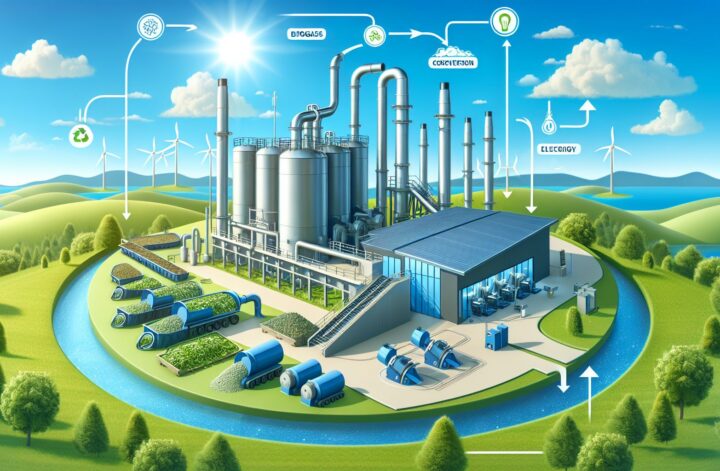
As the world continues to grapple with an ever-increasing demand for energy, the need for sustainable solutions is becoming ever more pressing. One such solution that has garnered significant attention in recent years is biogas production. It is a renewable energy source, produced during the breakdown of organic matter in the absence of oxygen, a process known as anaerobic digestion. This article delves into the intricacies of biogas production, explaining its importance, the process involved, commonly encountered problems, and potential ways to improve the efficiency of the process.
Understanding Biogas
Biogas consists mainly of methane (CH4) and carbon dioxide (CO2), with small amounts of other gases like hydrogen sulphide (H2S). It is the methane in biogas which provides the energy, the other gases are considered impurities and can cause corrosion if not removed during upgrading[^1^].
The Logic Behind Biogas Production
Biogas production is an appealing source of renewable energy due to its numerous benefits:
- Waste treatment: Organic waste from households, industry and farming can be treated and sanitized, producing a nutrient-rich digestate that can be used as fertilizer, thus completing a nutrient cycle.
- Mitigation of greenhouse gases: Most of the methane produced in anaerobic digestion would have been released into the atmosphere if not captured. Methane is 25 times more potent as a greenhouse gas than carbon dioxide[^2^].
- Energy production: Biogas can be used to generate electricity, heat, or biofuel, reducing dependence on fossil fuels.
The Process of Biogas Production
Biogas production occurs in a series of steps: hydrolysis, acidogenesis, acetogenesis, and methanogenesis[^3^].
Hydrolysis
In hydrolysis, complex organic molecules are broken down into simple sugar, amino acids, and fatty acids by hydrolytic bacteria.
Acidogenesis
Acid-forming bacteria then convert these simpler compounds into volatile fatty acids, carbon dioxide, hydrogen, and ammonia among others.
Acetogenesis
In the third stage, known as acetogenesis, volatile fatty acids are converted into acetic acid, carbon dioxide and hydrogen by acetogenic bacteria.
Methanogenesis
Finally, during methanogenesis, methanogenic archaea consumes these products to produce methane, carbon dioxide and water.
Challenges in Biogas Production
However, like any other technology, biogas production is not without its hiccups. For instance, ammonia toxicity and sulfide toxicity can inhibit the anaerobic digestion process. High concentrations of sulphur in the feedstock can lead to the formation of hydrogen sulphide, a toxic gas which can inhibit methanogenic archaea. Similarly, high concentrations of nitrogen in the feedstock can cause an increase in ammonia levels, which can also inhibit the methanogens[^2^].
Another challenge is that biogas production efficiency is dependent on maintaining the correct conditions inside the digester, such as temperature and pH. For example, a balance between the mesophilic (moderate temperature range) and thermophilic (higher temperature range) bacteria is crucial for methane production[^1^].
Towards Improved Efficiency and Sustainability
To address the challenges associated with biogas production, several methods have been devised, including co-digestion and addition of trace elements.
Co-digestion involves the anaerobic digestion of two or more types of waste together, for example, manure and food waste. This typically improves the nutrient balance of the feedstock and thus the efficiency of biogas production[^3^].
On the other hand, the addition of trace elements like cobalt, nickel, and iron can significantly promote growth and activity of methanogenic archaea, thereby increasing methane yield.
In the quest for carbon neutrality, biogas production offers promise. With more research and innovation, the process can become even more efficient and sustainable, thereby significantly contributing to the global energy mix in a responsible and environmentally friendly manner.
[^1^]: Nielfa, A., Cano, R., Fdz-Polanco, M. (2015). Theoretical methane production generated by the co-digestion of organic fraction municipal solid waste and biological sludge. Biotechnol Reports, 5, 14-21.
[^2^]: VDI (2006). VDI 4630 Fermentation of organic materials. Characterisation of the substrate, sampling, collection of material data, fermentation tests. Berlin: Beuth.
[^3^]: Angelidaki, I., Ellegaard, L. (2003). Codigestion of manure and organic wastes in centralized biogas plants. Appl Biochem Biotechnol, 109: 95-105.