Our planet is facing increasingly dire environmental consequences as a result of relentless human activity and industrialization. Among the most significant issues attributed to industrial activity is the production and subsequent release of greenhouse gases into the environment, a phenomenon leading to the escalating problem of global warming. Methane, a potent greenhouse gas, has a global warming potential about 25 times greater than that of carbon dioxide. Thus, mitigating methane emissions presents an effective approach to lessen our environmental footprint and combat climate change. This article discusses the concept of methane capture, its methods, benefits, and the potential challenges associated with this process.
What is Methane Capture?
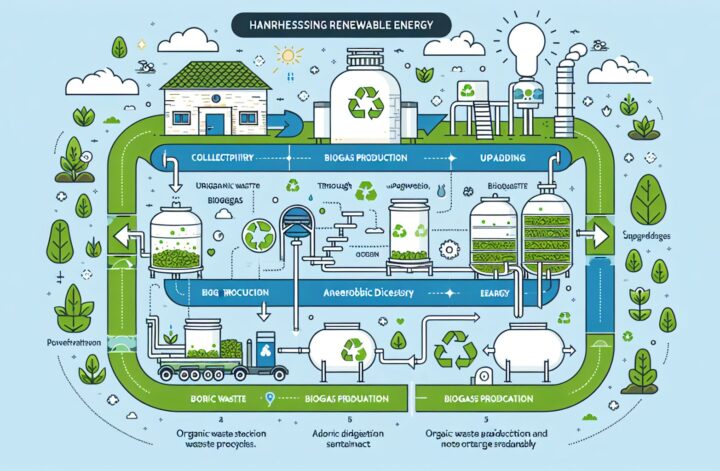
Methane capture refers to the process of trapping and collecting methane before it escapes into the atmosphere. This technique is performed at locations where methane emissions are high, such as landfills, coal mines, and livestock farms. It can also concentrate on wastewater treatment plants and organic waste management facilities, where anaerobic digestion produces a significant volume of biogas enriched with methane[^1^].
Methane capture is not only an effective measure to combat climate change but is also becoming an increasingly profitable venture, as the collected methane can be repurposed as a renewable energy source.
Methane Capture Methods
1. Landfill Gas Collection Systems
Landfills, given the large amounts of decomposing waste they house, are a prime source of methane emissions. Landfill gas collection systems consist of a series of wells drilled into the landfill, connected by a network of pipes. The gas is vacuumed from these wells and moved to a central point, where it can be treated and repurposed[^2^].
2. Coal Mine Methane Capture
The extraction and utilization of coal mine methane (CMM) can significantly reduce the environmental impact of mining. This process involves capturing methane trapped in coal seams before extraction or capturing it from the mine after extraction but before ventilation. Alternatively, methane can be captured from the atmosphere above the mine post-ventilation[^3^].
3. Agricultural Methane Capture
Agricultural practices, particularly dairy and beef farming, account for a significant portion of methane emissions. Methane capture here predominantly involves anaerobic digestion of manure in a closed system, transforming it into biogas primarily composed of methane, which can then be harnessed and used as a renewable energy source[^4^].
Other options include implementing better grazing practices and dietary alterations for the livestock to mitigate their methane outputs.
Benefits of Methane Capture
The advantages of methane capture extend beyond environmental conservations, making it an attractive option for various sectors.
-
Climate Change Mitigation: By capturing and converting methane into a valuable resource, the process significantly reduces greenhouse gas emissions, directly contributing to combating global warming.
-
Renewable Energy Production: The captured methane can be converted into electricity or heat, providing a valuable source of renewable energy.
-
Financial incentive: The sale of electricity or heat generated from captured methane provides significant economic benefits, creating a financial incentive for businesses and industries to invest in methane capture technologies[^5^].
Challenges in Methane Capture
While methane capture presents a promising solution to reducing greenhouse gas emissions, its implementation is not without challenges. Key obstacles include cost, technology, and regulatory challenges. Initial setup costs can be prohibitive, especially for smaller operations, although many jurisdictions offer incentives or subsidies to offset these costs.
Effective methane capture requires advanced technology, expert knowledge, and technical know-how, which might not be readily accessible everywhere. Moreover, varying regulatory standards and protocols complicate the implementation process across different regions[^6^].
Despite these challenges, the value of methane capture and utilization is undeniable. Its benefits are multi-faceted, spanning environmental, economic, and societal sectors. It is crucial for industries, corporations, and governments to recognize the potential of this process, investing in technologies and practices that encourage methane capture and its productive utilization. Only with such concerted efforts can we aspire to create a healthier planet and a more sustainable future.
[^1^]: U.S. EPA. 2020. “Basic Information about Landfill Gas.” U.S. Environmental Protection Agency. https://www.epa.gov/lmop/basic-information-about-landfill-gas
[^2^]: Environmental Defense Fund. 2020. “Methane: The other important greenhouse gas.” Environmental Defense Fund. https://www.edf.org/methane-other-important-greenhouse-gas
[^3^]: U.S. EPA. 2020. “Coalbed Methane Outreach Program.” U.S. Environmental Protection Agency. https://www.epa.gov/cmop
[^4^]: U.S. Department of Energy. 2020. “Bioenergy: Biomass to Biofuels.” U.S. Department of Energy. https://www.energy.gov/eere/bioenergy/bioenergy-biomass-biofuels
[^5^]: ScienceDirect. 2020. “Methane Capture: Options for Greenhouse Gas Emission Reduction.” ScienceDirect. https://www.sciencedirect.com/topics/earth-and-planetary-sciences/methane-capture
[^6^]: Sadeh, J. 2006. “Methane Capture: Pros and Cons.” Renewable Resources Coalition. https://www.renewableresourcescoalition.org/methane-capture/