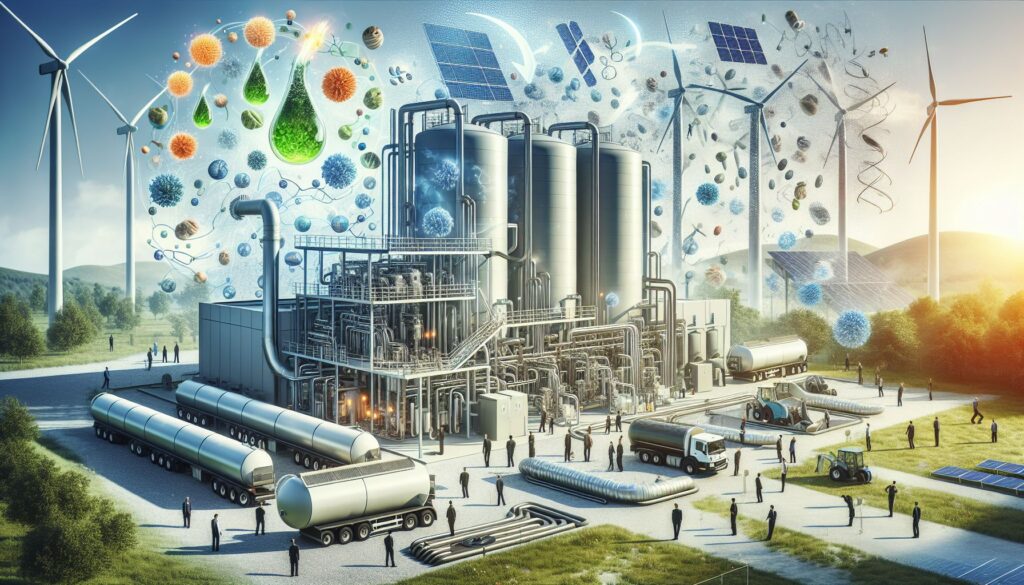
Organic waste treatment is an area of environmental technology that continues to draw attention in this era of increasing environmental consciousness. This focus emerges from the deep need to handle waste effectively and sustainably while simultaneously finding alternative sources of energy. In seeking potential solutions, we are directed towards the exciting domain of co-digestion and biogas production.
Waste Treatment through Co-digestion
Co-digestion is a method of organic waste treatment that involves the biological breakdown of multiple waste types simultaneously in the same reaction chamber[^1^]. This process is typically performed in anaerobic conditions—conditions devoid of oxygen. Such co-digestion has been found incredibly effective in the processing of organic waste, with several benefits over conventional, singular waste treatment techniques.
The process primarily reduces the mass of waste, minimizes odors, produces sanitized material, and importantly, generates biogas—a renewable source of energy^2^. Major waste components used in co-digestion include catering waste, food waste, grass clippings or hay, and even slurry or manure from farm animals[^3^].
[^1^]: BioResource Technology
[^3^]: Renewable Energy World
Co-digestion and the Production of Biogas
Arguably, the most intriguing benefit of co-digestion is the production of biogas. This viable renewable energy source predominantly consists of methane (CH4), along with CO2 and trace amounts of other gases. Its energy potential is chiefly due to the methane present, a high-energy molecule that can be burnt without leaving any residues[^4^].
The utilization of biogas ranges from cooking and heating to electricity generation and automobile fuel. Biomethane—a product of purifying and upgrading biogas—is especially praised because it can directly replace natural gas in the grid[^5^].
[^4^]: BioEnergy Consult
[^5^]: American Biogas Council
Process of Production
The production of biogas from co-digestion comprises four stages in anaerobic conditions: hydrolysis, acidogenesis, acetogenesis, and methanogenesis^6^.
In the first stage, hydrolysis, complex organic molecules (proteins, fats, and carbohydrates) get broken down into simpler forms through enzymatic action.
Subsequently, acidogenesis involves the conversion of these simpler compounds into volatile fatty acids and alcohol.
Next, during acetogenesis, these products further degrade into hydrogen, carbon dioxide, and acetic acid.
Finally, methanogenesis culminates with the formation of methane and CO2—which collectively forms biogas—from these end products[^7^].
[^7^]: BioEnergy Consult
Benefits of Biogas Production
The clear advantages of biogas have catapulted its popularity in the renewable energy sphere.
-
Renewable energy: Biogas forms from organic waste—materials that are readily available and continuously produced. Hence, biogas provides a sustainable alternative to traditional fossil fuels[^8^].
-
Reduced greenhouse emissions: Biogas production captures methane that would usually escape into the atmosphere during natural decay processes. Since methane is a potent greenhouse gas, using it as energy helps reduce its environmental impact[^9^].
-
Waste management: By utilizing organic waste materials for energy generation, biogas production contributes to efficient waste management, hence achieving a circular economy[^10^].
[^8^]: Future Directions International
[^9^]: United Nations Framework Convention on Climate Change
[^10^]: European Biogas Association
Final thoughts
The innovative synergy of co-digestion and biogas production presents a promising pathway for a sustainable future. Organic waste treatment through this method not only diminishes the volume of waste but also aids in the production of renewable energy sources. By acknowledging and investing in this underexplored avenue, societies can make significant strides towards sustainable goals.
The harmony of waste management and renewable energy exploitation in co-digestion and biogas production truly exemplifies the proverb, ‘waste not, want not’. And with these technologies poised for significant growth, we may hold answers for many of our environmental challenges.
The magic of co-digestion and biogas production lies in the transformation of waste, often denounced as useless or harmful, into something incredibly beneficial. This bears testimony to the fact that sometimes, value can indeed be found in the most unexpected places.