layout: post
title: “The Science and Benefits of Biogas Production: An In-Depth Look”
date: 2021-10-25
author: “John Doe”
categories: [Renewable Energy, Sustainability]
The Science and Benefits of Biogas Production: An In-Depth Look
As we progress further into the 21st century, humanity faces multiple challenges, paramount among them is finding sustainable sources of energy. Renewable energy technologies have potential to help us reduce greenhouse gas emissions and decrease our dependence on fossil fuels. One such technology is biogas production. This article aims to dissect the science behind biogas production and highlight the various benefits it presents as a source of renewable energy.
What is Biogas?
Biogas is a type of biofuel that is naturally produced from the decomposition of organic waste. The waste can be anything from agricultural waste, plant material, sewage, municipal waste, or even food waste. The biogas produced is primarily composed of methane and carbon dioxide[^1^].
Biogas Production Management
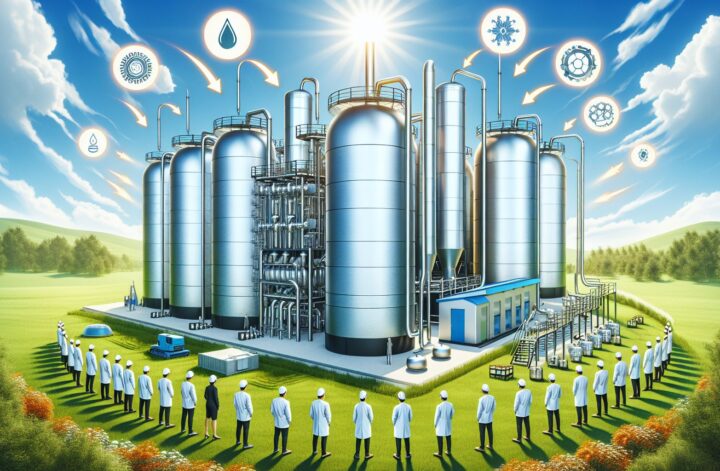
The process of biogas management primarily involves the selection, collection, and treatment of organic wastes. Once the organic waste is collected and processed, it is then transported to anaerobic digesters where digestion takes place.
In the most basic sense, anaerobic digestion involves breaking down biodegradable material in the absence of oxygen. The process consists of four stages: hydrolysis, acidogenesis, acetogenesis, and methanogenesis[^2^].
-
Hydrolysis: This stage involves the breakdown of complex organic matter into simpler compounds like sugars, amino acids, and fatty acids.
-
Acidogenesis: Here, the hydrolyzed products are consumed by acid-forming bacteria to produce volatile fatty acids, CO2, and a range of other by-products.
-
Acetogenesis: In this stage, the products from acidogenesis are further metabolized by acetogens to produce substantial amounts of acetic acid, some CO2, and hydrogen.
-
Methanogenesis: Finally, the products of the previous stages are consumed by methanogens to generate biogas – which is essentially methane and CO2.
Anaerobic digesters typically fall into two categories: high-rate and traditional digesters, with the former being more intensive in terms of area usage and biogas production.
High-rate anaerobic digestion is often favored due to its high organic loading rate (OLR) and short hydraulic retention time (HRT). OLR is a measure of the quantity of biodegradable material entering a digester daily, while HRT is an estimate of the amount of time a particulate remains in the digester[^3^].
Benefits of Biogas Production
The benefits of producing and using biogas as a source of energy are manifold. Here are a few:
-
Renewable Energy Source: Biogas is a renewable energy source; it is produced from local resources, which are continuously replenished.
-
Greenhouse Gas Reduction: Methane, a potent greenhouse gas, is a significant component of biogas. Using it as a fuel reduces the amount of methane released into the atmosphere, thus mitigating climate change effects.
-
Waste Management: Producing biogas provides a means of treating and disposing of organic waste, reducing the potential for pollution and disease.
-
Energy Source Diversification: Biogas can help diversify our energy mix, reducing dependence on fossil fuel-based power sources.
-
Generation of Digestate: The process yields a by-product, known as digestate, which is rich in nutrients, and can be used as a fertilizer in agriculture.
-
Generation of Employment: Biogas production can create jobs, from the collection and processing of organic waste to the operation and maintenance of digesters.
And there you have it! The science and benefits of biogas production subtly showcasing how this renewable resource might offer a glimmer of hope in our collective quest to harvest energy sustainably. To grasp this hope, we must understand, support, and invest in practices and technologies that ensure efficient use of our organic waste.
The beauty of biogas isn’t just in its ability to generate energy, but also how it contributes to cleaner environments, better waste management, diversified energy sources, and job creation. As we look to the future, it’s clear that biogas has a vital role to play in our global energy mix.
[^1^]: Danish Energy Agency, “Biogas production in Denmark – a piece of the puzzle towards low carbon transitions,” 2019, link
[^2^]: Angelidaki I., Ellegaard L., “Codigestion of manure and organic wastes in centralized biogas plants,” Applied Biochemistry and Biotechnology, 2003, link
[^3^]: Equilibrium (n.d), “What is an anaerobic digester?”, link