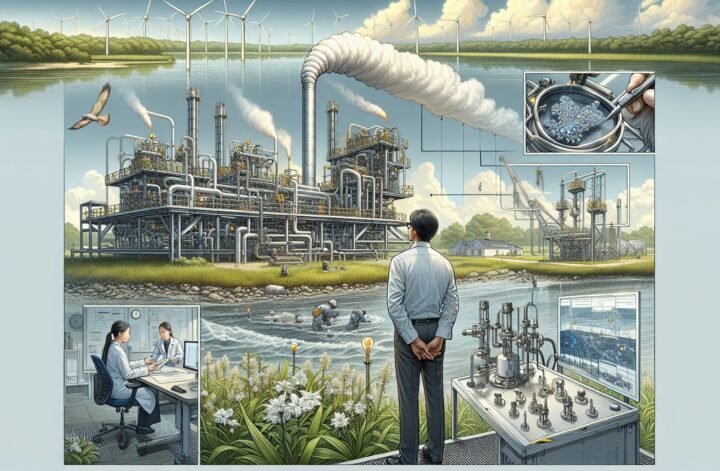
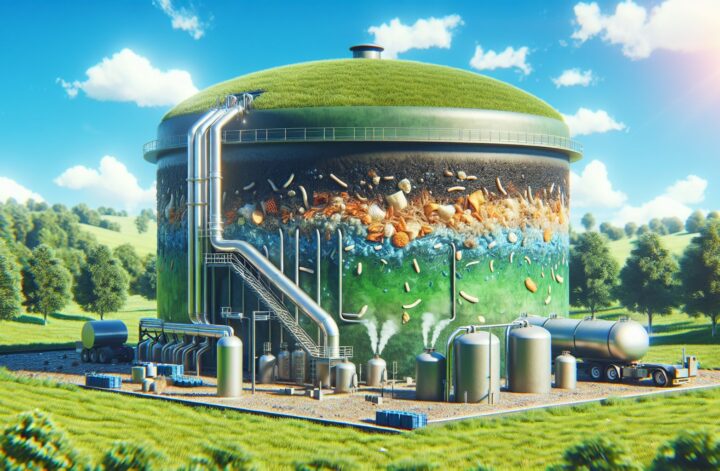
Renewable energy has, over the years, transitioned from a theoretically attractive alternative into an evidently viable solution to our ever-growing energy needs. Ranging from wind and solar energy to hydropower and biogas, renewable forms of energy generation are gradually disrupting the traditional power generation landscape. Whilst each form of renewable energy has its fair share of merits, this deep-dive exploration is slated to focus primarily on the latter – a practical, sustainable, and environment-friendly form of energy usually produced via the biological breakdown of organic matter – Biogas.
Specifically, in this 1,500-word feature article, we will debunk biogas production, delve further into the science of high-rate anaerobic digestion, and ultimately explore the future of renewable energy.
Biogas Production 101
Biogas, as a product of anaerobic digestion, is a renewable fuel constituted of methane, carbon dioxide, and trace gases. It is generated via the bacterial decomposition of organic matter, such as animal waste, food waste, seaweed, and more, in the absence of oxygen. The process entails four basic stages, namely: hydrolysis, acidogenesis, acetogenesis, and methanogenesis[^1^].
During the initial hydrolysis stage, microorganisms break down the long-chain organic matter into simpler sugar, amino acids, and fatty acids. Subsequently, the acidogenesis phase converts the simple molecules into volatile fatty acids, alcohols, carbon dioxide, hydrogen, and residual organic compounds. The next stage, acetogenesis, sees specific bacteria convert the products into acetic acid, carbon dioxide, and hydrogen. Finally, methanogenesis occurs – methanogens convert the acetic acid and carbon dioxide into methane, a key component of biogas[^2^].
[^1^]: “Understanding the basics of biogas production,” Sustainable Energy Authority of Ireland.
[^2^]: “Basic information on biogas,” Umweltbundesamt.
High-Rate Anaerobic Digestion
A quintessential parameter of biogas production is the time of digestion, typically demonstrated as the hydraulic retention time (HRT) – the amount of time that the digester biomass is exposed to substrate[^3^]. Strategically reducing this length is what gives birth to high-rate anaerobic digestion, a faster biogas production method optimized for large volumes.
High-rate anaerobic digesters make use of the substrate’s low solubility, allowing for continuous feeding and discharging. They are designed to ensure that the microorganisms responsible for digestion are retained within, thus increasing their concentration and subsequently, the rate of digestion[^4^].
[^3^]: “Anaerobic digestion basics,” Ontario Ministry of Agriculture, Food and Rural Affairs.
[^4^]: “High-rate anaerobic technology,” Water and Wastewater News.
The Future of Renewable Energy
Renewable energy, led by strategic biogas production, is poised to play a key role in the future of global energy provision. As the world unites to combat climate change, biogas serves as a great renewable energy source that also tackles waste management issues. Given a regulated production process with optimized co-digestion and sludge stabilization techniques, coupled with sound policies at the government level, large scale adoption of biogas production can definitely alter the energy landscape[^5^].
Couple this with other renewable energy sources like wind, solar, geothermal, and hydropower, and a sustainable energy future becomes undeniably achievable. It is not unrealistic for renewable energy to cover a significant percentage of our future energy needs globally, given the increasing efforts in technology developments, policy-making, and climate change mitigation.
[^5^]: “Investment in renewable energy: The role of policy design and restructuring,” Renewable and Sustainable Energy Reviews.
Biogas, along with its renewable allies, bears the potential to shape a future where energy production doesn’t compromise the planet’s welfare. As we conserve traditional resources and decrease our carbon footprint, we champion sustainable development – because, in our shared pursuit of progress, we must strive to power today without impeding tomorrow.
Conclusion
Renewable energy, specifically biogas, has the potential to positively disrupt the traditional energy production and consumption patterns. As we gradually shift towards a quicker, more efficient biogas generation method – high-rate anaerobic digestion, we can look ahead to a future driven by sustainability and innovation. Despite the challenges and complex requirements involved in transitioning to renewable energy, the benefits that it holds for our planet and future generations are undeniably significant. An energy revolution is both necessary and achievable, and we all play a part in this important transition.