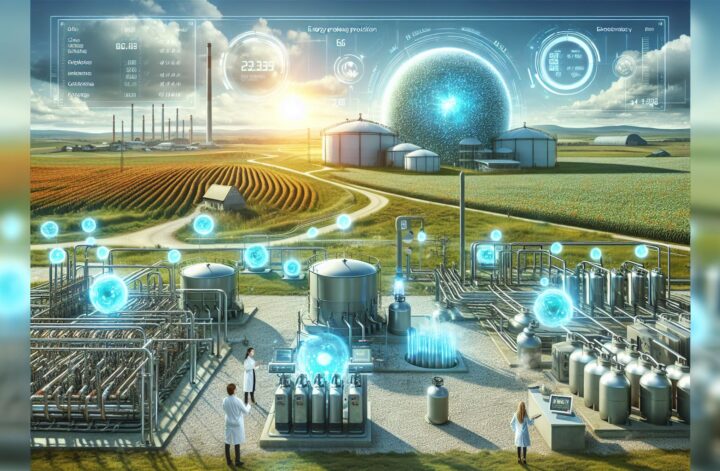
Through the lenses of time, the narrative of energy production and consumption has seen a magnificent evolution. From unravelling the potential of firewood to tapping into the inexhaustible power of the sun, human beings have continually traversed towards cleaner, sustainable, and technologically advanced methods of energy extraction and usage. Pivoting on a similar path, the concept of biogas as a source of renewable energy has grabbed the attention of researchers and industry specialists in recent decades. In the confounding maze of renewable energy sources, biogas upgrading is a gleaming beacon, championing the cause of sustainability and clean energy.
One of the most intriguing aspects of biogas as a renewable energy source is the process of its upgrading. Biogas upgrading is a technique used to increase the concentration of methane in biogas by reducing the amount of carbon dioxide[^1^]. This article lays its focus on understanding the promising technology of biogas upgrading and its role in aiding the renewable energy revolution.
Discovering Biogas and its Untapped Potential
Before diving into the nitty-gritty of biogas upgrading, it is crucial to first understand biogas itself. Biogas is a mixture of methane and carbon dioxide produced by the bacterial decomposition of organic wastes. The decomposition process is carried out in an anaerobic environment (an environment devoid of oxygen). The resultant gas can be used as a source of heating and power generation[^2^].
Traditional biogas is a low calorific value gas, due to the presence of carbon dioxide and traces of other impurities. Hence, to boost its calorific value and make it more efficient, it undergoes a process known as biogas upgrading.
Unveiling the Spectrum of Biogas Upgrading
Upgrading biogas significantly enhances its energy yield, making it a desirable fuel source for a multitude of applications, such as piped gas supplies and vehicle fuel. The broad objective of upgrading is to derive biomethane – a highly purified form of methane gas that can be injected directly into natural gas grids or used as transport fuel.
The method of biogas upgrading revolves around three critical steps:
- Removal of H2S, siloxanes and other harmful substances.
- Separation of CO2 and, if present, nitrogen and oxygen.
- Dehumidification of the biogas[^3^].
A variety of technologies are currently available for biogas upgrading, including pressure swing adsorption, water scrubbing, organic physical scrubbing, chemical scrubbing, membrane separation, and cryogenic separation. Each of these technologies comes with its limitations and advantages, the balance of which determines its applicability in a given context.
Biogas Upgrading and its Impact on Renewable Energy Sector
The significance of biogas upgrading in the renewable energy sector is evident from any perspective. First and foremost, it provides a reliable and stable source of renewable energy. With continuous advancements in technology, it is possible to efficiently extract valuable biomethane from organic waste materials that were previously discarded or underutilized.
Secondly, biogas upgrading revolves around a circular economy. It values waste as a potential energy source and hence, promotes waste recovery and recycling. This facet not only contributes to resource conservation but also aids in waste management.
Moreover, the use of upgraded biogas curbs greenhouse gas emission, meeting the global demand for carbon-neutral sources of energy. The mitigation of methane, a potent greenhouse gas, is a significant bonus.
Final Thoughts
As the witnesses of an epoch grappling with energy crisis and environmental degradation, it is our collective responsibility to explore and invest in technologies that balance efficiency, viability, and sustainability. Biogas upgrading stands victorious in this testing terrain. It nudges us a step closer to a greener, cleaner world, where every shred of resource is valued, and energy is harnessed responsibly.
As the wheel of innovation turns, the impending years promise more efficient, cost-effective, and environment-friendly technologies to upgrade biogas. We stand at the cusp of this revolutionary trail, anticipating a world where renewable energy is not just an aspect of the energy industry but its driving force.
[^1^]: Up-Grading of Biogas to Biomethane with Chemical Absorption: A Review.
[^2^]: Technologies for Biogas Upgrading to Biomethane: a Review.
[^3^]: A Review of Biogas Utilisation, Purification and Upgrading Technologies.