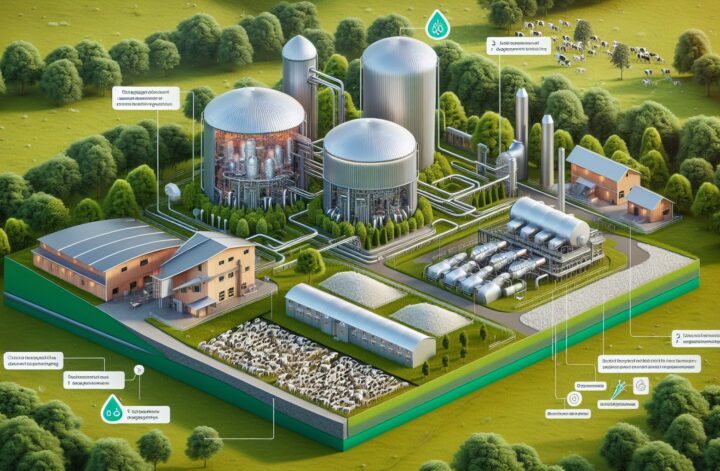
Renewable energy refers to the energy derived from natural processes that are replenished at a higher rate than they are consumed [1]. In the modern era of increasing energy demand, exploring different sources of renewable energy becomes integral and necessary. While solar and wind energy is widely known and harnessed, one renewable energy source still remains underexplored – Co-digestion.
Co-digestion is a biological process where multiple organic materials are anaerobically digested in a single digester. It enhances the production of biogas, a type of renewable energy that can be used for electricity, heat, fuel among others. This article delves into the process of co-digestion, its benefits and its potential in providing renewable energy.
Organic Waste as a Precursor to Energy
A plethora of organic materials can serve as substrates in the co-digestion process. An array of food waste, agricultural residuals, animal manure, and sewage sludge are generally used as substrates. These substrates are loaded with various microbes initiating the degradation process [2].
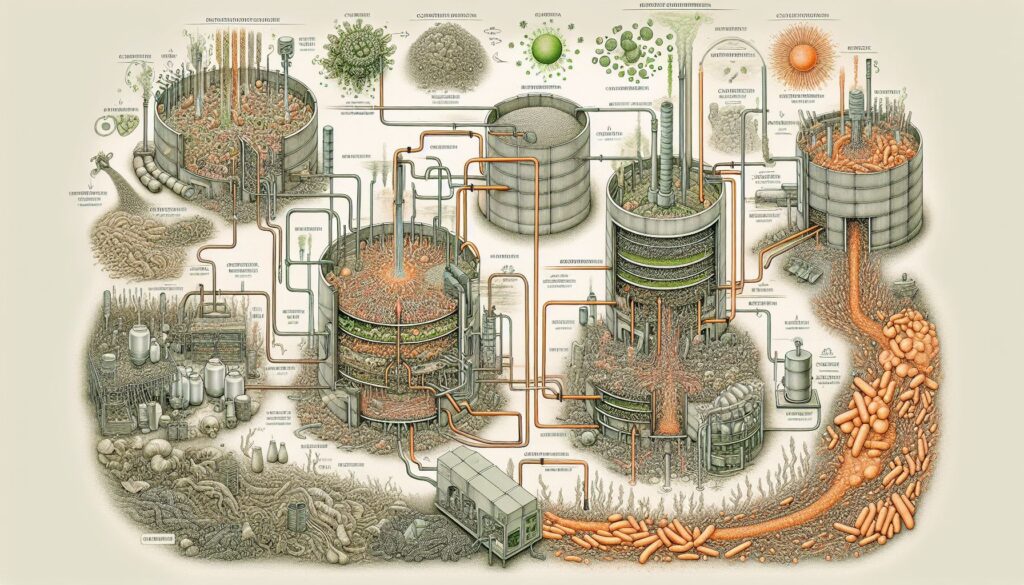
The decay process is not a single-step routine, but a sequence of interconnected biological phases—hydrolysis, acidogenesis, acetogenesis, and methanogenesis. Each of these steps involves a set of specialized microbes that simplifies complex organic materials into simpler, energy-rich compounds.
The Path Way to Energy Production
Hydrolysis
Numbers of enzymes like amylases, proteases, and lipases break complex polymers into simpler monomers for instance, proteins to amino acids, lipids to fatty acids, and carbohydrates to monosaccharides [3].
Acidogenesis
A group of facultative anaerobic and obligate anaerobic bacteria further break down these byproducts through acidogenesis into volatile fatty acids, alcohols, carbon dioxide, and hydrogen.
Acetogenesis
Acetogenic bacteria act on these volatile fatty acids, cleaving them and forming acetic acid, hydrogen, and carbon dioxide.
Methanogenesis
Finally, the methanogens use hydrogen, carbon dioxide, and acetic acid to produce methane, the end product of this anaerobic digestion process. Methane holds great potential as it can be harnessed as a renewable source of energy.
Co-Digestion: A Step Forward
Co-digestion improves the overall process of anaerobic digestion by optimizing the nutrient balance, diluting inhibitors, and increasing the organic loading rate (OLR), hydraulic retention time (HRT), and solid retention time (SRT) [3].
Co-digestion allows the process to be run in a more controlled manner, providing an ideal environment for sustaining microbial metabolism and growth. This ensures sustained, consistent biogas production while efficiently treating organic waste.
Beneficial Outputs of Co-Digestion
Apart from renewable biogas production, the co-digestion process produces biosolids and some liquid residues, known as digestate. Both of these outputs can be utilized as soil conditions and organic fertilizers, providing a sustainable alternative to chemical fertilizers. The solid-liquid separation technique can provide a solid fraction that can be composted, and a liquid fraction that can be used as a liquid fertilizer.
The co-digestion process also can stabilize the sewage sludge and trap harmful gases, including greenhouse gases. This makes co-digestion an essential tool in combating greenhouse gas emissions.
Potential Challenges
Like any other biological process, co-digestion has its challenges, primarily inhibition of anaerobic digestion. Various factors like excessive accumulation of intermediate byproducts, change in pH, ammonia toxicity, and the concentration of organic load can inhibit the digestion process.
Alleviating these challenges requires meticulous management and regulation of the digestion process. It can also necessitate the implementation of special precautions like trace element supplementation and continuous monitoring to maintain proper digestion kinetics.
The Journey from Waste to Energy
While organic waste often is seen only as a problem, with proper management, we can turn it into a solution. Co-digestion enables the conversion of waste into sustainable renewable energy, thereby moving us towards a future where we minimize our dependence on fossil fuels.