In recent years, the focus on renewable energy has been exceptional across various industries. Businesses, organisations and governments are proactively finding sustainable solutions that reduce carbon footprints and contribute significantly to environmental conservation. One of such emerging environmental-friendly technologies is biogas production. This article will delve into the understanding of biogas, its production and its role in the modern world.
What is Biogas?
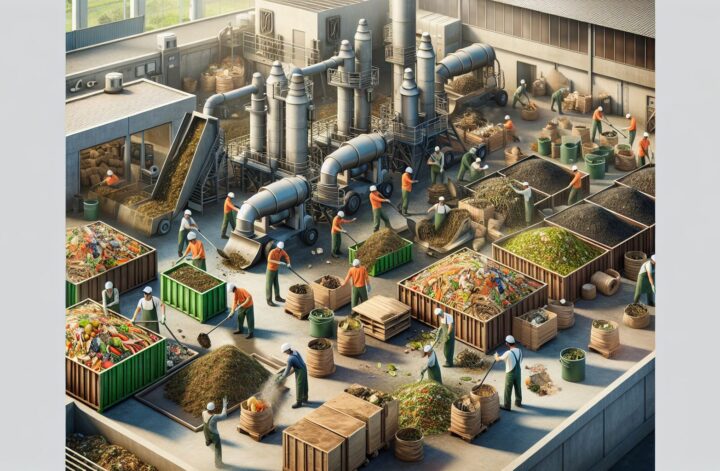
Biogas is a type of biofuel that is naturally produced from the decomposition of organic waste. This waste can be anything from agricultural waste, manure, plant material, sewage, green waste, or food waste (1). Biogas contains a high proportion of methane (the primary component of natural gas) therefore, it can be burned and used as a source of energy.
The Production Process
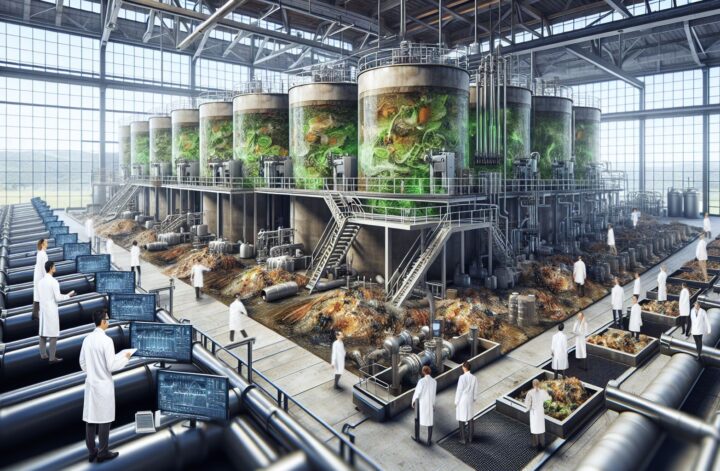
Biogas production is a complex process that involves the activity of various microorganisms in decomposing the organic material under oxygen-free conditions—this is called anaerobic digestion. The process of producing biogas can be divided into four stages: Hydrolysis, Acidogenesis, Acetogenesis, and Methanogenesis.
-
Hydrolysis: In this stage, complex organic compounds (proteins, fats, and carbohydrates) are broken down into smaller, soluble compounds such as sugars, amino acids, and long-chain fatty acids(1). This conversion facilitates the next stage of biogas production.
-
Acidogenesis: The smaller compounds are then digested by acidogenic bacteria to produce volatile fatty acids, carbon dioxide, ammonia, and other byproducts.
-
Acetogenesis: Acetic acid, carbon dioxide, and hydrogen are produced by acetogenic bacteria from the products of the previous stage.
-
Methanogenesis: In the final stage, methane is produced from the acetic acid and carbon dioxide by methanogenic bacteria (1).
The byproduct of this anaerobic digestion process, apart from biogas, is a nutrient-rich biofertilizer called digestate.
The Modern Role of Biogas
Biogas offers numerous benefits, especially in the contemporary world. Not only does it provide a clean, renewable source of energy that could potentially decrease reliance on fossil fuels, but it also assists in waste management, reduces greenhouse gas emissions, and produces fertilizers that enhance soil fertility.
Renewable Energy Source
The prevalent use of fossil fuels has become unsustainable due to its contribution to climate change and the fact that these resources are finite. Biogas, on the other hand, is a renewable source of energy as it is produced from organic waste which is continually created and is inexhaustible (2). The primary component of biogas, methane, can be harnessed for heat and electricity, or processed into natural gas-quality biomethane/ renewable natural gas (RNG). The processing to RNG is otherwise known as biogas upgrading.
Waste Management
When organic waste is dumped into landfills, it breaks down under anaerobic conditions producing methane. Methane being a potent greenhouse gas contributes substantially to global warming. The process of biogas production, in contrast, captures and utilizes these gases. Furthermore, it treats the waste that would otherwise be dumped, reducing waste volume in the landfills.
Greenhouse Gas Reduction
Biogas production contributes to greenhouse gas (GHG) reduction in two ways. First, it replaces fossil fuels in energy production, thus reducing associated carbon dioxide emissions. Second, it also prevents methane emissions, which would otherwise be released into the atmosphere when organic waste decomposes naturally (3).
Biofertilizer Production
The byproduct of bio gas production, digestate, is rich in nutrients such as nitrogen, potassium and phosphorus. This digestate can be directly used as fertilizer without any further treatment. This not only reduces the need for chemical fertilizers, but also improves the organic matter content and fertility of the soil.
Conclusion
The realm of biogas production holds enormous potential to revolutionize not just energy production, but also waste management and agriculture. It provides an innovative response to multiple environmental challenges including global warming, waste disposal, soil degradation and dependence on fossil fuels.
By embracing biogas production, promoting research and investing in infrastructure to harness it, we may stride towards a more sustainable future.
References
-
Al Seadi, T., Drosg, B., Fuchs, W., Rutz, D. and Janssen, R. (2013). Biogas Handbook. University of Southern Denmark Esbjerg. [Online] Available at: https://lemvigbiogas.com/The-biogas-process
-
Brown, L. (2003). Biogas: A Bright Idea for Africa. Worldwatch Institute. [Online] Available at: http://www.worldwatch.org/node/1192
-
US EPA (2020) Landfill Methane Outreach Program (LMOP). [Online] Available at: https://www.epa.gov/lmop