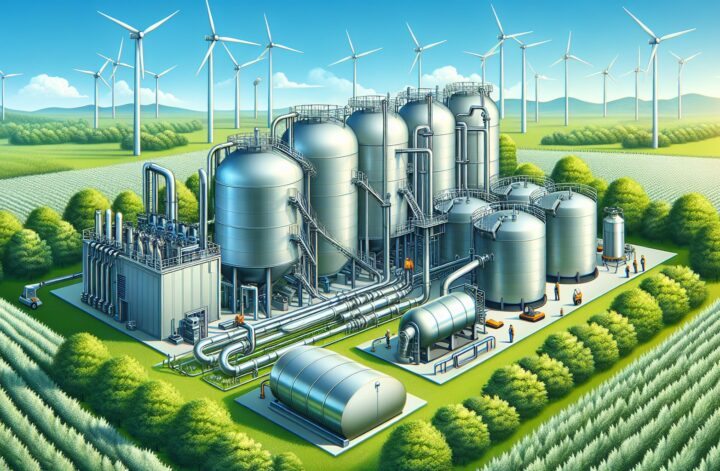
In the quest for renewable energy sources, biogas production has emerged as a highly promising solution. Biogas, composed mainly of methane and carbon dioxide, is produced via the anaerobic digestion of organic material by bacteria¹. It can be used directly as a fuel or upgraded to natural gas quality before utilization in the power, heating, and transportation sectors, playing a pivotal role in sustainable energy strategies.
In this article, we will delve into the potential of biogas production, discussing the process, benefits, and challenges, thus demonstrating its pivotal role in developing sustainable energy future.
Understanding Biogas Production
Biogas is primarily obtained from the breakdown of organic waste in an oxygen-deprived environment. This process is known as anaerobic digestion. The primary resources deployed in biogas production include manure, sewage sludge, food waste, agricultural residues, and energy crops.
The anaerobic digestion process comprises four stages: Hydrolysis, acidogenesis, acetogenesis, and methanogenesis, each performed by different sets of bacteria², often in dedicated stages of digester design. Let’s discuss these stages in brief.
-
Hydrolysis – This process breaks down complex organic materials into simpler organic compounds like sugars, amino acids, and fatty acids. Hydrolytic bacteria—facultative and anaerobic—are responsible for the process.
-
Acidogenesis – Acidogenic bacteria convert the resultant compounds from hydrolysis into volatile fatty acids, along with alcohols, ammonia, hydrogen, and carbon dioxide.
-
Acetogenesis – Acetogenic bacteria consume the products of acidogenesis, producing acetates, hydrogen, and carbon dioxide.
-
Methanogenesis – Finally, methanogenic archaea turn the acetates, CO2, and hydrogen into methane, the primary component of biogas.
The resultant biogas and solid residue—called digestate—are separated. While biogas can be used as an energy source, the digestate can serve as a nutrient-rich organic fertilizer.
Benefits of Biogas Production
Biogas production addresses several crucial challenges of modern society, including waste management, renewable energy production, and reducing greenhouse gas emissions.
-
Waste Management – Biogas production offers an efficient and sustainable solution for managing organic waste. It reduces the burden on landfills, eliminates the pollution caused by traditional waste treatment processes, and transforms waste into valuable commodities—energy and fertilizer.
-
Renewable Energy Production – Unlike fossil fuels, biogas is a renewable form of energy, possesing relatively stable production rates that do not depend on external factors like weather or daylight. It provides a reliable, locally available energy source, significantly reducing the dependence on imported fossil fuels.
-
Greenhouse Gas Reduction – The utilization of organic waste in biogas production prevents the escape of methane—a potent greenhouse gas—into the atmosphere, thus reducing the environmental footprint of waste management. Besides, burning biogas instead of fossil fuels results in far fewer carbon-dioxide emissions.
Challenges of Biogas Production
Like any other technology, biogas production also faces several challenges. The absence of well-developed collecting and processing systems for organic waste, technical challenges in digester design, managing the digestate, and potential inhibitory substances, such as ammonia or trace elements, are among the most critical.
However, continuous research and advancements are addressing these challenges, improving the efficiency of biogas production, and making it more cost-effective.
Conclusion
In summary, biogas production is one of the most promising ways of creating a sustainable energy future. By efficiently dealing with organic waste, producing renewable energy, and reducing greenhouse gas emissions, it provides numerous environmental and economic benefits.
While there are challenges to fully implement biogas production, they are being overcome with advancements in technology and growing interest from industries and governments. Therefore, we must push for more investments and research in this space to fully explore and harness its enormous potential.
References
-
Taherzadeh, M.J., and R. Sárvári Horváth. “Introduction to Anaerobic Digestion: Basic Biology to Technology,” in Bioenergy – Basics and Applications. (2013): 289-308.
-
Yenigun, O., and B. Demirel. “Ammonia Inhibition in Anaerobic Digestion: A Review.” Process Biochemistry 48, no. 3-4. (2013):338-351.
-
Wellinger, A., A. Lindberg, and A. Lefebvre. Biogas upgrading to vehicle fuel standards and grid injection. Springer, (2013).