The world’s growing population and rapid urbanization increase daily organic waste generation. Proper waste management has always been crucial for a clean environment; however, with the dramatic surge in waste production, it’s more important than ever. This calls for efficient strategies to handle organic waste. Today, we’re here to discuss organic waste treatment – an environmental and economical process that has the potential to revolutionize waste management and energy production.
What is Organic Waste?
Before delving into treatment procedures, it’s essential to understand what organic waste is. Organic waste, also known as green waste, is material that comes from plants or animals and is biodegradable. It includes but is not limited to fruit and vegetable peels, leafy garden waste, coffee grounds, eggshells, discarded food, and paper. While organic waste can generate greenhouse gases if not treated properly, it also holds the potential to contribute to sustainable energy production through the creation of biogas[^1^].
Organic Waste Treatment: An Overview
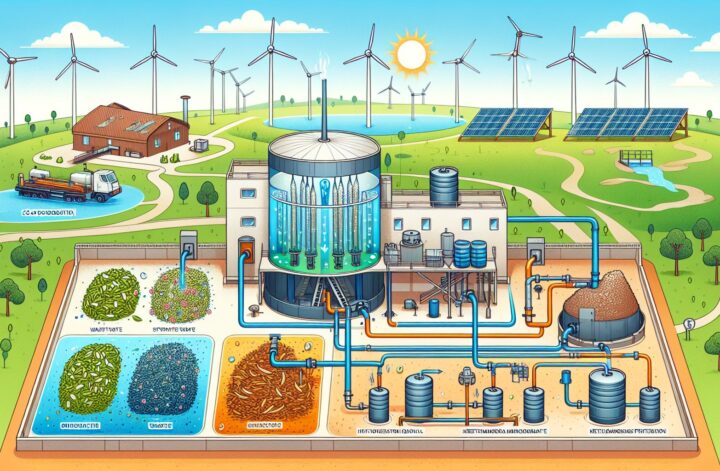
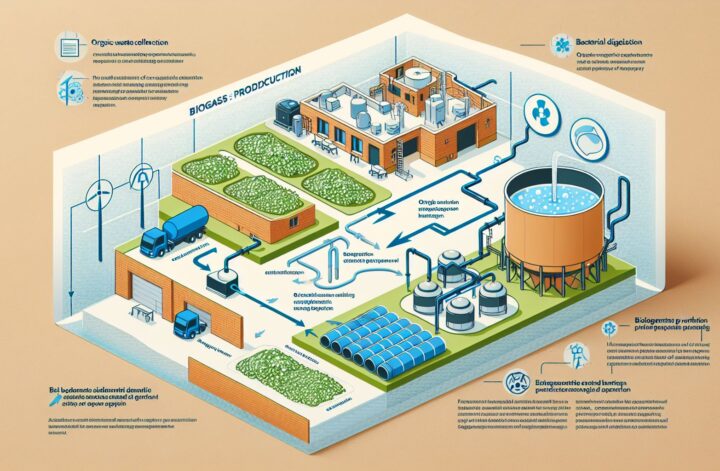
Organic waste treatment is a process that decomposes organic material in an environment absent of oxygen, known as anaerobic digestion. Its benefits are two-fold: reducing waste that ends up in landfills, and generating a renewable source of energy, known as biogas.

The organic waste treatment process undergoes four stages:
- Hydrolysis: The organic material is broken down into simple sugars, amino acids, and fatty acids.
- Acidogenesis: These simple compounds are further decomposed into volatile fatty acids and alcohol.
- Acetogenesis: Volatile fatty acids are finally transformed into acetic acid, hydrogen, and carbon dioxide.
- Methanogenesis: The hydrogen and acetic acid are converted into methane[^2^].
The final product of this process, biogas, consists of methane (approximately 60%), carbon dioxide (approximately 40%), and a small amount of other trace gases[^3^]. Biogas can be used in various arenas: cooking, heat production, electricity generation, and vehicle fuel. Moreover, the residue left behind after extracting the biofuel, known as digestate, can serve as a nutrient-rich fertilizer[^1^].
Organic Waste Treatment: Environmental and Economical Implication
The benefits of organic waste treatment can be examined from two perspectives: environmental and economic. From an environmental standpoint, it reduces landfill waste and greenhouse gas emissions, while improving soil fertility when digestate is applied as a fertilizer.
From an economic perspective, municipalities utilizing organic waste treatment facilities can reap significant cost savings by reducing landfill use and waste disposal costs. Also, the production of renewable energy and fertilizer from organic waste presents an additional revenue-stream[^2^].
From Theory to Practice: Challenges and Opportunities
Accelerating the adaptation of organic waste treatment can face certain challenges. Potential barriers include operational issues, such as waste sorting, transportation, and the need for significant capital investment to build waste treatment facilities. Moreover, these plants require specific expertise for operation and maintenance.
Nonetheless, with increasing public awareness about sustainability, more robust waste disposal regulations, and the attraction of renewable energy generation, the adoption of organic waste treatment is ramping up globally. With ongoing research and the technological advancements aimed at reducing the cost and resource requirements, this environmental and economical solution is positioning itself as a key player in the sustainable future[^3^].
Conclusion
It’s clear that treating organic waste is not solely about minimizing waste; it’s about utilizing available resources to their full potential for a more sustainable and renewable future. Despite the friction faced in terms of implementation, the benefits offered by organic waste treatment in terms of environmental conservation, reduced waste disposal costs, and the creation of a substantial source of renewable energy make it an area worth investing time, effort, and resources.
The world’s need for a renewable energy source and efficient waste disposal methods is becoming increasingly pressing, and organic waste treatment might just be the eco-friendly and economical solution we need.
References
[^1^]: “Organic Waste Management.” U.S. Environmental Protection Agency.
[^2^]: “Anaerobic Digestion.” Office of Energy Efficiency & Renewable Energy.
[^3^]: “Biogas Production from Organic Waste.” US National Library of Medicine, National Institutes of Health.