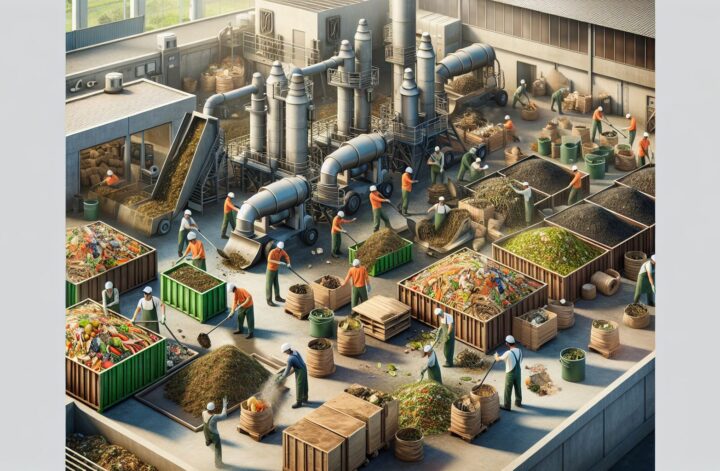
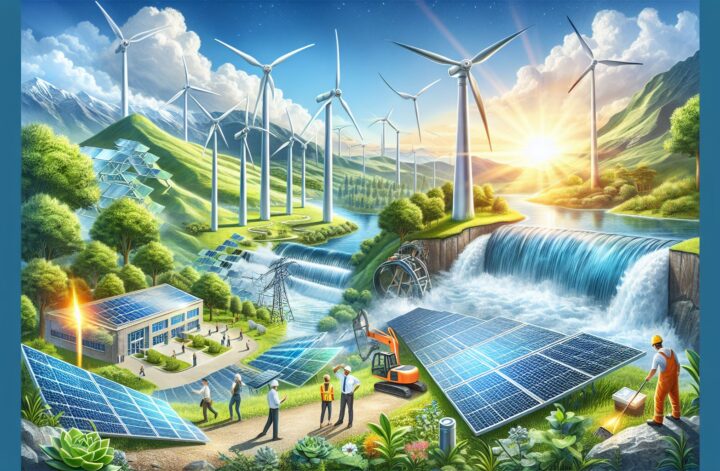
In the puzzle that is the modern world, one of the main challenges we face is management of waste. Today’s conversation around this subject will revolve around the concept of digestate – an often-underappreciated product of biogas production. In this lengthy essay, we are going to have a deep dive into what digestate is, its production process, benefits, challenges faced, and its role in promoting a more sustainable future.
What is Digestate?
To begin with, digestate is an end product of a process known as anaerobic digestion[^1^], which essentially entails bacterial digestion of organic materials while in an environment devoid of oxygen. In this process, organic waste is converted into two main products: biogas (primarily methane, which can then be used for energy) and digestate.
To put it simply, think about when you yourself eat food. It goes in, gets broken down by the bacteria in your gut, resulting in ‘energy’ for your activities and waste. Digestate is quite alike to the waste part of that scenario. However, unlike human waste which often has limited utilities, digestate effectively can be utilized in numerous fields, especially agriculture.
Production of Digestate
The production of digestate corresponds synonymously with the production of biogas itself, which primarily occurs through anaerobic digestion[^2^]. To break it down, the process involves four stages:
- Hydrolysis: Complex organic compounds are broken down to simpler compounds.
- Acidogenesis: The simpler compounds are further broken down to volatile fatty acids and alcohols.
- Acetogenesis: The fatty acids and alcohols are converted into hydrogen, carbon dioxide, and acetate.
- Methanogenesis: Acetates are then converted to methane.
In the end, what is left behind is the digestate. This material generally appears as a thick slurry and contains minerals, un-degraded organic materials, and considerable amounts of fluid. It’s important to note that its consistency, appearance, and composition are determined by the feedstock used in the process and the intensity and efficiency of the digestion process itself.
The Utility of Digestate
So, we have this slurry. It’s a byproduct of our biogas systems, and we have quite a lot of it. What good is it? Answer: quite a lot.
Soil Conditioner
The primary use of digestate is as a soil conditioner. This is because it is rich in nitrogen, potassium, and phosphorus – three of the primary macronutrients needed for plant growth[^3^]. Plus, it has an abundance of organic matter which helps improve soil structure, moisture-holding capacity, and general soil health. Using digestate as a soil conditioner also reduces the need for synthetic fertilizers, which can have a considerable environmental impact due to their production process.
Source of energy
In addition to improving soil health, digestate can also be used as a source of renewable energy. While the major share of energy from anaerobic digestion comes from biogas itself, the residual digestate still contains significant amounts of potential energy which can be tapped through processes such as combustion.
Challenges faced
While the digestate smartly fits into the equation of sustainable development, it too encounters several hurdles. The primary of these is the element of inconsistency in its makeup, largely influenced by the feedstock and the environmental and operational parameters of the digestion process.
Another major challenge is handling and storage. Lack of proper planning or poor handling of digestate can potentially lead to the contamination of water sources and emission of greenhouse gases.
Digestate: A Sustainable Approach
Despite these challenges, digestate still brings the whole package. Managing waste of all types, mitigating climate change, regenerating soil fertility, and the list goes on.
Our journey towards sustainability is about understanding how everything in our world is interconnected, and in this case, how our waste management practices can be connected to energy production, soil health, and economic efficiency.
As we face the challenges of climate change and resource scarcity, digestate and the anaerobic digestion process remind us of the potential in every little part of our world – including the ‘waste’ we often disregard – and the difference it can make to our planet.
Looking ahead, we need to invest in more research and technology regarding digestate management and usage. Effective policies to regulate its use and promote it as a viable and sustainable alternative to conventional fertilizers and energy sources will go a long way in harnessing the full potential of digestate.
This humble byproduct may be just what we need to develop a future that’s not just sustainable but regenerative.
[^1^]: “Digestate – An Overview | ScienceDirect Topics”. www.sciencedirect.com.
[^2^]: “Anaerobic Digestion – Bioenergy Association of NZ”. www.bioenergy.org.nz.
[^3^]: “Effective use of digestate in farming”. www.wrap.org.uk.