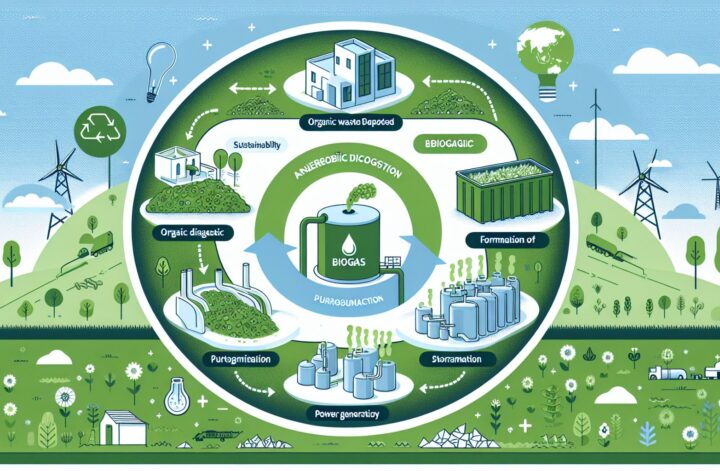
With the growing effects of climate change and scarcity of fossil fuels, the world is leaning towards renewable sources of energy more than ever before. One such area of exploration is biogas production. In this article, we will delve into the process behind biogas production, the benefits it affords, and its implications for the future of renewable energy. We will also examine anaerobic digestion, one of the primary processes integral to biogas production.
The Process: Biogas Production
Biogas is a type of biofuel that is naturally produced from the decomposition of organic waste. When organic matter, such as food scraps and animal waste, decompose in an anaerobic environment (one without oxygen), they release a blend of gases, primarily methane and carbon dioxide. This is the biogas that can be collected and used [^1^].
Anaerobic Digestion
A significant part of the process of generating biogas is anaerobic digestion. This multi-step process breaks down organic matter in the absence of oxygen [^2^]. The four primary stages of anaerobic digestion are:
-
Hydrolysis: In this step, microorganisms break down complex organic wastes into simple sugars, amino acids, and fatty acids.
-
Acidogenesis: Here, the products from hydrolysis are further broken down to produce volatile fatty acids, carbon dioxide, hydrogen, and ammonia.
-
Acetogenesis: Then, the partially broken down material is further converted into hydrogen, carbon dioxide, and acetic acid.
-
Methanogenesis: Finally, methane-producing microbes utilize the products of the previous stages to produce methane – the principal component of biogas.
Each of these stages involves complex biological and chemical processes. Slight changes in conditions, such as temperature and pH, can significantly affect the efficiency of gas production.
The Benefits: Applications of Biogas
Biogas production presents us with several benefits, besides generating energy from waste.
Renewable Energy
Biogas is a renewable source of energy, as the materials needed for its production are continually replenished. In contrast to fossil fuels, biogas does not contribute to an increase in atmospheric concentrations of greenhouse gases, given that the carbon dioxide released from biogas is part of the short-term carbon cycle [^3^].
Waste Management
Biogas is produced from organic waste that would otherwise contribute to landfill issues and methane emissions if not appropriately managed. The use of these substances in the anaerobic digestion process helps in waste reduction and the generation of useful byproducts.
The Future: Implications
The biogas industry has substantial potential for growth and could become instrumental in meeting the world’s energy demands. Furthermore, the technology behind biogas production is continually evolving, enabling more efficient use of feedstocks and the production of higher-quality biogas.
However, challenges do exist. These range from logistical challenges (related to the collection, storage, and distribution of biogas) to technological challenges (linked to the efficiency and effectiveness of the digestion process). Overcoming these hurdles will require further research, development, and government support.
In conclusion, biogas production through anaerobic digestion is an effective way to manage organic waste while producing renewable energy. Though challenges persist, the potential rewards are significant, and the continued exploration and development of this energy source are essential for a sustainable future.
References
[^1^]: Pöschl, M., Ward, S., Owende, P. (2010). Evaluation of energy efficiency of various biogas production and utilization pathways. Applied Energy, 87(11), 3305-3321. https://doi.org/10.1016/j.apenergy.2010.05.011
[^2^]: Appels, L., Baeyens, J., Degrève, J., Dewil, R. (2008). Principles and potential of the anaerobic digestion of waste-activated sludge. Progress in Energy and Combustion Science, 34(6), 755-781. https://doi.org/10.1016/j.pecs.2008.06.002
[^3^]: Angelidaki, I., Treu, L., Tsapekos, P., Luo, G., Campanaro, S., Wenzel, H., & Kougias, P.G. (2018). Biogas upgrading and utilization: Current status and perspectives. Biotechnology Advances, 36(2), 452-466. https://doi.org/10.1016/j.biotechadv.2018.01.011