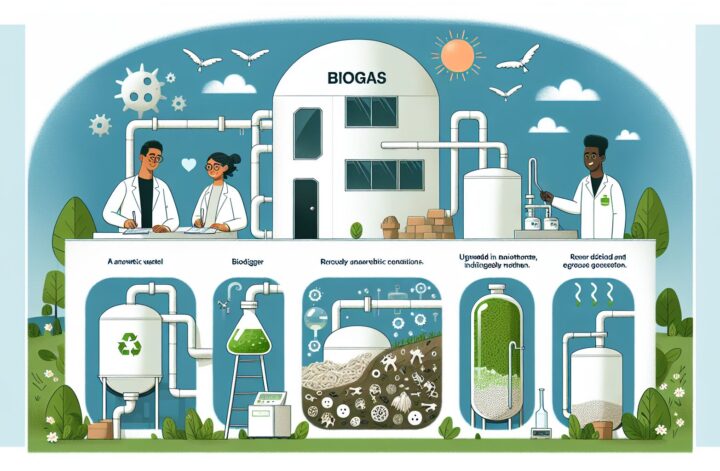
Over the past few decades, the world has seen drastic changes in the environment due to industrialization and an increase in population, resulting in an escalating waste management problem. Among the various kinds of waste generated, organic waste significantly contributes to landscape pollution, releasing harmful gases when dumped into open grounds which affects the health of individuals and the environment. In this context, the organic waste treatment stands as a potential and environmentally friendly solution, to this mounting global issue.
Overview
Organic waste encompasses discard from plant or animal sources, mainly originating from households, industries, and agriculture. It includes yard waste, food waste, paper, wood, manure, and sludge amongst others. When left untreated, it results in resource depletion, soil degradation, water pollution, and significant greenhouse gas emissions[^1^]. Therefore, it becomes crucial to process this waste in a sustainable and efficient manner.
Key Organic Waste Treatment Techniques
Three major techniques are extensively used to treat the organic waste – composting, anaerobic digestion, and incineration.
Composting
Composting is a biological process where organic materials are decomposed under controlled aerobic conditions to a state sufficient for safe handling, storage and application to land[^2^]. The process includes a breakdown of organic matter through bacterial activity into nutrient-rich compost which can be used as a soil conditioner.
Anaerobic Digestion
Anaerobic digestion is another biological process, except it occurs in the absence of oxygen. In this method, microorganisms break down organic waste into simpler molecules, producing a gas primarily composed of methane and carbon dioxide, known as biogas. Biogas can be effectively used as a source of renewable energy. Furthermore, the remaining material can be utilized as a soil enhancer, often known as digestate.
Incineration
Incineration is a thermal process that involves the combustion of organic waste to reduce it to basic compounds such as water, carbon dioxide, and inorganic ash. It is highly effective in reducing the volume of waste. However, it is the least desirable method concerning the environment due to the production of hazardous by-products and the consumption of large amounts of energy[^3^].
Advantages of Organic Waste Treatment
Treating organic waste not only reduces pollution but also has many other advantages. It conserves space in landfills and cuts down waste transportation costs. It also produces rich compost, which returns essential nutrients to the soil. Additionally, energy recovery from waste, as seen in anaerobic digestion, offers a sustainable substitute for fossil fuels. Furthermore, the carbon dioxide emitted in processes such as composting is much less potent as a greenhouse gas compared with the methane which would have been emitted if the organic waste was landfilled.
Barriers to Organic Waste Treatment
While organic waste treatment has a plethora of advantages, there are also several barriers that prevent its large-scale implementation. These include high initial setup costs, lack of infrastructure, technical know-how, and slow return on investment. Overcoming these barriers requires increased funding, amendments to regulatory policies, increased public awareness, and capacity building amongst waste management officials.
Conclusion
In a world increasingly affected by climate change, developing and implementing sustainable methods for waste management is not a choice but a necessity. Organic waste treatment stands as a significant potential solution to this problem, offering a multitier approach towards waste management, soil conservation, and energy production. With the right amount of innovation, support, and commitment, it is evident that treating organic waste has the potential to turn today’s waste into a resource for tomorrow.
[^1^]: Faika, D., & Tiquia, S. M. (2014). A review on the sustainability of co-digestion as a treatment technology for managing food waste and human excreta in developing countries. Journal of Environmental Health Science and Engineering, 12, 157. https://doi.org/10.1186/s40201-014-0157-x
[^2^]: Rothenberger, Jennifer, et al. (2017) “Urban Composting Programs on the Rise.” BioCycle, vol. 58, no. 4, p. 23+. Gale Academic OneFile
[^3^]: Giusti, L. (2009). A review of waste management practices and their impact on human health. Waste Management, 29(8), 2227–2239. https://doi.org/10.1016/j.wasman.2009.03.028