In furthering our understanding of sustainable energy solutions, this article aims to provide an in-depth look at the production of biogas, a renewable energy resource obtained from the anaerobic digestion or fermentation of organic matter. This process is catalyzed by a consortium of microbes which, in the absence of oxygen, metabolize organic waste materials into methane, a primary component of biogas[^1^].
This is an enlightening journey examining the principles, processes, benefits, and challenges of biogas production.
Understanding Biogas
Biogas is a versatile, renewable energy source, predominantly consisting of 60-70% methane, 30-40% carbon dioxide, along with trace elements of gases such as hydrogen sulfide[^2^]. Biogas is a sustainable solution that has been exploited to power homes, cars, and industries. Its infrastructure and viable production methods make it an accessible resource in several parts of the world.
Production of Biogas
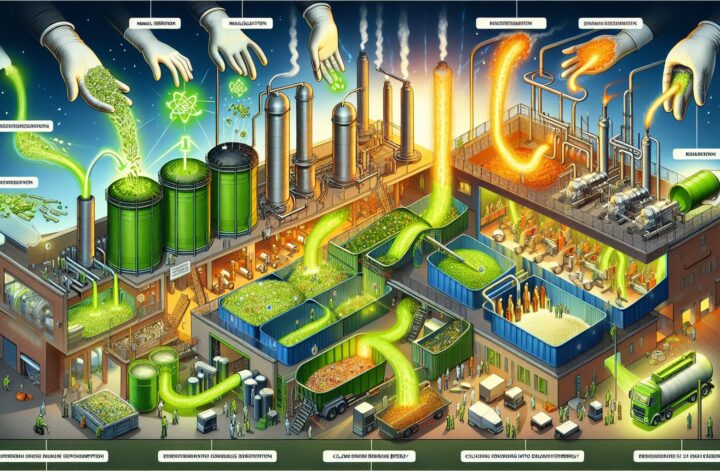
The production of biogas occurs in four distinct stages: hydrolysis, acidogenesis, acetogenesis, and methanogenesis[^1^].
-
Hydrolysis: Here, complex organic materials are broken down into simpler monomers. Bacterial enzymes help in the hydrolytic cleavage of these substances.
-
Acidogenesis: The simpler monomers are converted into volatile fatty acids, alcohols, and gases like hydrogen and carbon dioxide by acidogenic bacteria.
-
Acetogenesis: Acetogenic bacteria convert the products from acidogenesis into acetic acid, hydrogen, and carbon dioxide.
-
Methanogenesis: Methane-producing microbes (methanogens) convert these intermediates into methane, which constitutes most part of biogas[^3^].
Biogas Upgrading
Raw biogas undergoes a purification process known as ‘upgrading,’ enhancing the quality of the gas by reducing contaminants and increasing the concentration of methane. This process includes dehydration, desulfurization, and removal of carbon dioxide (CO2), leading to the production of biomethane, a clean and efficient source of energy[^4^].
The Importance of Biogas
Biogas production bolsters various ecological and economical advantages:
- Waste Management: Biogas technology helps recycle waste products, reducing the waste that would otherwise find its way into landfills.
- Provision of Energy: Biogas is a reliable source of renewable energy that can be used in heat and power generation.
- Greenhouse gas reduction: Biogas generation and use reduce greenhouse emissions by converting potent gases like methane into less harmful CO2.
- Generation of valuable by-products: The residual solid matter from the biogas production is known as digestate. This nutrient-rich product can be used as a biofertilizer to improve soil fertility[^2^].
- Job Creation: Biogas plants and management require skilled personnel, indirectly creating job opportunities.
The Challenges of Biogas Production
Despite the significant advantages of biogas production, certain challenges prevail:
- Inhibition of Anaerobic Digestion: This problem arises due to the presence of inhibitors like ammonia, volatile fatty acids, and sulfides, which impair the bacterial activity inside the digester.
- Economic feasibility: The establishment of biogas plants requires considerable investment. The installation, operating costs, and return of investment are factors that govern the feasibility of biogas plants.
These limitations necessitate robust research and development, aiming at improving the digester design, enhancing microbial activity, and making biogas production economically viable.
Conclusion
The paradigm shift from fossil fuels to renewable energy resources looks promising with the advent of technologies like biogas production. Aligning with our sustainable goals, biogas offers a harmonious blend of ecological benefits and economic prospects. As technology advances and biogas production becomes even more efficient, we inch closer to a future where clean and renewable energy becomes the rule and not the exception.
[^1^]: Appels, L., Lauwers, J., Degrève, J., Helsen, L., Lievens, B., Willems, K., … & Dewil, R. (2011). Anaerobic digestion in global bio-energy production: Potential and research challenges. Renewable and sustainable energy reviews, 15(9), 4295-4301.
[^2^]: Nishio, N., & Nakashimada, Y. (2004). Recent development of anaerobic digestion processes for energy recovery from wastes. Journal of bioscience and bioengineering, 97(4), 227-242.
[^3^]: McInerney, M. J., Bryant, M. P., & Pfennig, N. (1979). Anaerobic bacterium that degrades fatty acids in syntrophic association with methanogens. Archives of Microbiology, 122(1),129-135.
[^4^]: Ryckebosch, E., Drouillon, M., & Vervaeren, H. (2011). Techniques for transformation of biogas to biomethane. Biomass and Bioenergy, 35(5), 1633-1645.