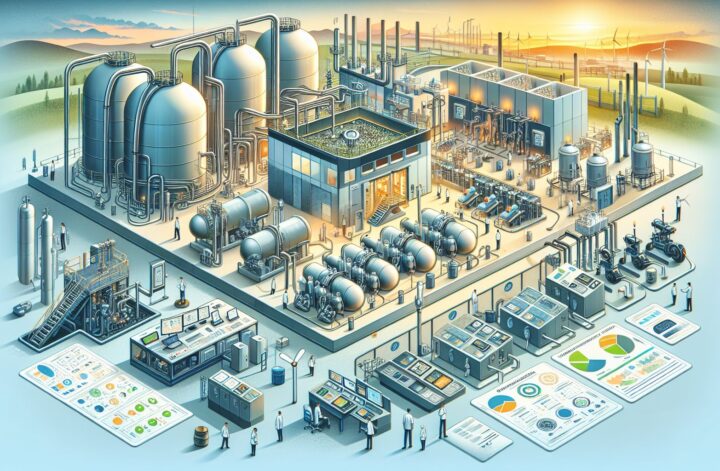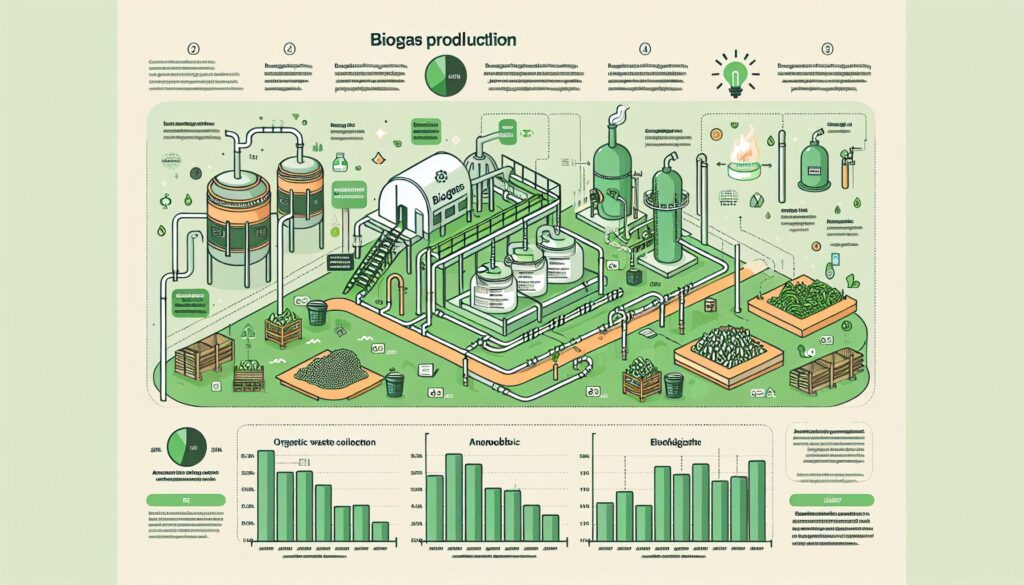
Biogas production represents a crucial solution to several environmental and economic challenges. It leverages organic waste to provide a renewable energy source, while reducing greenhouse gas emissions, alleviating pressure on landfills, and contributing to a greener, more sustainable future.
Introduction to Biogas Production
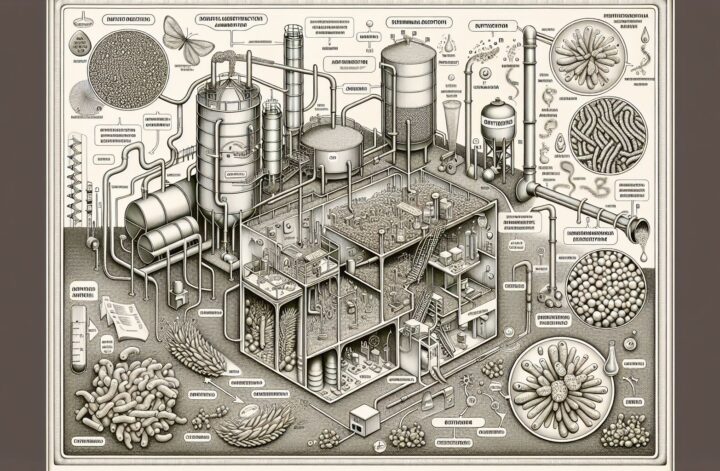
Biogas production involves the breakdown of organic matter in the absence of oxygen, a process known as anaerobic digestion[^1^]. Various forms of organic waste, such as agricultural, municipal, and industrial waste, are used in this process. The main byproducts of this process are biogas, a mixture of gases mainly composed of methane and carbon dioxide, and digestate, a nutrient-rich residue used as a natural fertilizer.
Anaerobic Digestion Process
The anaerobic digestion process comprises four key stages: hydrolysis, acidogenesis, acetogenesis, and methanogenesis[^1^].
Hydrolysis
In the initial hydrolysis stage, complex organic substances such as carbohydrates, fats, and proteins are converted into simple monomers, with the help of hydrolytic bacteria.
Acidogenesis
During acidogenesis, these monomers undergo further biodegradation by acidogenic bacteria, leading to the production of carbon dioxide, hydrogen, ammonia and organic acids.
Acetogenesis
In the acetogenesis stage, acetogenic bacteria transform the products of acidogenesis into acetic acid, carbon dioxide, and hydrogen.
Methanogenesis
Finally, in the methanogenesis stage, methane is produced when methanogenic archaea convert acetic acid and gases formed in the previous stages into methane and carbon dioxide[^1^].
Biogas Upgrading
Although biogas can be used in its raw form for heating, cooking, or light production, it generally undergoes an upgrading process to remove impurities and increase its methane content[^2^]. Methods commonly used for biogas scrubbing or upgrading include water scrubbing, pressure swing adsorption, and membrane separation[^2^]. The resulting biogas can be used in vehicles or injected into the gas grid.
Biogas Utilization: Combined Heat and Power (CHP)
One of the main uses of upgraded biogas is in Combined Heat and Power (CHP) systems, also known as cogeneration. These systems simultaneously generate electricity and useful heat from the same energy source, achieving high efficiencies and considerable energy savings[^3^].
Factors Influencing Biogas Production
Several parameters impact the biogas production process, such as the nature and composition of the feedstock, temperature, pH, and the organic loading rate (OLR). Also, hydraulics retention time (HRT) and solid retention time (SRT) should be carefully controlled[^1^].
Furthermore, to ensure sufficient nutrient availability for the microbial community involved in anaerobic digestion, trace element supplementation might be necessary[^1^].
Opportunities and Challenges with Biogas Production
Biogas production provides significant greenhouse gas reduction benefits, as it captures methane – a potent greenhouse gas – that would otherwise be released into the atmosphere.
Nevertheless, this process is not without its challenges. For instance, inhibition of anaerobic digestion due to ammonia or sulfide toxicity can reduce the efficiency of biogas production[^1^].
Additionally, the logistics and investment necessary for biogas production systems, especially large-scale operations, can present hurdles.
Conclusions
As our world seeks to shift towards more sustainable and renewable energy sources, the role of biogas cannot be underestimated. Harnessing the power of biogas presents a promising avenue for addressing energy and environmental challenges, fostering a more sustainable and circular economy.
[^1^]: “How Does Anaerobic Digestion Work?” American Biogas Council, https://americanbiogascouncil.org/anaerobic-digestion/overview/
[^2^]: “Biogas Upgrading.” European Biogas Association, https://www.europeanbiogas.eu/biogas/biogas-upgrading/
[^3^]: “What Is Combined Heat and Power (CHP)?” U.S. Energy Information Administration (EIA), https://www.eia.gov/energyexplained/biofuels/use-of-biogas.php