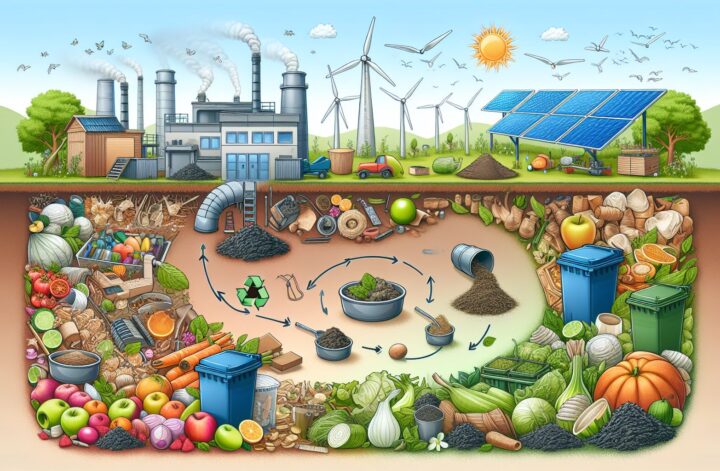
The need for renewable energy sources has taken center stage in recent years, which leads us to explore novel sources of energy. One such source is biogas. This article provides an in-depth exposition into the realm of biogas production and its potential in producing renewable energy.
Introduction
Biogas refers to a type of biofuel that is naturally produced from the organic decomposition of agricultural waste, sewage, manure, plant material, green waste, and other forms of organic waste. The main components of biogas are methane (CH4) and carbon dioxide (CO2), with traces of other gases like hydrogen and hydrogen sulfide. It can be used directly as fuel, in combined heat and power gas engines, or, after its cleaning and upgrading, it can be converted to natural gas or compressed to fuel vehicles.
Process of Biogas Production
Biogas is produced over a period of time through a series of decomposition stages by various microorganisms. The entire process, referred to as anaerobic digestion, occurs in the absence of oxygen and can be broadly classified into four stages:
-
Hydrolysis: In this initial phase, complex organic wastes are broken down into sub-components like sugars, amino acids, etc. by enzymes produced by hydrolytic bacteria *.
-
Acidogenesis: The products of hydrolysis are then put through a phase called acidogenesis. In this phase, acid-forming bacteria transform the sugars and amino acids into carbon dioxide, hydrogen, ammonia, and organic acids *.
-
Acetogenesis: The third stage involves converting the products from acidogenesis into acetic acid, carbon dioxide, and hydrogen. Acetic acid is necessary for the final stage – methanogenesis *.
-
Methanogenesis: This is the final stage of anaerobic digestion. Methane is produced by methanogens from the acetic acid, CO2, and hydrogen formed in the three previous stages *.
Advantages of Biogas Production
One of the main benefits of biogas production is that it contributes towards the reduction of greenhouse gas emissions. During the breakdown of organic matter, methane, a potent greenhouse gas, gets released. By capturing this methane during biogas production, we can prevent it from being released into the atmosphere and contribute to the reduction of greenhouse gas emissions.
Additionally, biogas production offers an effective way to manage organic waste and convert it into a valuable resource. It provides an environmentally friendly solution for the disposal and treatment of organic waste, thus making our waste management systems more efficient and sustainable.
Challenges and Future Directions
While biogas production holds much promise, it is not without its challenges. Ensuring the efficiency and stability of the anaerobic digestion process requires careful monitoring and control of various parameters such as pH, temperature, and organic loading rate (OLR).
Ammonia toxicity is also an issue, where high concentrations of ammonia can inhibit the methanogens and disrupt biogas production. Similarly, sulfide toxicity is another challenge wherein high levels of sulfides can negatively impact the microorganisms involved in the production process.
Furthermore, to achieve more widespread adoption of biogas technology, it is essential to tackle issues related to the upgrading, storage, and transportation of biogas. Biogas scrubbing techniques need to be further developed to efficiently and economically remove unwanted components from the raw gas. Development of suitable biogas upgrading technologies is also crucial to increase its viability as a substitute for natural gas.
Despite these challenges, the future of biogas production is promising owing to ongoing research and advancements in anaerobic digestion technology. There is growing interest in exploring the co-digestion of different types of wastes and feedstocks to enhance biogas yield.
Overall, biogas production has the potential to contribute significantly to the global renewable energy mix, and plays a crucial role in waste management, and greenhouse gas reduction. It represents a promising sustainable solution that aligns with the goals of energy conservation, environmental protection, and efficient resource utilization.
Sources: