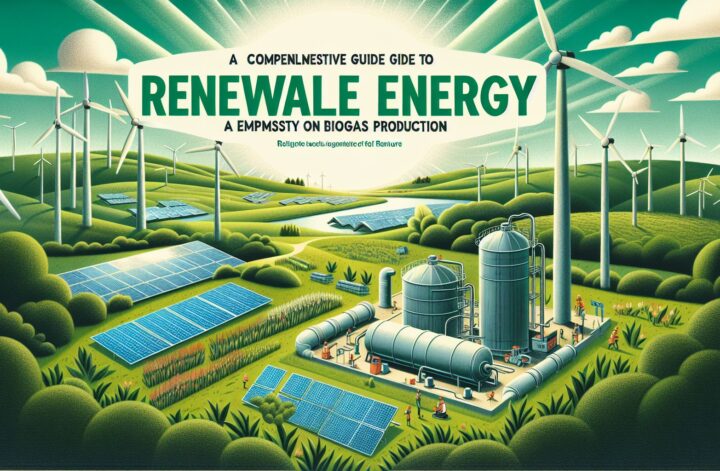
Biogas extraction and use are central to global renewable energy solutions, contributing to cleaner, greener, and more sustainable forms of energy production. This comprehensive guide will delve into in-depth insights about Biogas production, its environmental impacts, notable advantages, and growing potential in the energy sector.
Introduction to Biogas and Its Production Process
Biogas is a type of biofuel that is naturally produced from the decomposition of organic waste. When organic matter, such as food scraps and animal waste, breaks down in an environment without oxygen, it releases a blend of gases, primarily methane and carbon dioxide. In this regard, biogas can be produced from raw materials such as agricultural waste, manure, municipal waste, plant material, or other biodegradable feedstocks.
The Four Stages in Biogas Production
Biogas production is a complex process that involves four primary stages: Hydrolysis, acidogenesis, acetogenesis, and methanogenesis[^1^].
-
Hydrolysis: At the first stage, bacteria decompose the organic material into molecules such as sugars.
-
Acidogenesis: In acidogenesis, a different set of bacteria consume these sugars, producing smaller soluble molecules, including volatile fatty acids.
-
Acetogenesis: Another group of bacteria converts these acids and alcohol into acetic acid, carbon dioxide, and hydrogen.
-
Methanogenesis: The final stage of the process, methanogenesis, involves a group of bacteria known as methanogens, which take these final byproducts and produce methane.
The Role of Anaerobic Digestion
Crucial to the entire process is an activity called anaerobic digestion, whereby bacteria break down organic materials in the absence of oxygen. This process can occur naturally, for instance, in landfills and swamps. However, it can also be harnessed and optimised in controlled environments such as anaerobic digesters, often used in waste treatment plants and specialised biogas production plants[^2^].
Anaerobic digestion also plays an essential role in waste management, reducing the volume of sludge requiring disposal and ensuring effective sludge stabilisation.
The Importance of Biogas Upgrading
One of the essential steps in the process of converting raw biogas into a usable form is biogas upgrading. This occurs after the biogas has been produced in the digester. Biogas consists mainly of methane and carbon dioxide, with traces of water vapour, hydrogen sulphide, and minor elements. Through the process of “biogas upgrading”, carbon dioxide and other impurities are removed, resulting in high-quality, pipeline-grade biomethane[^3^].
Biogas as a Source of Renewable Energy
Biogas serves as an essential source of renewable energy. When burned, it releases an ample amount of energy, which makes it an excellent substitute for non-renewable fossil fuels. The energy produced can serve various purposes, such as generating electricity, heating, and fuel for vehicles, thereby contributing significantly to greenhouse gas reductions.
Biogas production also generates valuable byproducts such as digestate, a nutrient-rich substance that can be used as a high-quality fertiliser. It is an excellent tool for sustainable waste management, converting organic wastes into beneficial and recyclable materials.
Applications and Future Prospects
The adoption of biogas technology implies several benefits. It provides a sustainable solution for waste management, contributes to generating clean and renewable energy, and reduces emissions. As the world continues moving towards more sustainable energy models, biogas production becomes increasingly valuable and relevant.
In conclusion, biogas production represents a compelling answer to the world’s energy needs. Not only does it convert waste into sustainable energy, but it also reduces pollutants, recycles valuable nutrients, and provides new opportunities for farmers, energy companies, and end-users alike. The growth of biogas production globally signals a bright and cleaner future for us all.
[^1^]: Agoramoorthy, G., & Hsu, M. J. (2018). Biogas: A way forward to sustainable energy future.Journal of the Energy Institute, 91(6), 876-882.
[^2^]: Murphy, J. D. (2018). A perspective on the potential role of biogas in smart energy grids. Renewable and sustainable energy reviews, 94, 341-353.
[^3^]: Dennehy, C., Lawlor, P. G., Gardiner, G. E., & McCabe, M. S. (2018). An investigation into the effect of supplementation with β-glucanase and β-xylosidase enzymes on biogas production from wheat and barley straw respectively. Biomass and Bioenergy, 107, 248-254.