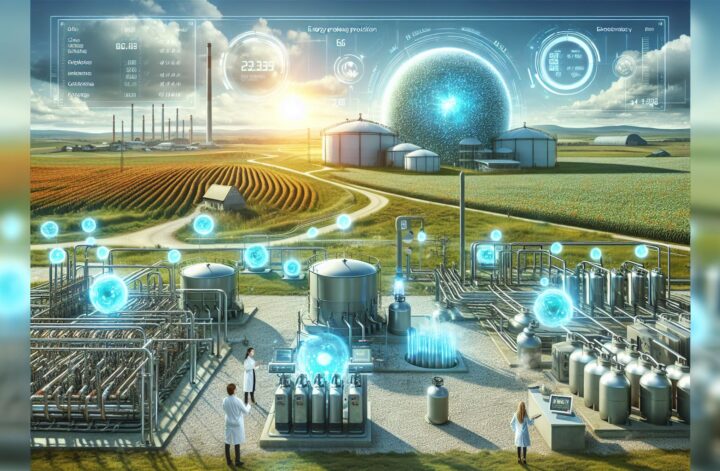
In the modern age, finding efficient, sustainable, and renewable energy solutions is paramount. These energy sources are critical to decrease our dependency on non-renewable resources like coal and oil, mitigate energy prices, and foster environmental sustainability by reducing harmful emissions contributing to climate change. Among the several renewable energy options, one promising source that we will explore in this article is “biogas.” We will delve into the processes used in its production and the prospects of its use as a sustainable energy source.
What Is Biogas?
Biogas is a type of biofuel that is naturally produced from the breakdown of organic material in an oxygen-free environment [1]. This process is referred to as anaerobic digestion. The organic materials commonly used for biogas production are plant wastes, animal manure, food wastes, sewage, and specific types of grass and crops.
The primary components of biogas are Methane (CH4, 50-75%) and carbon dioxide (CO2, 25-50%) along with trace amounts of other gases such as hydrogen, nitrogen, hydrogen sulfide [2]. Methane, the primary component of natural gas, is combustible and can produce heat and electricity when burnt in the right conditions.
Biogas Production
Anaerobic digestion, the process of generating biogas, involves four principal stages: Hydrolysis, Acidogenesis, Acetogenesis, and Methanogenesis.
-
Hydrolysis is the first step in which microorganisms break down biodegradable material in the absence of oxygen.
-
In the Acidogenesis phase, bacteria convert the products of Hydrolysis into volatile fatty acids and alcohol.
-
During Acetogenesis, the organic material undergoes further breakdown, producing additional ammonia, carbon dioxide, and hydrogen sulfide.
-
The final stage, Methanogenesis, involves methanogens (a type of archaea microorganism) metabolizing the by-products from Acetogenesis and converting them to methane, carbon dioxide, and water.
Waste treatment plants employing this process produce biosolids, a stabilized semi-solid residue, that can be used as fertilizer [3]. Anaerobic digestion is an effective sludge stabilization method to reduce the volume, convert the organic material to usable energy, and lower pathogens in sewage sludge.
The Role of Biogas in Renewable Energy
Not only does biogas provide an alternative to traditional fossil fuels, but it also promotes waste management and reduces harmful emissions. This methane capture prevents the methane, a potent greenhouse gas, from reaching the atmosphere, thus mitigating its impact on climate change. Besides, biogas plants help in organic waste treatment, converting waste from households, industries, and agriculture into valuable resources.
After a biogas plant has produced raw biogas, further enhancements or “biogas upgrading” is typically performed. Upgrading removes impurities and raises the concentration of methane, increasing the energy value of the biogas, which can then be utilized in the same way as natural gas. It can be used for cooking and heating at the local level or upgraded to inject into the national grid.
Additionally, the biogas can be used in a combined heat and power (CHP) system to generate electricity and heat efficiently. The CHP systems take advantage of the heat that would otherwise be wasted during the production of electricity, making it an efficient and effective process.
The Promise of Biogas
With its twofold benefits of managing waste and generating renewable energy, biogas stands to play a significant role in the sustainable energy landscape. Whether used locally or upgraded for broader use, biogas offers a promising alternative to fossil fuels, significantly helping in curtailing carbon emissions.
In a world grappling with climate change and depleting resources, renewable sources of energy like biogas, offer a promising solution. The processes involved in biogas production, from digestion to the final use, represent a sustainable loop in which waste is turned into crucial energy resources.
Sources:
[1]. National Geographic Society. (2012). Biogas. https://www.nationalgeographic.org/encyclopedia/biogas/
[2]. Wellinger, A., Murphy, J., & Baxter, D. (2016). The biogas handbook: Science, production and applications. https://www.sciencedirect.com/science/article/pii/B9780128054239000013
[3]. United States Environmental Protection Agency. (2021). Frequent Questions About Biosolids. https://www.epa.gov/biosolids/frequent-questions-about-biosolids