In the complex ecosystem of wastewater treatment plants, equalization tanks serve as crucial buffers that smooth out the chaotic fluctuations inherent in municipal and industrial wastewater flows. These massive concrete vessels, often overlooked by the general public, play a pivotal role in ensuring the downstream treatment processes operate efficiently and effectively.
The Science Behind Flow Equalization
Wastewater doesn’t arrive at treatment plants in a steady, predictable stream. Instead, it comes in waves that mirror human activity patterns—surging during morning showers, dropping during overnight hours, and spiking again during evening routines. Industrial discharges add another layer of complexity, introducing sudden bursts of concentrated pollutants that can overwhelm biological treatment systems.
Equalization tanks address this variability by temporarily storing incoming wastewater during peak flow periods and releasing it at a controlled rate during low-flow times. This process, known as flow equalization, transforms erratic influent patterns into a steady, manageable flow that optimizes the performance of primary clarifiers, aeration basins, and secondary treatment processes.
The tanks typically operate with sophisticated control systems that monitor incoming flow rates, water levels, and quality parameters. Variable speed pumps, controlled by programmable logic controllers (PLCs), adjust discharge rates based on predetermined algorithms that balance storage capacity with treatment plant requirements. Modern installations often incorporate real-time monitoring systems that can predict flow patterns based on historical data and weather forecasts.
Design Considerations and Operational Challenges
Designing effective equalization tanks requires careful consideration of local flow characteristics, treatment plant capacity, and regulatory requirements. Engineers must balance tank volume with construction costs while ensuring adequate mixing to prevent septicity and solids settling. Most installations require approximately 4-8 hours of average flow storage capacity, though this varies significantly based on local conditions.
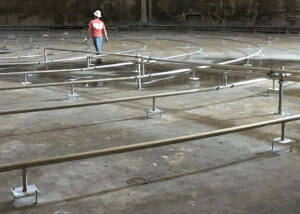
Mixing systems represent a critical component of equalization tank design. Without proper agitation, heavier solids settle to the bottom while lighter materials float to the surface, creating operational headaches and reducing treatment efficiency. Common mixing technologies include submerged mixers, diffused aeration systems, and mechanical surface aerators. Each approach offers distinct advantages: submerged mixers provide efficient mixing with lower energy consumption, while aeration systems simultaneously provide mixing and odor control.
Corrosion control presents another significant challenge. The combination of varying pH levels, hydrogen sulfide production, and mechanical equipment creates an aggressive environment that can rapidly deteriorate concrete and steel components. Modern installations employ specialized coatings, cathodic protection systems, and corrosion-resistant materials to extend equipment life and reduce maintenance costs.
Leading Manufacturers Shaping the Industry
The American wastewater treatment industry relies on several key manufacturers for equalization tank equipment and systems. Xylem Inc., headquartered in Rye Brook, New York, stands as one of the largest players in the market. Their Flygt submersible mixers and pumps are ubiquitous in equalization applications across the country. The company’s adaptive mixing technology automatically adjusts mixing intensity based on tank conditions, optimizing energy consumption while maintaining effective solids suspension.
Sulzer Ltd., with significant North American operations based in Tulsa, Oklahoma, manufactures robust submersible mixers specifically designed for equalization tank applications. Their ABS line of mixers features advanced impeller designs that maximize mixing efficiency while minimizing energy consumption. The company’s emphasis on computational fluid dynamics (CFD) modeling ensures optimal mixer placement and performance in complex tank geometries.
KSB Inc., operating from their Frankenthal, Pennsylvania facility, offers comprehensive pumping solutions for equalization systems. Their extensive product line includes submersible pumps capable of handling varying flow rates and solids concentrations typical in equalization applications. The company’s focus on variable frequency drive integration allows operators to precisely control discharge rates while minimizing energy costs.
Pentair plc, through their Hydromatic and Myers brands, provides specialized equipment designed for the harsh conditions found in equalization tanks. Their solids-handling pumps incorporate features like hardened impellers and wear-resistant casings that extend service life in abrasive environments. The company’s wireless monitoring systems enable remote pump performance tracking and predictive maintenance scheduling.
Philadelphia Mixers, a division of SPX Technologies, manufactures custom mixing solutions for large-scale equalization applications. Their side-entering mixers are particularly popular in retrofit applications where existing tanks need upgraded mixing capabilities. The company’s engineering expertise in fluid dynamics ensures optimal mixing patterns that prevent dead zones and maintain uniform conditions throughout the tank.
Technological Innovations and Future Trends
The equalization tank sector continues to evolve as manufacturers integrate advanced technologies to improve efficiency and reduce operational costs. Smart sensor networks now provide real-time monitoring of dissolved oxygen levels, pH, temperature, and turbidity, enabling operators to optimize mixing and aeration strategies. Artificial intelligence algorithms analyze historical data patterns to predict flow variations and automatically adjust system parameters.
Energy efficiency represents a primary focus area for equipment manufacturers. Variable frequency drives, premium efficiency motors, and optimized impeller designs have collectively reduced energy consumption by 30-40% compared to older installations. Some facilities are experimenting with energy recovery systems that capture and utilize the kinetic energy from incoming wastewater flows.
Modular construction techniques are gaining popularity as they reduce installation time and costs while improving construction quality. Precast concrete tanks with integrated mixing and pumping systems can be manufactured off-site under controlled conditions, then transported and installed with minimal site work. This approach particularly benefits smaller treatment plants that lack extensive construction resources.
Economic Impact and Regulatory Drivers
The equalization tank market in the United States represents a significant portion of the broader wastewater treatment infrastructure sector, with annual equipment sales exceeding $500 million. Aging infrastructure drives much of this demand, as facilities installed during the 1970s and 1980s reach the end of their design lives and require major upgrades or replacement.
Increasingly stringent discharge regulations also fuel market growth. The Environmental Protection Agency’s ongoing efforts to reduce nutrient pollution in water bodies require treatment plants to achieve more consistent effluent quality, making flow equalization an essential component of compliance strategies. Plants that previously operated without equalization are retrofitting these systems to meet new performance standards.
Climate change considerations add another dimension to equalization tank importance. More frequent and intense storm events strain collection systems and treatment plants, making flow buffering capabilities increasingly valuable. Forward-thinking utilities are oversizing equalization tanks to accommodate projected increases in wet-weather flows while maintaining treatment performance.
Conclusion
Equalization tanks represent a mature but continuously evolving technology that remains essential to effective wastewater treatment. As regulatory requirements become more stringent and infrastructure ages, the importance of these systems will only increase. The American manufacturers leading this sector continue to innovate, developing more efficient, reliable, and intelligent solutions that help utilities protect public health and environmental quality.
The success of wastewater treatment plants increasingly depends on the seamless integration of multiple treatment processes, with equalization tanks serving as the crucial first step in this complex chain. Their ability to transform chaotic influent patterns into manageable flows makes them indispensable components of modern wastewater treatment infrastructure. As the industry moves forward, continued investment in equalization technology will remain essential for meeting the growing challenges of wastewater treatment in the 21st century.