In our constant search for renewable energy sources, biogas production has emerged as a powerful player offering a sustainable and environmentally-friendly solution. As an organic form of energy, biogas can be created from virtually any organic material, including various types of waste. It thus simultaneously provides a renewable energy source and an effective waste management solution.
Introduction to Biogas
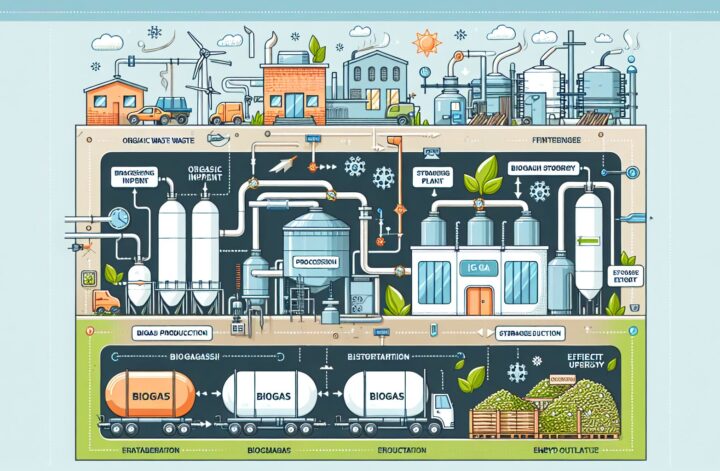
Biogas is a type of biofuel that is naturally generated from the decomposition of organic waste. The waste type can be varied, including agricultural waste, plant material, sewage, municipal waste, or food scraps. This decomposition process is known as anaerobic digestion and happens in a sealed, oxygen-free tank known as an anaerobic digester[^1^].
The Anaerobic Digestion Process
Anaerobic digestion is a multistep process that includes hydrolysis, acidogenesis, acetogenesis, and methanogenesis[^2^]. During the process, microorganisms work under oxygen-free conditions to break down organic matter into methane-rich biogas and a nutrient-rich residue called digestate.
Hydrolysis
During hydrolysis, bacteria break down insoluble organic matter into soluble components that can be utilized in the next stages.
Acidogenesis
In acidogenesis, other bacteria break down the soluble components into short-chain fatty acids and other further intermediates.
Acetogenesis
Next, in acetogenesis, these intermediates are converted into acetic acid, hydrogen, and carbon dioxide, among other compounds.
Methanogenesis
Finally, in methanogenesis, all these products are transformed into methane, carbon dioxide, and water.
By harnessing this natural process, biogas production offers a green energy-efficient solution, providing us with renewable energy while reducing organic waste, protecting the environment, and promoting sustainable development.
Importance of Biogas Production
Renewable Energy Source
Biogas is a renewable energy source, meaning it can be replenished naturally over a short period. The renewable nature of biogas dramatically contrasts with the finite and pollutive nature of fossil fuels.
Waste Treatment
Biogas production also presents a beneficial solution to waste management issues. Organic waste that would otherwise end up in landfills or be wasted is instead utilized, converted into useful energy, and reduced.
Environmental Benefits
Biogas production also contributes to reducing greenhouse gas emissions. Methane, which is 25 times more potent as a greenhouse gas than carbon dioxide[^3^], would be released into the atmosphere if organic waste were left to decompose naturally. By capturing and utilizing this methane, biogas production significantly lowers greenhouse gas emissions.
Economic Development
Lastly, biogas production can also contribute to economic development by creating jobs in the renewable energy sector.
Future of Biogas Production
The future potential for biogas production is huge. As the world continues to shift towards renewable energy, biogas stands as a significant part of this transition. Energy demand is anticipated to increase by 50% over the next couple of decades, and renewable energy sources like biogas will be crucial in satisfying this demand in an environmentally sustainable manner[^2^].
In conclusion, biogas production has offered a win-win solution, promoting renewable energy and waste reduction, while also contributing to environmental protection and economic development. As our world continues to shift towards sustainable energy, it is clear that biogas has an important role to play.
[^1^]: Anaerobic digestion
[^2^]: Anaerobic digestion: a review
[^3^]: How Bad of a Greenhouse Gas Is Methane?
Note: This is a brief introduction to biogas production. For more detailed information, it is recommended to refer to specific literature on each of the topics mentioned.