In the evolving world of an increasing population and rapid urbanization, organic waste management comes as an ever-rising issue. Organic waste includes materials that come from plants or animals and are biodegradable. A significant proportion of it is kitchen waste from households or the food industry. Accurate and effective organic waste treatment is, thus, critical for a more sustainable ecosystem.

The Problem with Organic Waste
Untreated organic waste has numerous potential hazards. It can result in a noticeable increase in greenhouse gases, primarily in the form of methane gas. When organic waste is left to decay in landfills, it undergoes anaerobic digestion, releasing methane—a potent greenhouse gas contributing to climate change. The World Bank estimates that about 1.6 billion tons of carbon-dioxide equivalent are generated from organic waste every year^1^.
Moreover, irresponsibly disposed organic waste can result in contamination of water bodies, posing a threat to public health by spreading diseases.
Approaches to Organic Waste Treatment
Due to the increasing issues associated with organic waste disposal, the idea of treating and transforming organic waste into resources has gained attention over the years. Among the several methods available, composting and anaerobic digestion are the most favored.
Composting
Composting is a treatment method where organic waste is mixed with other waste materials like leaves to speed up the decay process. The result is a nutrient-rich substance useful for gardening and farming purposes.
Anaerobic Digestion
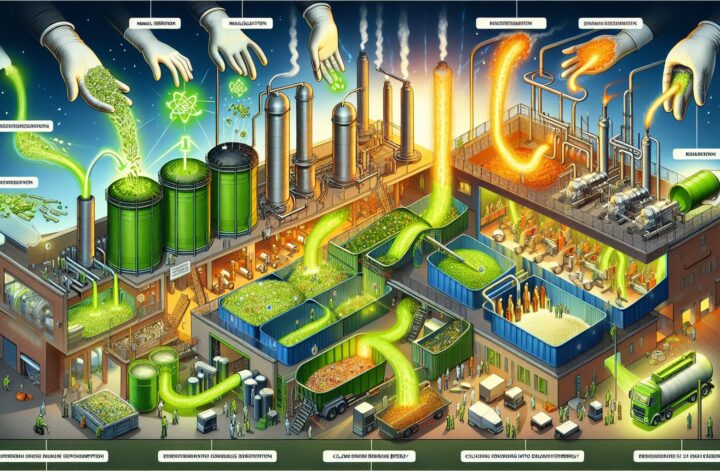
Anaerobic digestion is a complex series of processes in which microorganisms break down organic material in conditions devoid of oxygen. The organic waste undergoes different stages: hydrolysis, acidogenesis, acetogenesis, and methanogenesis; resulting in the production of biogas—a combination of methane and carbon dioxide—, and digestate, an organic material which can be used as a fertilizer^2^.
Anaerobic Digestion: A Closer Look
The stages of anaerobic digestion are complex and interconnected.
Hydrolysis
In the first phase, hydrolysis, bacteria breaks down the complex organic materials into simple sugars, amino acids, and fatty acids.
Acidogenesis
In acidogenesis, the simple molecules formed are then converted into fatty acids, alcohol, carbon dioxide, hydrogen, and other byproducts.
Acetogenesis
Acetogenesis is when the products of acidogenesis are digested by acetogens to produce more acids, more carbon dioxide, and more hydrogen.
Methanogenesis
The final phase, methanogenesis, sees the formation of methane by methanogens, along with an additional amount of carbon dioxide.
The biogas produced by anaerobic digestion comprises of about 60% methane and 40% carbon dioxide, making it a potential source of renewable energy^3^. The digestate can be used as a soil conditioner.

The Future of Organic Waste Treatment
Anaerobic digestion offers an excellent opportunity for the sustainable treatment of organic waste. Not only does it reduce waste volume and greenhouse gas emissions, but it also generates renewable energy and creates value-added products.
There are several strategies to improve the efficiency of anaerobic digestion. These include process optimization, implementing high-rate digesters, and co-digestion, where different types of wastes are digested together to increase biogas yield.
It is also crucial to manage potential inhibitors of anaerobic digestion, like ammonia and sulfide toxicity, and ensure an adequate supply of trace elements.
Conclusion
It is clear that organic waste treatment, particularly through anaerobic digestion, is a promising strategy towards developing a sustainable and clean environment. The increasing emphasis on renewable energy and waste reduction adds momentum to improve and expand this technology.
Through continuous research and development, it is hoped that the challenges surrounding the optimization of anaerobic digestion, such as dealing with toxic elements and improving the biogas yield, will be addressed effectively.
Efficient organic waste treatment is key to an environmentally sustainable future. Let us all contribute to it.

References
^1^: World Bank. What a Waste: An Updated Look into the Future of Solid Waste Management. 2018.
^2^: Ward, A. J., Hobbs, P. J., Holliman, P. J., & Jones, D. L. (2008). Optimisation of the anaerobic digestion of agricultural resources. Bioresource technology, 99(17), 7928-7940.
^3^: Angelidaki I, Ellegaard L. Codigestion of manure and organic wastes in centralized biogas plants. Appl Biochem Biotechnol. 2003;109:95–105.