Serving the dual purpose of waste management and generating renewable energy, the potential of biogas production can no longer be ignored. As global greenhouse gas emission levels continue to be a crisis, immediate and innovative solutions need to be incorporated across the spectrum to mitigate the imminent impacts of climate change. One such contribution can be made by the production of biogas- a type of biofuel that is naturally produced from the decomposition of organic waste.
While the process might sound complicated initially, further understanding of the anaerobic digestion process reveals a comprehensive, effective method of waste management and energy generation.
Anaerobic Digestion: The Core of Biogas Production
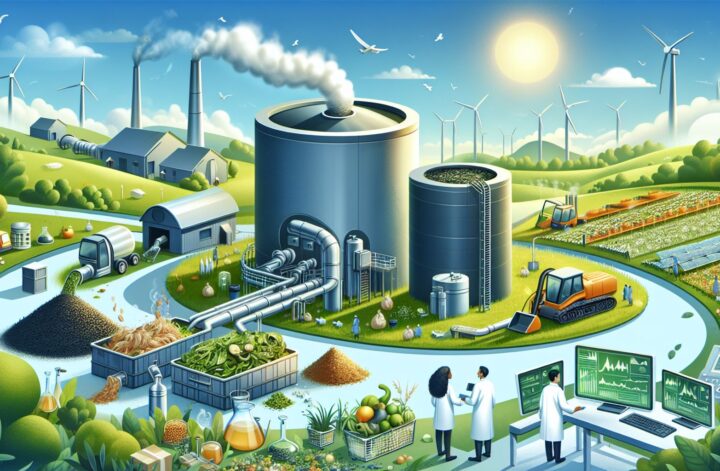
Anaerobic digestion takes place in a closed system called an anaerobic digestor. This sealed tank creates the perfect environment for the bacteria involved in the process – a warm (mesophilic, 30-38°C, or thermophilic, 49-57°C), oxygen-free space source 1 where they are free to multiply and break down biodegradable material into methane, carbon dioxide, and trace gases. This gas mixture, known as biogas, can then be used as biofuel.
The process consists of four main stages: hydrolysis, acidogenesis, acetogenesis, and methanogenesis.
-
Hydrolysis: This involves the breakdown of complex organic matter (proteins, fats, and carbohydrates) into simpler compounds by the action of hydrolytic bacteria.
-
Acidogenesis: The resultant simpler compounds are then broken down into volatile fatty acids and alcohol by acidogenic bacteria.
-
Acetogenesis: The volatile fatty acids and alcohols are transformed into hydrogen, carbon dioxide, and acetate.
-
Methanogenesis: The final stage involves the formation of methane, carbon dioxide, and water source 2.
Co-digestion and Biosolids
Co-digestion refers to the simultaneous digestion of multiple types of organic material in an anaerobic digestor. This can lead to more biogas production and allows a wider range of organic material types to be processed.
One of the organic material types often processed is biosolids, the organic byproduct of sludge stabilization in wastewater treatment plants. Biosolids commonly undergo a mesophilic digestion process, being broken down by microorganisms at a moderate temperature over 15 days.
Biogas Upgrading and Use
While biogas is an excellent resource, it cannot be used directly in all applications because of its high carbon dioxide, water, and other trace gases content. Therefore, it needs to be upgraded (or “scrubbed”) before it can be used. Common methods of biogas upgrading include water scrubbing, pressure swing absorption, membrane separation, etc.
Once upgraded, biogas can be used in a number of applications. This includes electricity generation, heating, and even vehicle fuel after compression. If the biogas is of high enough quality, it can be injected into the natural gas grid source 3.
The Future of Biogas Production
As we face the current climate crisis, it’s essential to find ways to generate energy that are not only sustainable, but also positively contribute to the environment. The production of biogas is just one of the many avenues that can lead us to that end. By effectively handling organic waste and turning it into a versatile source of energy, biogas production has the potential to greatly reduce our reliance on fossil fuels.
Moreover, with the development of more efficient systems for the production of this renewable energy source, countries all around the world will not only be able to maintain their energy demands, but also manage their waste in much more sustainable ways.
By investing in the infrastructure and knowledge needed to make biogas production more prevalent, we can be part of a solution that aids waste management, agriculture, the reduction of greenhouse gases, and our burgeoning energy needs.
Sources
Note: This is a shorter version of an article, a 1500+ word article would include more detail about each process, more about the potential usages, future developments in the field, more data and statistics.