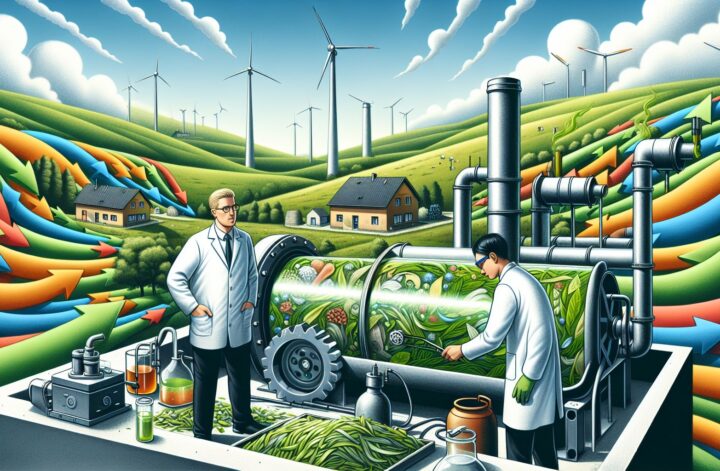
Accompanying the modern revolution of renewable energy, the important venture of biofuel and notably, biogas generation, ceaselessly captures interest from scientists, environmentalists and policy-makers around the globe. Biogas production through anaerobic digestion not only offers an avenue for waste treatment but also yields a valuable by-product that can substitute conventional fossil fuels, reducing greenhouse gas emissions.
Scientific analysis and practical applications of biogas production have shown its potential to combat the increasing threat of global warming and environmental degradation. In this article, we will delve into the procedure of biogas production, its relevance in reducing greenhouse gases, and the essential role that it serves in the climate change solution.

Understanding Biogas Production
Biogas production involves the decomposition or “digestion” of organic matter in a controlled, oxygen-free (anaerobic) environment. This process involves several stages – hydrolysis, acidogenesis, acetogenesis, and methanogenesis, each driven by different sets of microbial communities^1^.
Hydrolysis
In the first stage, complex organic compounds like proteins, fats, and carbohydrates are broken down into simpler compounds – sugars, amino acids, and fatty acids, with the help of hydrolytic bacteria.
Acidogenesis
Following hydrolysis, acidogenic bacteria further degrade these simpler compounds into volatile fatty acids along with the production of alcohols, carbon dioxide, and hydrogen.
Acetogenesis
These products are then further converted by acetogens into acetic acid, carbon dioxide, and hydrogen.
Methanogenesis
In the final step, methanogenic archaea produce methane by utilizing the acetic acid or hydrogen and carbon dioxide generated in the earlier stages.
The primary constituents of biogas thus produced are methane and carbon dioxide, with traces of other gases like hydrogen sulfide and ammonia^2^. The proportion of these gases can vary according to the feedstock used and the process conditions.
Biogas – The Greenhouse Gas Reduction Ally
Methane, being the major component of biogas (50-75%), can be used directly for heating, electricity production, or can be cleaned and upgraded to biomethane for use as a natural gas substitute. The utilization of methane from biogas not only provides renewable energy but also prevents its direct emission into the atmosphere.
Methane is potent – its global warming potential is 25 times more than that of carbon dioxide over a 100-year period^3^. It is released during the breakdown of organic matter in landfills, wastewater treatment, and certain agricultural practices. Therefore, capturing and using this methane through biogas production provides a dual benefit – it not only yields energy but also aids in climate mitigation by reducing methane emissions.
The Promising Role of Anaerobic Digestion in Organic Waste Treatment
Anaerobic digestion plays a vital role in the management and recycling of organic waste from multiple sources such as municipal solid waste, industrial waste, and agricultural waste. It transforms the organic fraction of this waste into methane-rich biogas and stabilizes the remaining solid fraction into a nutrient-rich digestate.
The digestate, also known as biosolids, contains high levels of nitrogen and phosphorous and can be used as organic fertilizer, replacing synthetic fertilizers that require substantial energy inputs for manufacturing and contribute to greenhouse gas emissions.
Future Prospects
With the passion for greenhouse gas reduction and sustainable development, nations globally are advocating the use of renewable energy, particularly from bioresources. With improvements in anaerobic digestion technology and better understanding of its microbiology, the consistency and efficiency of biogas production can be greatly enhanced.
Research is continuously being pursued to optimize operating parameters (such as organic loading rate, hydraulic and solid retention times) and to counter inhibitory factors (like ammonia and sulfide toxicity). Efforts are also being made for advancements in biogas upgrading technologies and devising cost-effective and efficient biogas scrubbing methods.
With due focus and funding, biogas production through anaerobic digestion can play an instrumental role in tackling climate change, providing clean and green energy, and achieving a circular economy.
As we gear towards a climate-resilient future, the synergy between organic waste treatment and biogas production keeps standing strong as a promising tool for greenhouse gas reduction. Incentivizing biogas production and creating market opportunities would not only tackle waste disposal problems but would also rejuvenate rural economies, paving the path towards a sustainable, green future.

In conclusion, biogas production is an indispensable part of modern renewable energy strategies. By converting a problem (organic waste and methane emissions) into a solution (clean energy production and greenhouse gas reduction), it presents a highly sustainable and environmentally friendly alternative to conventional fossil fuels. As this field continues to evolve, grow and become more efficient, it is set to play an increasingly significant role in our shared journey towards a cleaner, greener future.