The production of biogas through the processing of organic waste is a crucial element in current attempts to mitigate climate change and move towards a more sustainable and resilient energy system. At the same time, it presents solutions for managing organic waste, reducing greenhouse gas emissions, and even generating economic benefits. This article explores the intricacies of biogas production, its relevance, challenges, and future prospects.
What is Biogas and How is It Produced?
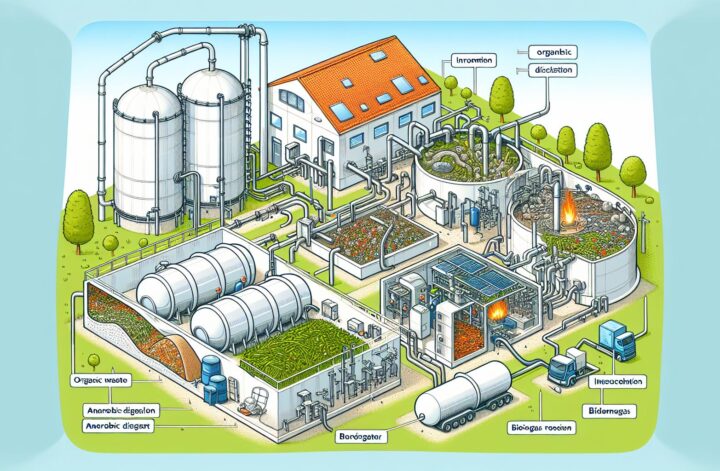
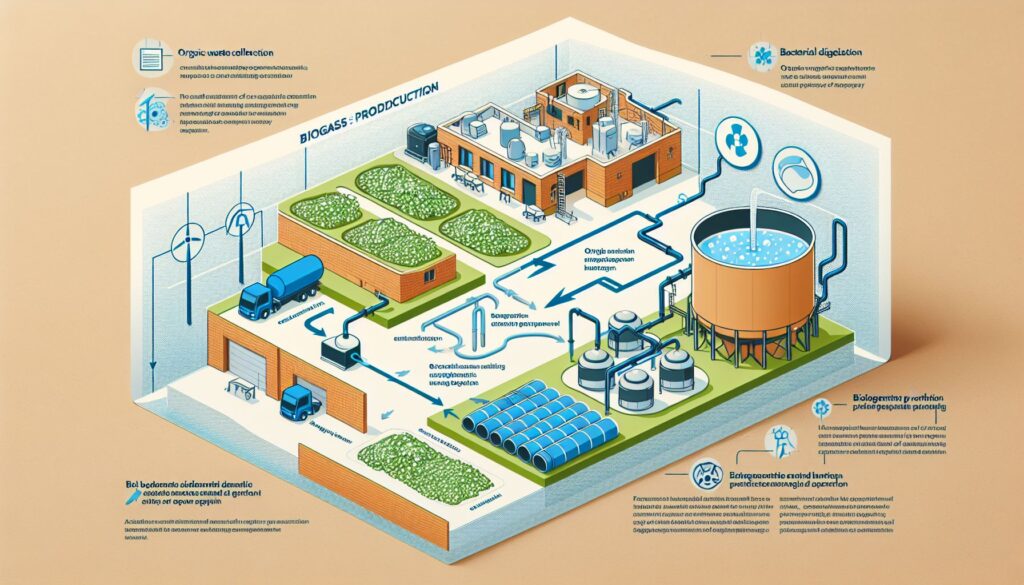
Biogas is a type of biofuel that primarily consists of methane and carbon dioxide. It’s generated by microorganisms during the process of biodegradation when oxygen is absent or in scarce supply—a process known as anaerobic digestion[^1^].
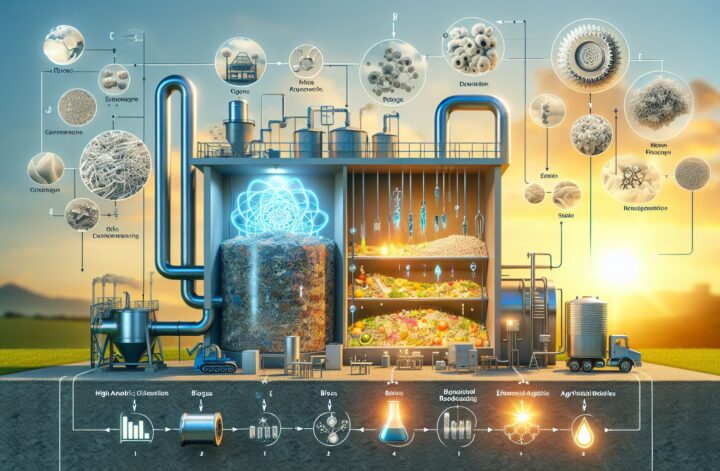
Organic material such as agricultural waste (crop residues, animal manure), food waste, sewage sludge, and energy crops are used in anaerobic digestion. It’s a four-stage process that consists of hydrolysis, acidogenesis, acetogenesis, and methanogenesis.
In hydrolysis, organic, solid materials are broken down into soluble derivatives. Subsequent to this, acidogenesis converts the soluble derivatives into volatile fatty acids and alcohol. Acetogenesis is the third stage, which further breaks down the products of acidogenesis into hydrogen, carbon dioxide, and acetate. Finally, in methanogenesis, methane is produced by the conversion of acetate and hydrogen[^2^].
During the anaerobic digestion process, a semi-liquid residue known as digestate is also generated, which is a nutrient-rich substance and can be used as fertilizer.
Biogas as a Renewable Resource
Biogas has been hailed as a promising renewable energy source. It’s squarely at the crossroads of two increasingly pressing challenges: clean energy provision and waste management. The comprehensive treatment of organic waste vastly reduces the emission of greenhouse gases. Simultaneously, the production of biogas aids in the switch towards decarbonized, renewable energy sources.
Biogas can be combusted directly for cooking, heating, and power generation. Upgraded to biomethane — by removing CO2 and impurities — it can substitute natural gas in cooking, heating, and vehicle fuels[^3^] or be fed into the natural gas grid. The use of biogas in combined heat and power (CHP) units can generate a constant supply of electricity and heat.
Challenges and Future Directions
Yet, challenges persist. An efficient biogas plant requires precise control of all process parameters, and any disturbances like temperature, pH level change, or toxic substances can significantly decrease the biogas yield or even halt the production process. For example, ammonia and sulfides can be toxic to methanogenic bacteria under certain conditions. Additionally, anaerobic digestion microbiology is complex and requires a balance among different microbial populations and their syntrophic relationships[^2^].
Moreover, biogas facilities still represent a significant financial investment. Costs come from plant construction, energy crops (if used), and digestate management. However, the cost can be offset by the economic benefits derived from selling excess energy back to the grid and utilizing digestate as a natural fertilizer.
Investments in research and development, training of skilled personnel, establishment of supporting policies, and the efficient use of available resources can greatly overcome these challenges. As we move forward, it will be essential to make biogas production more widespread and efficient, creating a virtuous circle of waste reduction, energy production, and economic advantage.
Conclusion
Biogas production is a key part of a sustainable future. Besides being a renewable energy source, it offers a solution for organic waste treatment, potentially creating a circular economy. While challenges exist, with the right investment and innovation, biogas could become an important player in the future energy landscape.
[^1^]: Anaerobic Digestion – Biogas Production
[^2^]: Anaerobic Digestion: Basic Biology and Process Control Principles
[^3^]: The use of biogas in the circular economy