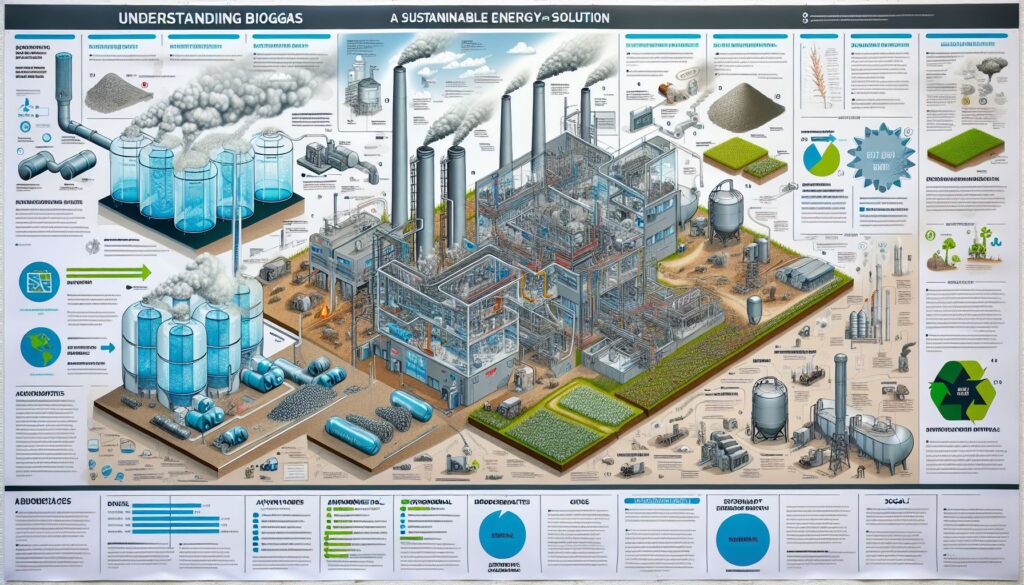

Biogas production is becoming an increasingly significant player in the sector of environmentally sustainable energy sources. A method of producing energy that utilizes waste, it is not just a form of renewable energy but also contributes to waste reduction and management. Its process and implications in the modern world have several positive impacts on the environment, with the potential to combat several environmental crises we are facing. This article will explore biogas production in depth, understanding it from its process to its benefits and challenges.
The Basics of Biogas Production
Before we delve any deeper, let’s first understand what biogas is. Simply put, biogas is a type of biofuel that is naturally produced from the decomposition of organic waste. The abbreviation ‘bio’ refers to ‘biological’, hence it is sourced directly from material that is organic, such as plant and animal matter[^1^].
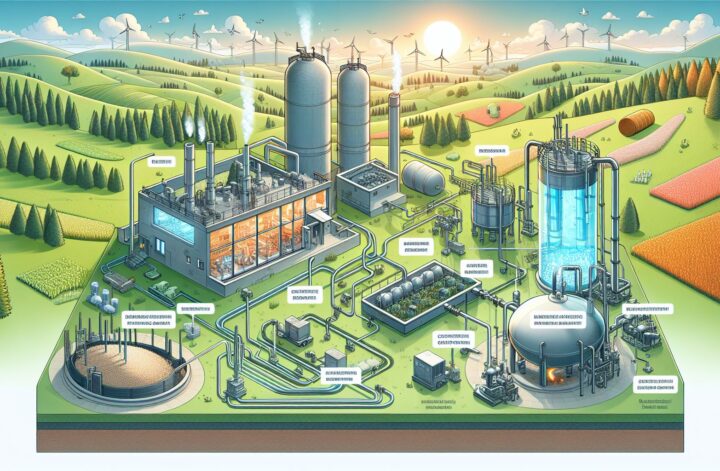
Biogas production takes place through a process called anaerobic digestion. Anaerobic digestion refers to the process by which microorganisms break down organic material in the absence of oxygen. This process occurs in an anaerobic digester or a biogas reactor under controlled conditions[^2^].
Physically speaking, a biogas plant is a sealed container, filled with organic matter and naturally occurring bacteria. The bacteria break down the organic matter inside the plant, producing biogas and a nutrient-rich residue, also known as digestate, which can be used as fertilizer[^3^].
Anaerobic Digester Design
The design of an anaerobic digester plays a crucial role in the efficiency and effectiveness of biogas production. The working temperature inside an anaerobic digester generally falls within two categories: mesophilic, operating at temperatures around 20 to 45 degrees Celsius, and thermophilic, operating at temperatures around 50 to 60 degrees Celsius[^1^].
The length of time that the organic waste stays in the digester, termed the hydraulic retention time (HRT), and solid retention time (SRT) can vary but is usually 20-30 days. The volume of organic material added to the digester per day against the volume of the digester, the organic loading rate (OLR), also significantly influences the production of biogas[^1^].
The Role of Microbiology in Biogas Production
One of the most important aspects of biogas production is the role microbiology plays. There are several stages of microbial breakdown of the organic waste resulting in biogas, mainly comprised of methane and carbon dioxide[^2^].
These stages, consisting of hydrolysis, acidogenesis, acetogenesis, and methanogenesis, involve various specialized groups of microorganisms working in syntrophic (mutually beneficial) relationships to produce biogas. However, the biogas production process may be inhibited due to factors such as high ammonia or sulfide contents, or lack of essential trace elements[^2^].
Therefore, ensuring favorable conditions for the collection of microorganisms in the digester, which in turn, promotes good biogas production, is vitally important.
After-Production Processing: Biogas Upgrading and Scrubbing
Once the biogas is produced, it often undergoes a process of upgrading and scrubbing. This process removes impurities and increases the proportion of methane, improving the quality and versatility of the resulting biogas[^3^].
The process of upgrading and scrubbing leads to a gas that can be used not only for heating and power generation, but also as vehicle fuel and in rare cases, supplied to the gas grid[^3^].
Potential Benefits and Challenges
The biogas production process holds several significant benefits. Firstly, it is an efficient method of treating and managing organic waste. Secondly, it helps mitigate climate change by capturing and utilizing methane, a potent greenhouse gas. Furthermore, the digestate produced in the process can be used as an effective organic fertilizer[^1^].
Conversely, operational complications such as inhibition due to high ammonia or sulfide levels, difficulty in processing feedstocks with high fibrous content, and the economic viability of the plants given the fluctuations in energy pricing pose challenges.
In Conclusion
Biogas production is an intriguing and potentially impactful solution to our growing energy and environmental needs. Understanding the variables of its production and appreciating its benefits and limitations is the first step towards embracing this method as a sustainable alternative to the conventional energy sources that have long dominated the landscape.
[^1^]: Kraemer, J.T., & Bagley, D.M. (2007). Supersize me: The benefits of large-scale Anaerobic Digestion. Resource Magazine, 14(6), 6-9.
[^2^]: Appels, L., Baeyens, J., Degreve, J., & Dewil, R. (2008). Principles and potential of the anaerobic digestion of waste-activated sludge. Progress in Energy and Combustion Science, 34(6), 755-781.
[^3^]: US Environmental Protection Agency. (2012). Wastes – Resource Conservation – Common Wastes & Materials – Anaerobic Digestion. Retrieved from www.epa.gov/anaerobic-digestion.