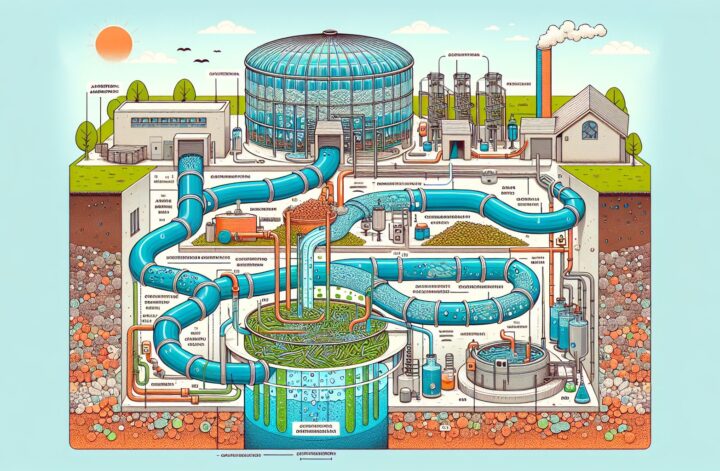
Biogas is, essentially, a type of biofuel that is naturally generated from the decomposition of organic waste. When organic matter like plants, animal waste, and even kitchen waste decompose, they give off a mixture of gases, primarily methane and carbon dioxide. In this article, we will discuss the benefits, challenges, and processes related to biogas production.
What is Biogas?
Biogas is a type of biofuel produced by the breakdown of organic matter in the absence of oxygen. The process, known as anaerobic digestion, occurs within a structure called an ‘anaerobic digester’ or a ‘biogas plant’.
The main elements of biogas are methane (CH4) and carbon dioxide (CO2), though it also contains small amounts of other gases such as hydrogen, nitrogen, and traces of other gases. The exact composition of biogas can vary depending on the organic matter being processed. Methane, however, is a valuable gas because it is a strong greenhouse gas with a global warming potential 24 times greater than carbon dioxide (1).
Biogas Production Process
The production of biogas involves four main stages: hydrolysis, acidogenesis, acetogenesis, and methanogenesis. This is a complex process involving various types of bacteria, each performing a specific function, which is why maintaining the right growth conditions for these bacteria is essential for the efficient production of biogas.
In the first stage, hydrolysis, complex organic matter is broken down into simpler organic matter like sugars, amino acids and fatty acids. In the acidogenesis stage, further break down occurs, resulting in volatile fatty acids and additional ammonia, carbon dioxide, and hydrogen sulfide. The third stage, acetogenesis, involves the formation of acetic acid, additional ammonia and hydrogen from the volatile fatty acids produced in the previous stage. Finally, during methanogenesis, methane, carbon dioxide and water are produced from the acetic acid, hydrogen, and other products (2).
Benefits of Biogas Production
The production of biogas presents numerous benefits spanning environmental, economic, and social aspects.
Environmental Benefits
-
Renewable Source of Energy: Biogas production involves recycling waste materials that are otherwise dumped in landfills, burnt openly or dumped into water bodies. With the world grappling with the adverse effects of climate change, the need for renewable sources of energy has never been greater.
-
Reduction of Greenhouse Gas Emissions: Methane, a potent greenhouse gas, is a major contributor to global warming. By capturing this gas as a byproduct of the anaerobic digestion process, biogas production helps to significantly reduce greenhouse gas emissions.
-
Sludge Stabilization: The sludge produced from wastewater treatment plants is also treated and stabilized during anaerobic digestion. This reduces its volume, eliminates pathogens, and makes it easier to handle and dispose of.
-
Reduced Reliance on Fossil Fuels: Fossil fuels are not only a finite resource but their extraction and use also significantly contribute to environmental degradation. Biogas serves as a sustainable alternative to these non-renewable resources.
Economic Benefits
-
Cost Savings: Biogas can be used as a low-cost fuel in different sectors such as heating, electricity generation, and transportation. It also offers a cost-effective solution for waste management.
-
Employment Generation: The biogas industry creates job opportunities in construction, operation, and maintenance of biogas plants.
-
Fertilizer Production: The by-product of biogas production, known as ‘digestate’, is rich in nutrients and can be used as a fertilizer.
Social Benefits
-
Improved Health: Open burning of waste materials releases harmful gases that can cause health problems. By treating waste anaerobically, this problem is significantly mitigated.
-
Promotion of Sustainable Practices: The biogas production process encourages efficient waste management practices which align with the concept of sustainable development.
Challenges and Sustainability Factors
For biogas exploitation to be sustainable, its production process must be considerate of its environmental impact while also being economically viable. Production should not cause biodiversity loss, water and soil pollution, and negative socio-economic impacts. These potential concerns can be mitigated by locating operations in degraded or marginal lands, choosing feedstocks that do not compete with food crops, and maintaining good environmental governance (1).
Additionally, understanding the microbiology of anaerobic digestion and addressing possible inhibitions are crucial for the continuous improvement of the process efficiency. These include avoiding ammonia and sulfide toxicity and ensuring trace element supplementation when required.
Conclusion
Biogas production stands at a significant intersection between waste management, renewable energy sources, and sustainable agriculture. It offers a promising alternative to conventional fossil fuels and plays an important role in our transition towards low-carbon economies and sustainable societies. Its benefits are plentiful, from reducing greenhouse gas emissions, generating a renewable source of energy, to providing a cheaper substitute for traditional fossil fuels. However, to realize its full potential, further investment and research in the sector are essential.
Sources
- Ahamed, A., & Yin, K. (2017). An overview of biogas production and utilization at full-scale wastewater treatment plants (WWTPs) in the United States: Challenges and opportunities towards energy-neutral WWTPs. Renewable and Sustainable Energy Reviews, 75, 1131-1145. Link.
- Stein, W. (2008). Biogas from waste and renewable resources. Wiley-VCH. Link.
- Weiland, P. (2010). Biogas production: current state and perspectives. Applied Microbiology and Biotechnology, 85(4), 849-860. Link.