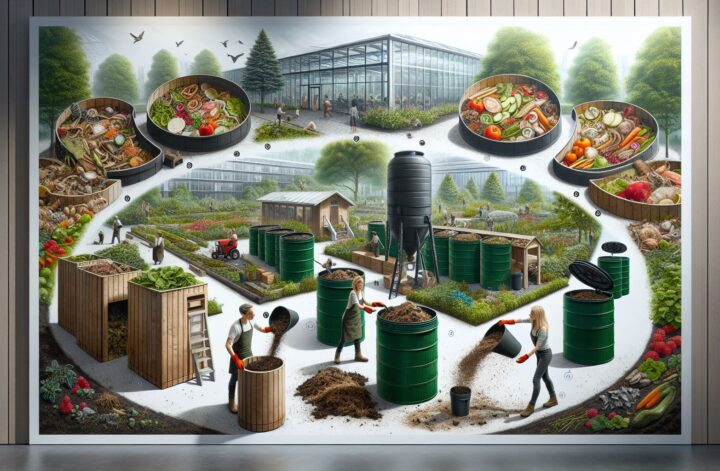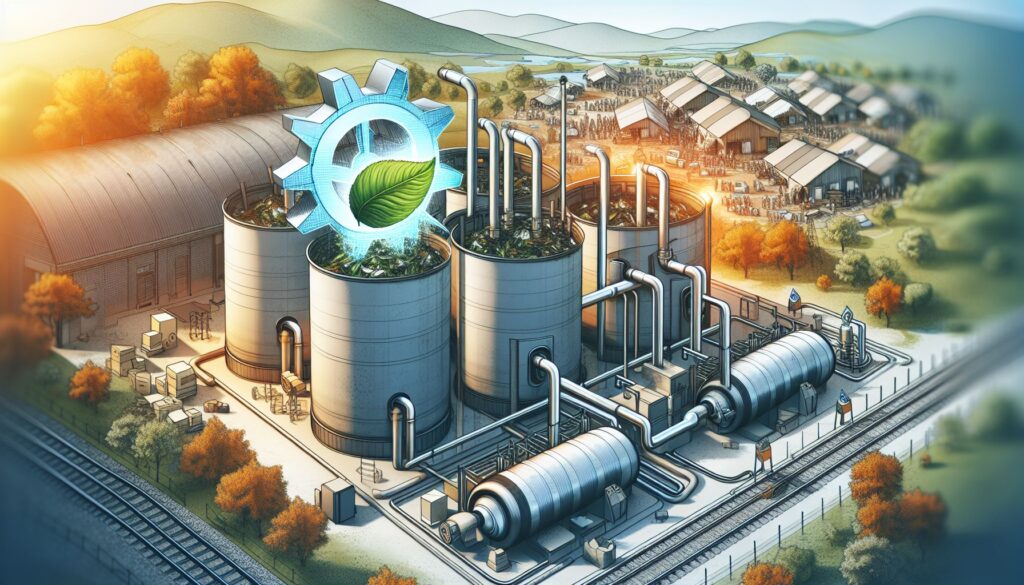
More than ever, society is realizing that waste doesn’t have to be wasted. Across the globe, a paradigm shift is evolving as we move towards embracing sustainable practices. In the energy space, biogas production emerges as a groundbreaking approach that not only addresses waste management issues but also provides a renewable energy source. Biogas production is a process that creates a mixture of gases (predominantly methane and carbon dioxide) produced by the breakdown of organic matter in the absence of oxygen, a process known as anaerobic digestion[^1^].
Understanding Biogas Production
The production of biogas is reliant on organic waste, which can be sourced from several places, including households, farms, and industrial processes. This organic waste contains methane, which is about 25 times more potent as a heat-trapping gas than carbon dioxide.
Anaerobic digestion, the central process of biogasis production, is a series of biological processes in which microorganisms break down biodegradable material in the absence of oxygen[^2^]. It occurs in four key stages: hydrolysis, acidogenesis, acetogenesis, and methanogenesis, each having a unique role in processing the organic waste and ultimately resulting in the production of biogas with methane, CO2, and minor amounts of other gases.
The Process of Biogas Production
The organic waste used in biogas production must first undergo a pre-treatment process, which can include sorting, sieving, and shredding. This is to ensure any non-organic material is removed and the remaining organic material is in a suitable form for digestion. Once this is done, the organic waste is mixed with water and introduced into the anaerobic digester.
In the first stage, hydrolysis, larger organic molecules are broken down into smaller ones. Proteins are converted into amino acids, carbohydrates into simple sugars, and fats into fatty acids. This step is crucial as it makes the nutrients available for the bacteria in the subsequent stages[^3^].
During acidogenesis, the simple molecules from the previous stage are further broken down into volatile fatty acids. Additionally, ammonia, carbon dioxide, and hydrogen sulfide are produced. In the next phase, acetogenesis, methanogens convert these products into acetic acid, carbon dioxide, and hydrogen.
The final phase, methanogenesis, sees methanogens converting the products of the acetogenic phase into methane, carbon dioxide, and water. This mixture forms the biogas. Once the biogas is harvested, it can be used as a renewable energy source, while the remaining solids, called digestate, can be used as a nutrient-rich fertilizer[^3^].
The Multiple Benefits of Biogas Production
There are several benefits to utilizing biogas production. Firstly, it addresses the pressing issue of waste management. Interestingly, not all waste ends up in landfills. A significant amount of organic waste can be utilized in biogas plants. This not only reduces the overall amount of waste to be managed but also decreases the volume of methane released into the atmosphere from decomposing organic matter.
Secondly, biogas serves as a renewable energy source. Unlike other forms of renewable energy, biogas can be produced continually, regardless of weather conditions. Due to its methane content, biogas burns cleanly and can be used for heating, electricity generation, and as a fuel for vehicles.
Finally, the process leaves a nutrient-rich digestate that can be used as fertiliser, which ultimately contributes to the circular economy[^3^].
Obstacles and Opportunities
Though biogas production presents a multitude of benefits, some challenges hinder widespread adoption. These revolve around issues with digesters, including operational difficulties, feedstock issues, inhibitory substances, and costly equipment. However, advancements in technology and improved understanding of anaerobic digestion microbiology promise to overcome these challenges[^3^].
Moreover, with burgeoning interest in sustainable practices and renewable energy, the future looks bright for biogas production. The increasing amount of organic waste being generated presents plentiful feedstock, driving the demand for more biogas plants. Biogas production’s potential to reduce greenhouse gas emissions and its ability to turn waste into valuable resources are increasingly being recognized across the world. We have only just begun tapping into its potential, and every ton of waste converted into biogas is a step in the right direction.
[^1^]: U.S. Environmental Protection Agency
[^2^]: National Renewable Energy Laboratory
[^3^]: Bioenergy Association of New Zealand