As the global population continues to increase, so too does the need for energy. However, traditional fossil fuel resources are not only finite but also harmful to the environment due to the emission of greenhouse gases. As a result, more sustainable solutions are needed. One such solution is biogas. Biogas production through anaerobic digestion is growing in popularity as a sustainable source of renewable energy. In this article, we are going to discuss biogas production, its benefits, and how we can make the most of this sustainable form of energy.
What is Biogas?
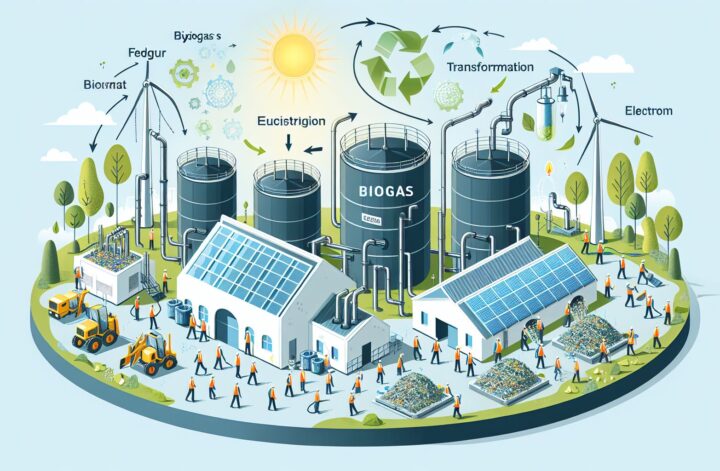
Biogas is a type of renewable energy produced by the anaerobic digestion of organic material by bacteria. This organic material, also known as biomass, can include a multitude of waste types ranging from farm waste, sewage, and municipal solid waste, to food waste, and green waste. The resultant biogas is primarily composed of methane (CH₄) and carbon dioxide (CO₂), but also contains varying amounts of water vapor and other trace gases[^1^].
How is Biogas Produced?
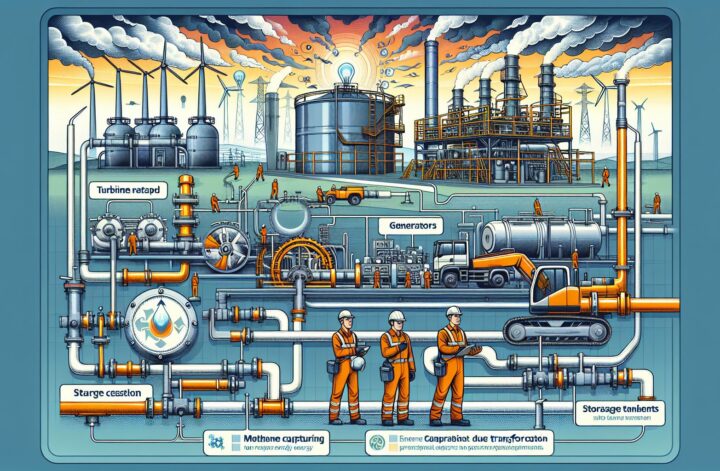
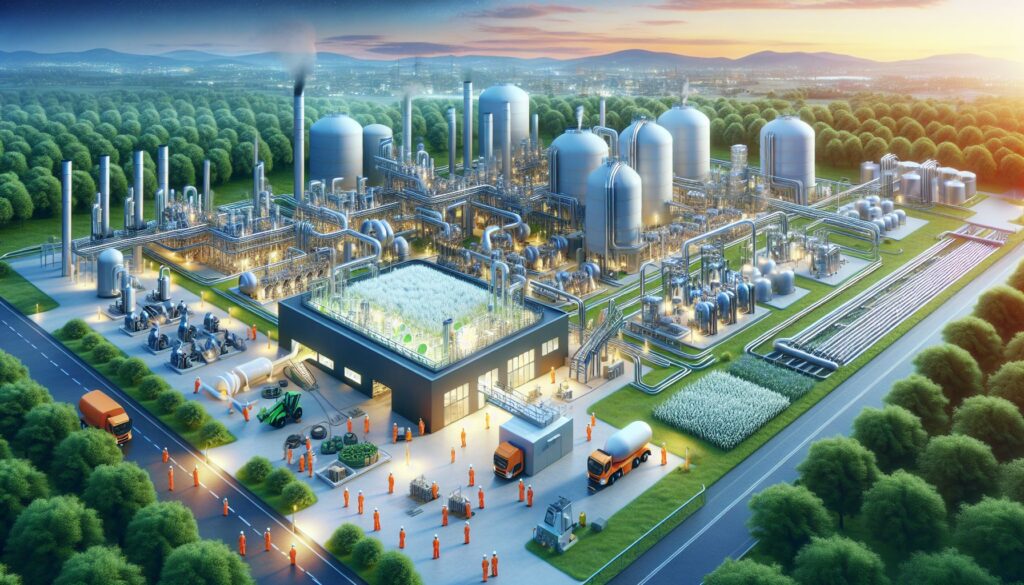
Biogas production takes place in an anaerobic digester – a sealed, heated container where bacteria break down organic material in an oxygen-free environment. The anaerobic digestion process can be divided into four primary stages: hydrolysis, fermentation (acidogenesis), acetogenesis, and methanogenesis[^2^].
1. Hydrolysis – In this stage, complex organic matter like proteins, fats, and carbohydrates are broken down into simpler components like amino acids, fatty acids, and sugars.
2. Fermentation (Acidogenesis) – During acidogenesis, the simple compounds generated in hydrolysis are converted into volatile fatty acids, alcohol, hydrogen, and carbon dioxide.
3. Acetogenesis – This stage sees those volatile fatty acids transformed into acetic acid, alongside additional hydrogen and carbon dioxide.
4. Methanogenesis – Lastly, methanogenic bacteria convert the acetic acid into methane and carbon dioxide – the primary constituents of biogas.
Benefits of Biogas Production
So why is biogas increasingly being viewed as a viable and sustainable solution? Here are some of the core benefits associated with biogas production:
1. Waste Management – Biogas production utilizes organic waste, turning a problematic waste product into a viable energy resource. This process significantly aids waste management efforts in urban and rural environments alike.
2. Produces Renewable Energy – As long as we produce organic waste, we can produce biogas. In this way, biogas marks a sustainable and renewable source of energy.
3. Reduces Greenhouse Gas Emissions – By converting organic waste into biogas, we are actively reducing the volume of methane released into the atmosphere. As methane has a global warming potential 28 times greater than that of carbon dioxide, this is a significant environmental benefit[^3^].
4. Creates High-Quality Fertilizer – The by-product of biogas production, known as digestate, can be used as a high-quality fertilizer – further showcasing the sustainable potential of this process.
Future of Biogas Production
While biogas production is not a new concept, recent advancements in technology have made it increasingly efficient and cost-effective. For instance, high-rate anaerobic digestion allows for enhanced decomposition and an increased rate of biogas production, creating a promising avenue for future research and implementation.
Moreover, the biogas generated is no longer restricted to the direct combustion. Technologies surrounding biogas upgrading – the process of refining raw biogas to biomethane, which can be injected into natural gas grids – and combined heat and power (CHP) generation are proving to be game-changers.
Conclusion
As we continue to navigate the complex landscape of renewable energy, biogas production is emerging as an effective solution. It embodies key circular economy principles, turning waste resources into energy and fertilizer, all while mitigating harmful greenhouse gas emissions.
Boosting biogas production can serve to provide a more sustainable future, where energy demand is met without compromising environmental integrity or the prosperity of future generations. Therefore, investing in research, development and infrastructure for biogas production is not just prudent; it is absolutely vital.
References
[^1^]: “Biogas Energy,” National Geographic. [Online]. Available: https://www.nationalgeographic.org/encyclopedia/biogas/.
[^2^]: “How Does Anaerobic Digestion Work?” The Anaerobic Digestion & Bioresources Association. [Online]. Available: https://adbioresources.org/about-ad/how-does-anaerobic-digestion-work/.
[^3^]: “Methane Emissions,” United States Environmental Protection Agency. [Online]. Available: https://www.epa.gov/ghgemissions/overview-greenhouse-gases#methane.