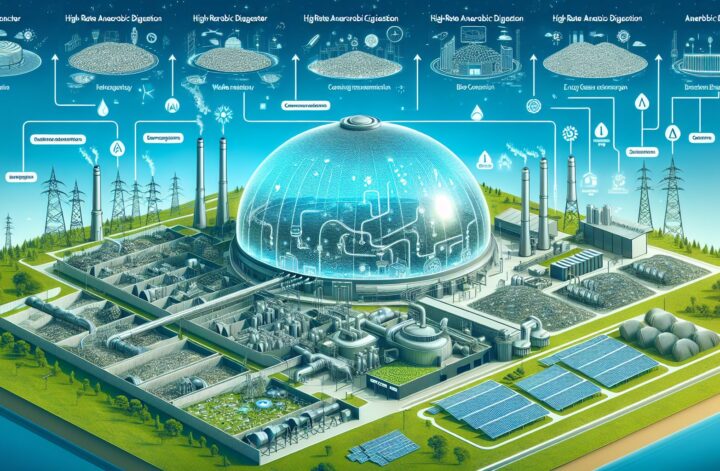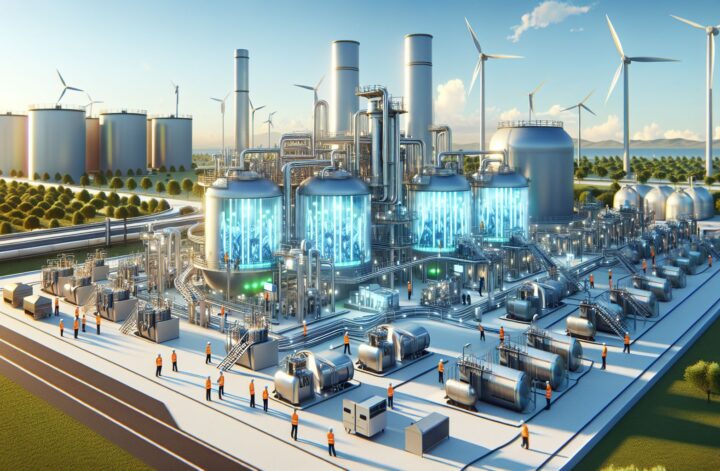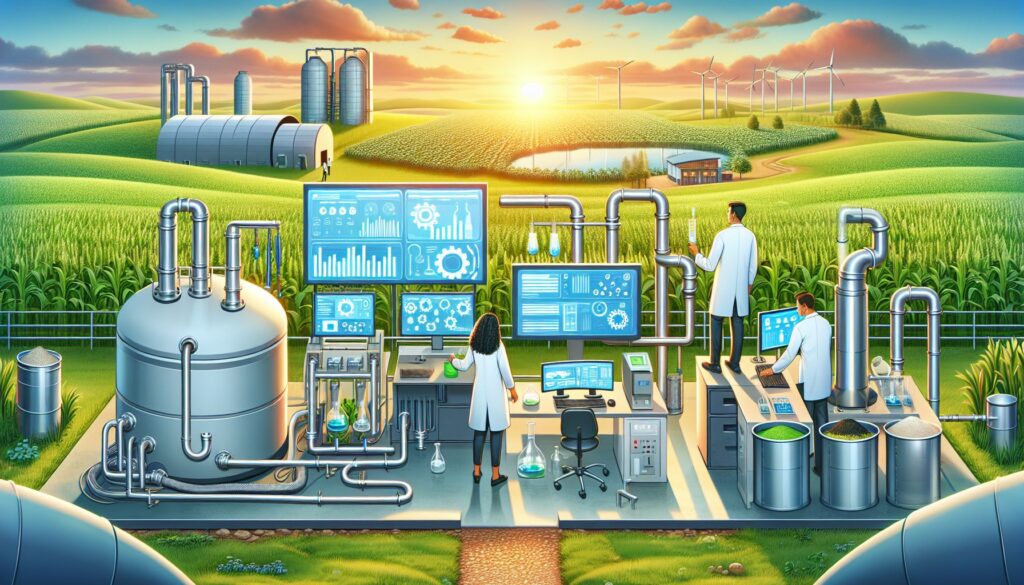
Over recent decades, the urgent need for sustainable and renewable energy sources has been growing increasingly apparent. As we grapple with the adverse effects of climate change, the search for clean energy becomes more critical. In this vein, one hopeful prospect lies in a biofuel known as biogas. It’s a natural byproduct of organic matter decomposition in a process called anaerobic digestion, and it’s becoming a viable solution for energy needs worldwide.
Anaerobic Digestion: The Source of Biogas Production
Anaerobic digestion (AD) is a natural process through which organic matter, like animal waste, food waste, and agricultural residues, breaks down in an oxygen-free environment[^1^]. This process involves a consortium of microorganisms working in synergy through the stages of hydrolysis, acidogenesis, acetogenesis, and methanogenesis. All these stages lead to the production of biogas, a mixture primarily consisting of methane (CH4), carbon dioxide (CO2), and traces of other gases[^2^].
Why Biogas?
The prominence of biogas hinges largely on its environmentally friendly attributes. While the gas produced does contain a high proportion of methane – a potent greenhouse gas – this methane is subsequently harnessed and used as fuel. In other words, the methane in biogas would otherwise be released into the atmosphere if it weren’t captured and utilized. Thus, promoting biogas production can actively aid in our fight against climate change[^3^].
Apart from mitigating the global greenhouse effect, biogas presents other beneficial qualities:
- Renewable energy source: Biogas is considered renewable as its primary source is organic waste, which is continually produced in substantial quantities.
- Waste management solution: The anaerobic digestion process concurrently addresses the issue of high-volume organic waste management. The leftovers of digestion, called digestate, can be used as a soil conditioner, offsetting the need for chemical fertilizers.
- Low Carbon Footprint: Biogas has a very low carbon footprint compared to fossil fuels. The CO2 produced during its combustion is part of a carbon-neutral cycle.
- Versatile applications: Biogas can be used for heating, electricity production, and as a fuel for vehicles after proper upgrading.
Biogas Production and Upgrading
In standard biogas production, the organic matter first undergoes hydrolysis, where long-chain molecules are broken down into simpler ones like sugars, fatty acids, and amino acids. Following this, the process of acidogenesis transforms these simple molecules into organic acids, alcohols, CO2, and hydrogen (H2). Then, during acetogenesis, these intermediate products are converted into acetic acid, CO2, and H2. The final stage methanogenesis leads to the formation of CH4 from the reduction of CO2[^2^].
Biogas produced in conventional anaerobic digesters contains approximately 60-70% CH4 and 30-40% CO2, along with varying amounts of nitrogen, hydrogen sulfide, and other trace gases. Before it can be used as a fuel, biogas must undergo a cleaning process commonly known as upgrading. This process removes the majority of contaminants, ingressing H2S, ammonia, water vapor, and other trace components, leaving behind pure biomethane[^3^].
Future Directions
Biogas production is a versatile system, coordinating with different organic waste types. It can potentially offer an incredible contribution to the global renewable energy status. However, the optimization and widespread adoption of biogas production and its commercial use is not without challenges.
These challenges are primarily associated with the stability of anaerobic digestion, which can be affected by factors such as ammonia toxicity, sulfide toxicity, oligoelements supplementation, inoculum origin, and feedstock characteristics.
Additionally, to maximize the benefit of this inevitable resource, we need advancements in digestate management, biogas upgrading technologies, and storage systems.
In conclusion, increasing biogas utilization is a multipronged solution that combats climate change, addresses waste management problems, and contributes to a sustainable and renewable energy portfolio. As such, it is worthy of further research and development, as well as public and private investment.
[^1^]: Appels, L., Baeyens, J., Degrève, J., & Dewil, R. (2008). Principles and potential of the anaerobic digestion of waste-activated sludge. Progress in energy and combustion science, 34(6), 755-781.
[^2^]: Amigun, B., Sigamoney, R., & von Blottnitz, H. (2008). Commercialisation of biofuel industry in Africa: A review. Renewable and Sustainable Energy Reviews, 12(3), 690-711.
[^3^]: Sosnowski, P., Klepacz-Smółka, A., & Kaczorek, K. (2013). Methane fermentation process as a source of clean sustainable energy and high-quality fertilisers-Efektywność fermentacji metanowej jako źródło czystej energii i wysokiej jakości nawozów. Przemysł Chemiczny, 92(6), 1118-1121.