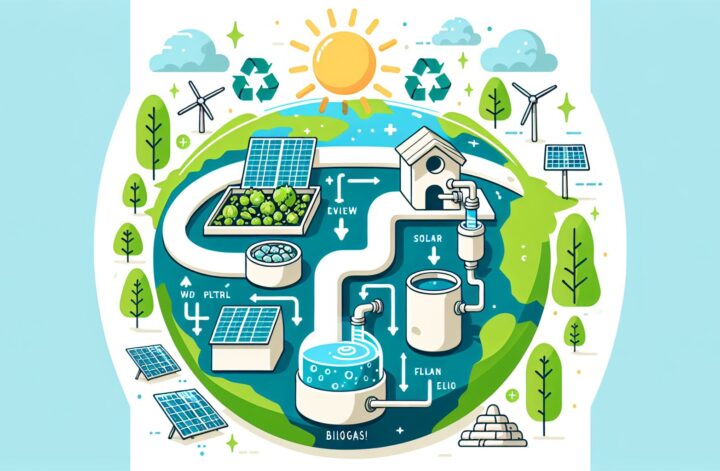
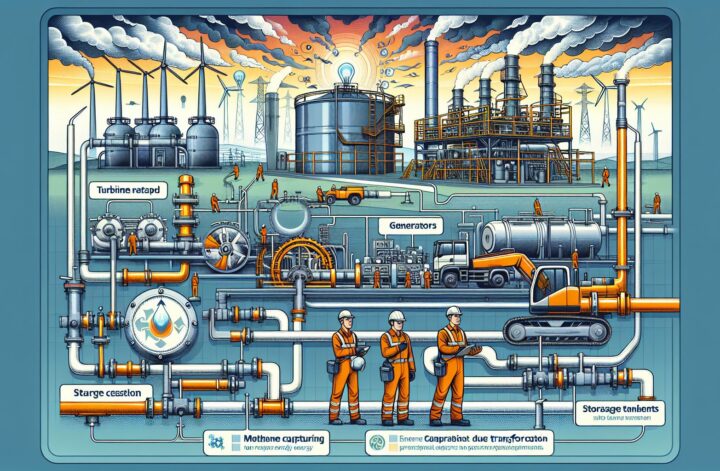
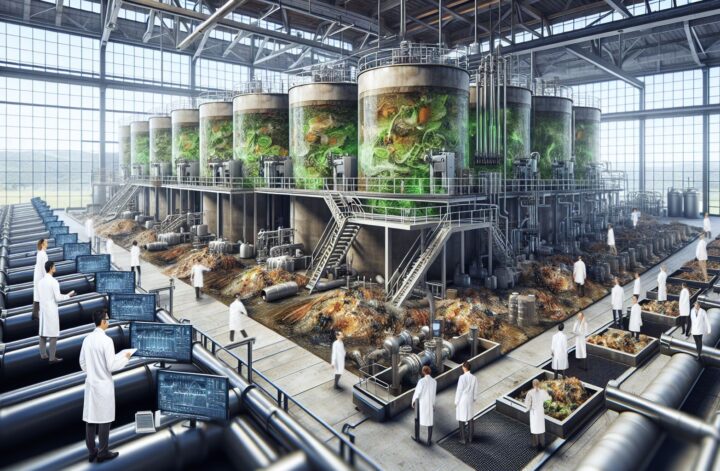
As the international push towards renewable energy sources intensifies, alternative energy sources like solar, wind and hydro power usually gain the most press. However, one lesser-known renewable energy alternative — biogas production — is poised to play a crucial role in our future energy ecosystem.
Biogas, produced from the breakdown of organic waste by bacteria in a process known as anaerobic digestion, is a methane-rich gas that can be used as a fuel source, offering a myriad of benefits. Not only does biogas production divert organic waste from landfills, reducing methane emissions, but it also creates a carbon-neutral energy source that can be used to generate electricity, heat homes, and even fuel vehicles.
What is Biogas?
Bio-gas is a naturally occurring gas that is produced from the breakdown of organic waste material in an environment devoid of oxygen, or an anaerobic environment. The bacteria that act on the waste material break it down into simpler substances, methane and carbon dioxide. Other gases, such as hydrogen sulfide, may also be produced depending on the waste material.
The produced gas can be captured and used in various ways. Gases like methane are highly combustible. If burned, they can produce significant amounts of thermal energy. This property of methane is what makes biogas a viable alternative to traditional fossil fuel energy sources.
How is Biogasis Produced?
Biogas is produced through a process known as anaerobic digestion— a natural process in which organic matter is broken down by bacteria in the absence of oxygen. The process consists of four key stages — hydrolysis, acidogenesis, acetogenesis, and methanogenesis.
-
Hydrolysis: In this step, the complex organic materials are broken down into simpler substances through the action of enzymes. The complex carbohydrates, proteins, and fats are broken down into sugars, amino acids, and fatty acids, respectively.
-
Acidogenesis: After hydrolysis, the new simpler substances are further broken down into volatile fatty acids and alcohols.
-
Acetogenesis: In this stage, the volatile fatty acids (VFAs) and alcohols are converted into acetic acid, carbon dioxide, and hydrogen.
-
Methanogenesis: Finally, bacteria feed on the acetic acid to produce methane, carbon dioxide, and water.
Through anaerobic digestion, approximately 50-75% of the organic material is converted into biogas, making it one of the most efficient ways of harnessing energy from waste material.
Why Biogas?
Biogas production presents a multitude of environmental, economic and social advantages:
-
Waste Management: The biogas process can recycle a wide range of organic wastes, reducing reliance on landfill and incineration.
-
Renewable Energy: Biogas is a reliable source of continuous and controllable energy, unlike other intermittent renewable energy sources.
-
Climate Change Mitigation: Biogas production reduces greenhouse gas emissions, especially methane, a potent greenhouse gas released by organic waste in landfills.
-
Jobs and Rural Economic Development: Biogas projects create green jobs and stimulate local economies, providing revitalization to rural areas.
-
Soil Fertility Improvement: The residual solid waste from biogas production (known as digestate) can be used as a high-quality organic fertilizer.
Biogas production is being acknowledged globally as a multifunctional technology that can address waste management and climate change, generate sustainable energy, and contribute to economic growth while improving the quality of life for citizens.
With anticipation of growing global consumer consciousness and emphasis on sustainability, the role of biogas in the overall energy mix is expected to expand. Climate change mitigation, job creation, waste management — the benefits of biogas production are profound and extensive. The exploration and maximisation of this seemingly simple process may mark a significant stride towards a sustainable future.
Sources:
1. U.S Environmental Protection Agency “The Process of Anaerobic Digestion”
2. Renewable Energy World “What is Biogas Energy?”
3. American Biogas Council “What is Biogas?”