Each year, global populations generate enormous quantities of waste. Disposal and processing of this waste pose significant challenges, but modern advancements have introduced processes capable of mitigating these issues. Among these, biogas production is a primary contender. By converting waste into renewable energy, we can reduce our consumption of traditional power sources, and introduce new streams of waste management that are beneficial to our environment.
What is Biogas Production?
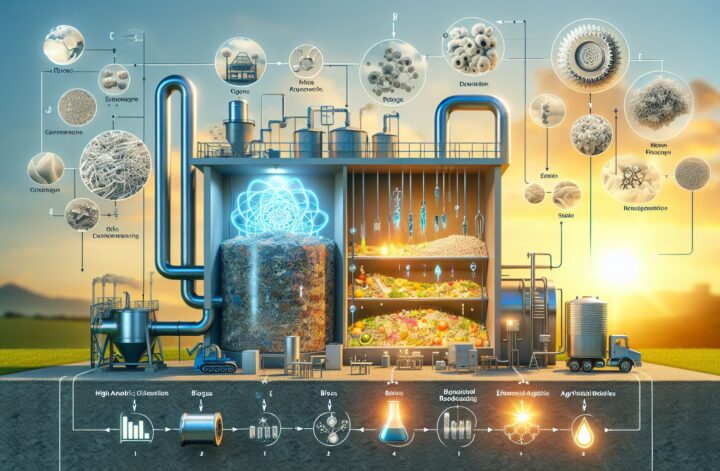
Biogas production is a biological process in which organic waste is broken down by bacteria in an environment devoid of oxygen, known as anaerobic conditions. This breakdown results in the generation of biogas, which is principally composed of methane and carbon dioxide, with minor amounts of other gases such as hydrogen and hydrogen sulfide[^1^].
The Process
The process of converting organic waste into biogas is achieved through four main steps:
-
Hydrolysis: This stage involves the decomposition of complex organic waste into simpler soluble organic molecules.
-
Acidogenesis: Here, the soluble organic compounds are broken down into volatile fatty acids and alcohols.
-
Acetogenesis: In this third stage, the volatile fatty acids and alcohols are converted into hydrogen, carbon dioxide, and acetate.
-
Methanogenesis: The final stage sees hydrogen and carbon dioxide converting into methane, with acetate being broken down into methane and carbon dioxide[^2^].
It’s critical to note that each of these steps is demanding of specific conditions, including pH values, retention times, and the presence of essential nutrients. Their orchestration is crucial to the successful generation of biogas.
Advantages of Biogas Production
Reducing Waste Volumes: The process of biogas production significantly reduces the volume of wastage – a fact that holds particular relevance when considering the issue of landfill over-utilization.
Renewable Energy Source: Biogas conversion into heat, electricity, or vehicle fuel serves as a valuable source of renewable energy, reducing our reliance on traditional, non-renewable, and often environmentally harmful energy sources.
Reduced Greenhouse Gas Emissions: Since the primary constituent of biogas is methane, controlling its release into the atmosphere through effective biogas production can significantly mitigate greenhouse gas emissions.
Challenges
However, it’s crucial to understand that the process does not come without its share of challenges. Factors such as pH imbalance, temperature fluctuations, and overloading can inhibit the effective production of biogas. Furthermore, toxic compounds like ammonia and sulfide can disrupt the process, rendering the resulting biogas unusable[^1^].
Innovation and Advancements
As technology advances, so too does our capacity to work within the limitations imposed by biogas production. For example, ‘biogas upgrading’ presents a new frontier for increasing biogas efficiency by reducing carbon dioxide content and increasing methane enrichment. This is achieved through practices such as water scrubbing and pressure swing adsorption[^3^]. The resultant product contains up to 95% methane, which is comparable to natural gas and can be utilized as a fuel source with minimal processing.
The Future
The future of biogas production is an exciting prospect. With advancements in technology, we can improve the efficiency of the process, reduce the associated environment harm, and increase the output and usability of biogas. In a world beset by complex waste management issues and an urgent need to transition to renewable energy, the realm of biogas production shows a promising path forward.
Wrapping Up
Though it is not without its share of challenges, biogas production provides us with a tangible way to create something valuable and environmentally friendly from what would otherwise be waste. The production process is complex and requires careful management, but when executed correctly, it yields a renewable energy source capable of significantly reducing greenhouse gas emissions. As technology continues to advance, so too do our abilities to effectively produce and utilize biogas, offering an exciting and sustainable prospect for the future.
[^1^]: Appels, L., Baeyens, J., Degrève, J., & Dewil, R. (2008). Principles and potential of the anaerobic digestion of waste-activated sludge. Progress in Energy and Combustion Science, 34(6), 755-781.
[^2^]: Noike T., Endo G., Chang J.E., et al. (1985). Characteristics of carbohydrate degradation and the rate-limiting step in anaerobic digestion. Biotechnology and Bioengineering, 27(10), 1482–1489.
[^3^]: Ryu, H., Kabir, M. R., & Afroze, S. (2020). Advanced biogas upgrading with simultaneous biogas desulfurization using inorganic membranes. Bioresource Technology, 297, 122456.