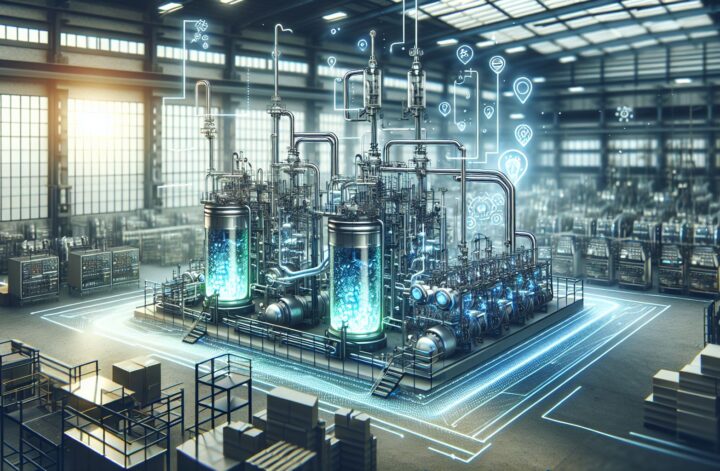
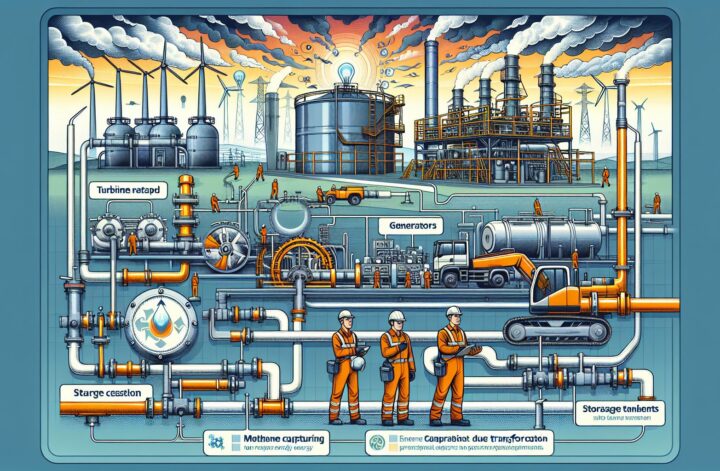
In today’s world, where resources are shrinking, and the environmental damage is on an unprecedented rise, preventing harmful emissions and utilizing waste effectively is not just an option; it has become a necessity. One such significant initiative in this direction is biogas production, a process involving the biological breakdown of organic matter in the absence of oxygen, a method known as anaerobic digestion[^1^]. The resulting product – biogas, predominantly composed of methane, serves in delivering renewable energy, reducing reliance on fossil fuels, quelling greenhouse gas emissions, and facilitating organic waste treatment.
Understanding Biogas Production
Biogas production is a natural process. It occurs in landfills where organic matter exists in the absence of oxygen. This process can be efficiently harnessed by introducing it in a controlled environment, primarily an anaerobic digester. The production involves four key steps – hydrolysis, acidogenesis, acetogenesis, and methanogenesis[^2^].
Hydrolysis: The first step of the digestion process, hydrolysis, commences when biodegradable substances split into simpler water-soluble compounds. Enzymes produced by hydrolytic bacteria expedite the process.
Acidogenesis: The resultant simpler compounds undergo fermentation operated by acidogenic microorganisms, transforming them into carbon dioxide, hydrogen, ammonia, organic acids, and other trace elements.
Acetogenesis: Acetogenic bacteria utilize the products from acidogenesis, synthesizing acetic acid alongside additional carbon dioxide and hydrogen.
Methanogenesis: Lastly, methanogenic archaea convert these substances into methane, carbon dioxide, and water.
Co-Digestion and High-Rate Anaerobic Digestion
A notable exploration in the field involves co-digestion: processing of multiple feedstocks concurrently. Generally, there is a primary feedstock (typically manure), and a secondary one, often an organic waste type like food waste or microalgae[^3^]. The advantage of co-digestion lies in the potential increase of biogas yield due to a better nutrient balance and dilution of potential inhibitors.
High-rate anaerobic digestion is another significant development in the field. It refers to a faster degradation of organic material and a quicker generation of biogas. The three significant types of high-rate anaerobic digesters are: Upflow Anaerobic Sludge Blanket (UASB), Expanded Granular Sludge Bed (EGSB), and Internal Circulation (IC).
Biogas Upgrading and Volatile Solids Reduction
A critical stage in biogas utilization is biogas upgrading – where contaminants and carbon dioxide are removed. This process yields biomethane, which can be used directly as vehicle fuel or injected into the gas grid. Technologies used in this upgrading process include pressure swing adsorption, water or chemical scrubbing, and membrane separation.
In anaerobic digestion, volatile solids reduction is an important measure of process efficiency. Volatile solids generally represent the total amount of organic matter in raw waste. Their reduction denotes how much of this matter has been transformed into biogas. A higher degree of volatile solids reduction means that more biogas has been produced, and less residual sludge will need further treatment.
Ammonia and Sulfide Toxicity
Certain elements, even in minute quantities, can inhibit anaerobic digestion. Ammonia results from the degradation of proteins and urea. At a high pH, it transforms into ammonium ions NH4+, the excess of which can inhibit methanogenesis and lead to process failure. The toxicity threshold for ammonia depends on several variables, including pH, temperature, and the acclimation state of microorganisms.
Similarly, sulfides, from the reduction of sulfur compounds, pose a potential inhibitory threat to methanogens when present in high concentrations. Besides their toxicity to microbes, sulfides also have a corrosive effect on steel and concrete, potentially shortening the life of biogas installations.
Practical and Environmental Significance
The power of biogas spans beyond waste management and renewable energy production. It also aids in the reduction of greenhouse gases by capturing methane, a gas twenty-five times as potent as carbon dioxide in terms of global warming potential[^2^].
Harnessing biogas is an integral solution to these problems. Digested organic matter, or digestate, can be used as a high-quality fertilizer, reducing reliance on synthetic fertilizers and improving soil health. Moreover, the waste treatment process kills pathogens present in raw waste and produces bioenergy, decreasing fossil fuel dependence.
In conclusion, biogas production represents one of how we can power our future sustainably. Because of its financial viability and eco-friendliness marked by the efficient use of organic wastes, reduction in greenhouse gas emissions, and generation of renewable energy, biogas production stands as a promising strategy moving forward.
Of Interest: Methane Capture, Renewable energy, Biogas upgrading, Combined heat and power (CHP), Greenhouse gas reduction.
[^1^]: Maus I, et al. (2017) “Trace elements in biogas microbiomes: requirements, sources, and health.” Anaerobe. Link.
[^2^]: Appels L, et al. (2011) “Principles and potential of the anaerobic digestion of waste-activated sludge.” Progress in Energy and Combustion Science. Link.
[^3^]: Wall D, et al. (2013) “Co-digestion of organic material.” Renewable energy. Link.
Disclaimer: The content in this article is meant for informational purposes only and should not be relied upon as advice. Every effort has been made to ensure the information is accurate as of the date of publication, but changes over time may render it inaccurate. Consult professionals for any energy projects.