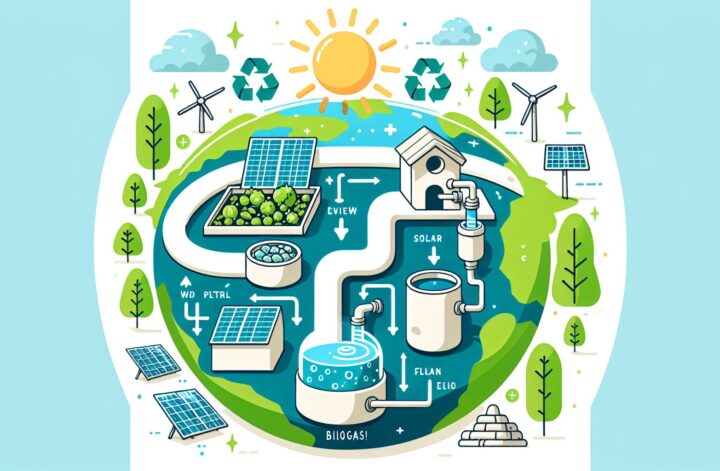
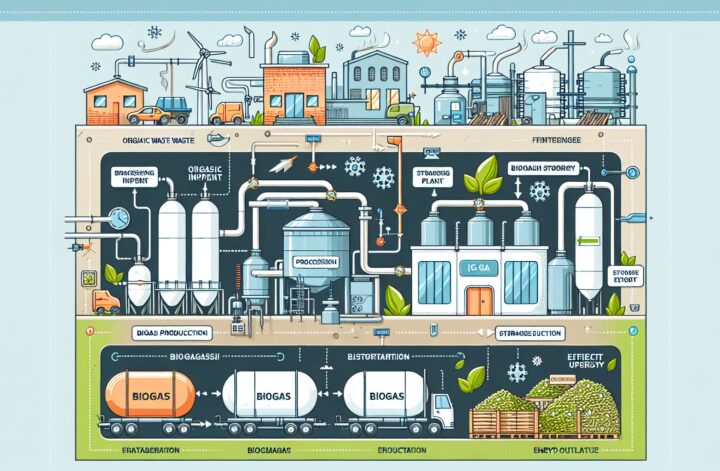
Renewable energy is rapidly becoming a vital part of global energy strategies, intended to combat the detrimental effects of fossil fuel usage. One such promising renewable energy source is biogas, a versatile source of energy produced through the anaerobic digestion of organic waste. This comprehensive guide aims to elucidate how biogas is produced, the principal components of the procedure, its possible benefits and uses, and its environmental impact.
What is Biogas?
Biogas is a type of biofuel – essentially, a gas that is produced by the breakdown of organic matter. In contrast to nonrenewable fossil fuels, biogas is generated from renewable resources such as agricultural waste, manure, plant material, green waste, and municipal waste. It chiefly consists of methane and carbon dioxide, and can be used as a source of heat, electricity, and vehicle fuel, making it a versatile energy solution [^1^].
[^1^]: “Biogas Basics.” PennState Extension. Available at: https://extension.psu.edu/biogas-basics
The Biogas Production Process:
Biogas production principally operates through a process called anaerobic digestion- a series of biological processes in which microorganisms break down biodegradable material in the absence of oxygen. This procedure is naturally occurring, but technology has streamlined this process for industrial production of biogas.
The anaerobic digestion process can be divided into four key stages: namely – Hydrolysis, Acidogenesis, Acetogenesis, and Methanogenesis.
Hydrolysis
During hydrolysis, microorganisms break down the complex organic matter into simpler compounds called monomers. Chemicals like carbohydrates are broken down into sugars, proteins into amino acids, and fats into fatty acids.
Acidogenesis
The monomers produced in hydrolysis further undergo a fermentation process in acidogenesis, transforming into volatile fatty acids and alcohols.
Acetogenesis
In this phase, fermentative bacteria convert the resulting volatile fatty acids, alcohols and ketones to produce acetic acid, hydrogen, and carbon dioxide.
Methanogenesis
This is the final stage where the products from acetogenesis are converted into methane and carbon dioxide – which constitutes biogas.
[^2^]: “Anaerobic Digestion.” Environmental, Water Resources, And Coastal Engineering. Available at: https://www.jamesjennings.co.uk/anaerobic-digestion/
The biogas produced in this manner can then be stored and used as renewable energy.
Advantages and Uses of Biogas
The benefits of biogas are manifold. Not only is it aiding us as a renewable source of energy, but it’s also assisting in waste management and reducing greenhouse emissions. The leftover bio matter post digestion, known as digestate, can be further used as high-quality fertilizer, effectively enhancing soil quality [^3^].
[^3^]: “Benefits of Biogas.” Greening the Islands. Available at: https://www.greeningtheislands.net/benefits-of-biogas/
Moreover, the process of capturing methane from organic waste in the production of biogas, termed as methane capture, significantly contributes to reducing greenhouse gas emissions since methane has a higher global warming potential than carbon dioxide.
Certainly, these characteristics make biogas a substantial contributor to sustainable development and climate change mitigation.
Environmental Impact
While biogas offers substantial environmental benefits, there are also potential detriments that must be taken into account. High levels of impurities such as hydrogen sulfide in biogas can be acidic when mixed with water, making it harmful for the natural environment. Similarly, the overuse of digestate as a fertilizer can lead to nutrient run-off, causing problems such as water eutrophication.
However, with appropriate technologies such as biogas scrubbing, and effective waste management strategies, these downsides can be mitigated, ensuring environmentally friendly utilization of biogas.
Conclusion
Thus, biogas production poses an effective strategy towards achieving renewable energy goals and environmental conservation. Despite some challenges, its benefits in providing energy sources from waste material, reducing greenhouse gases, and creating valuable farm inputs, highlight why it is an integral part of the sustainable development dialogue.
With advancements in technology, such as improved anaerobic digester designs and enhanced techniques for biogas upgrading, it is expected that the future of biogas holds immense potential for the global energy landscape.
At the end of the day, it is pivotal to strike a balance between renewable energy extraction and environmental preservation. This is the challenge and opportunity that biogas production presents to us in the contemporary world.
References:
[^1^]: “Biogas Basics.” PennState Extension. Available at: https://extension.psu.edu/biogas-basics
[^2^]: “Anaerobic Digestion.” Environmental, Water Resources, And Coastal Engineering. Available at: https://www.jamesjennings.co.uk/anaerobic-digestion/
[^3^]: “Benefits of Biogas.” Greening the Islands. Available at: https://www.greeningtheislands.net/benefits-of-biogas/