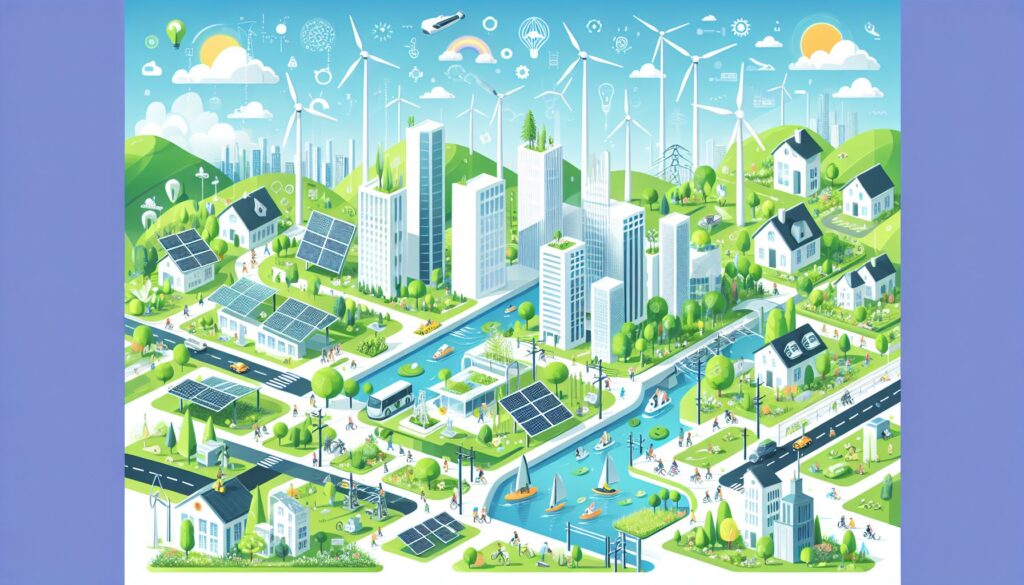
As we journey into the 21st century, the dialogue around the issue of renewable energy has consistently grown from mere whispers to influential societal discourse. Notably, various stakeholders, including governments, international organizations, and businesses, increasingly recognize the imperative transition toward renewable energy owing to its vital role in facilitating sustainable development. In order to articulate this discourse further, this article aims to delve into the intricacies of renewable energy, with a particular emphasis on its ecological significance, potential limitations, conversion technologies, and strides toward its widespread adoption.
Understanding Renewable Energy
Renewable energy essentially stands for energy derived from natural sources that can be replenished, such as sunlight, wind, rain, and geothermal heat[^1^]. Unlike fossil fuels, these energy sources will not get depleted due to human consumption. Moreover, the replacement of fossil fuels with renewable energy could replace the emission of greenhouse gases that exacerbate global warming.
Ecological Significance and Potential Limitations
The ecological significance of renewable energy cannot be overstressed. Its adoption primarily enables the reduction of greenhouse gas emissions, therefore mitigating climate change and reducing air and water pollution. Furthermore, it plays a significant role in improving public health, as the pollution from non-renewable energy sources is often associated with heart attacks, breathing problems, and premature deaths[^2^].
On the flip side, the potential limitations of renewable energy include its intermittent nature and relatively high initial installation costs. For instance, solar energy relies heavily on the sun, which may be inconsistent due to weather variations.
Conversion Technologies
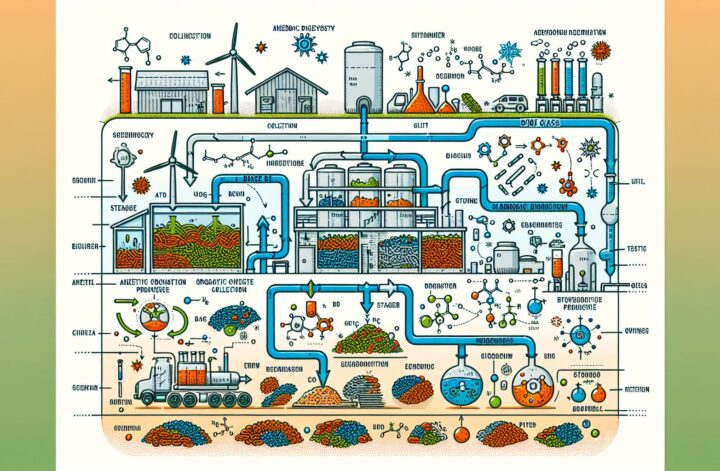
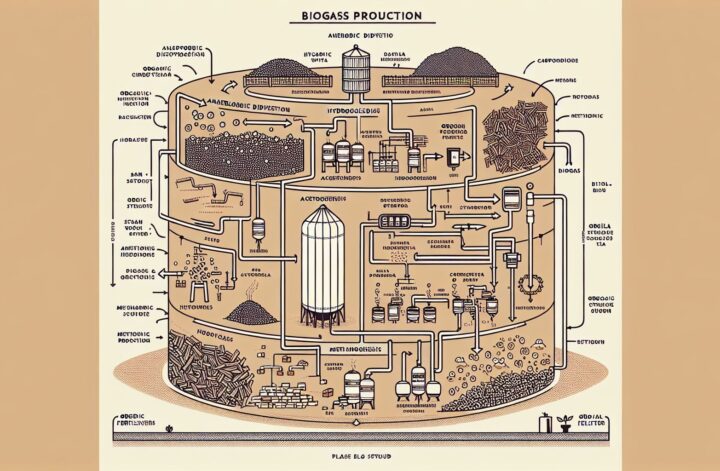
Several distinguished conversion technologies facilitate the generation and utilization of renewable energy. This includes hydropower, wind power, solar energy, biomass-energy and geothermal energy. Biomass-energy refers to the production of energy from organic materials, often wastes. When these organic materials decompose, they release gas known as biogas, which consists mostly of methane, a product that can be captured and used as a renewable source of energy[^3^].
Strides Towards Widespread Adoption
The widespread adoption of renewable energy is continually gaining momentum. A report from the International Renewable Energy Agency (IRENA) indicates that renewables represent the most cost-effective strategy for reducing carbon dioxide emissions, particularly with recent technology innovations and policy campaigns to lower costs.
In numerous countries and communities, renewable energy has proven to be a competent power supplier. In recent years, there have been concerted global efforts toward embracing renewable energy technologies. For instance, Denmark, one of the leading countries in the adoption of renewable energy, produced over 50% of its energy from wind and solar power in 2019.
Conclusion
In conclusion, renewable energy, with its multiple advantages and growing accessibility, is undeniably the way forward for sustainable development. Embracing renewable energy options would not only favor longevity and prosperity for individuals and societies but would also spearhead the fight against climate change, a universal threat that plagues our planet.
[^1^]: Energy Information Administration (EIA). (2020). What is renewable energy? U.S. Department of Energy. https://www.eia.gov/energyexplained/renewable-sources/
[^2^]: Global Energy Network Institute (GENI). (2021). The Environmental and Public Health Benefits of Achieving High Penetration of Solar Energy in the United States. GENI. https://www.geni.org/globalenergy/research/benefits-of-renewable-energy/index.shtml
[^3^]: International Energy Agency (IEA). (2021). Technology Roadmap: Bioenergy for Heat and Power. IEA. https://www.iea.org/publications/freepublications/publication/bioenergy.pdf