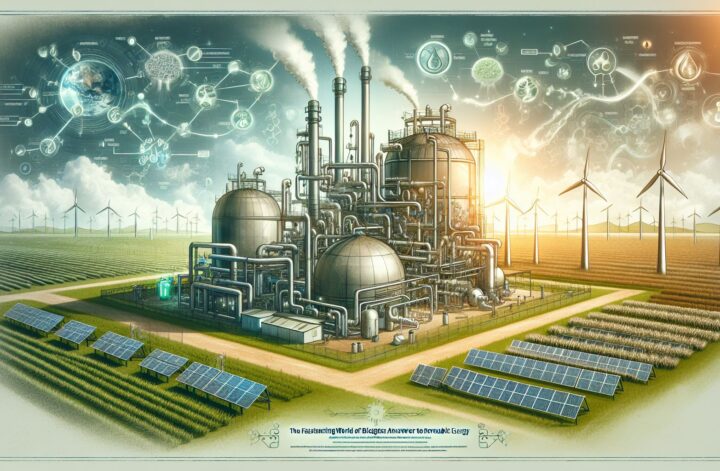
Biogas production is an eco-friendly technology that allows us to harness energy from organic waste. This alternative source of energy is not only renewable but also hugely beneficial in several ways, including the treatment of organic waste, creation of more sustainable communities, and reduction of greenhouse gas emissions, among others^1^.
What is Biogas?
Biogas is a type of biofuel made from the breakdown of organic material in an oxygen-free environment or “anaerobic conditions.” Common sources of organic waste used in biogas production include manure, food waste, agricultural residues, and sewage^2^. Biogas mainly consists of methane and carbon dioxide, with trace amounts of hydrogen sulfide, moisture, and siloxanes.
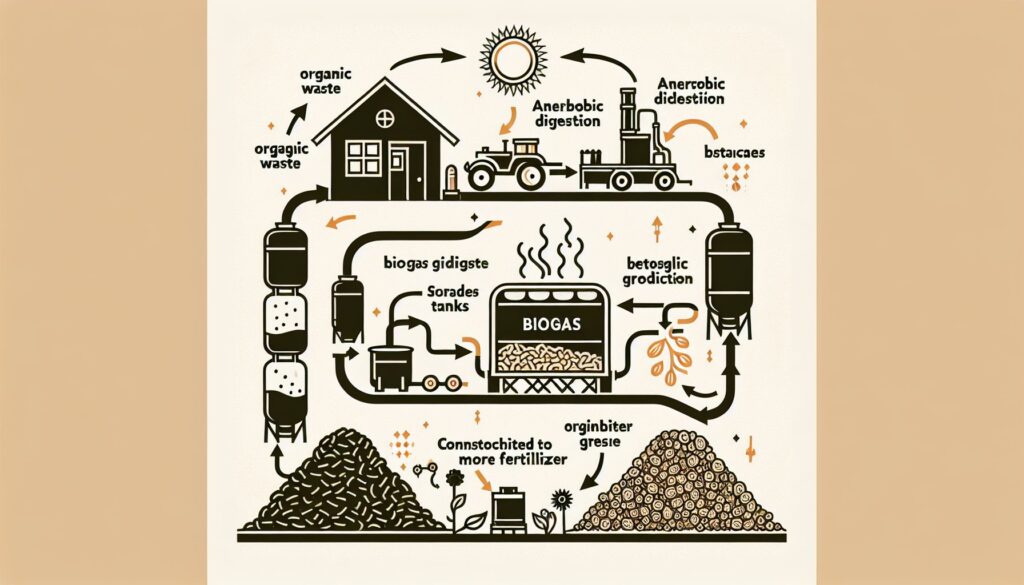
The Anaerobic Digestion Process
Anaerobic digestion is the process by which microorganisms break down biodegradable material in the absence of oxygen. This process happens in four stages: hydrolysis, acidogenesis, acetogenesis, and methanogenesis.
1. Hydrolysis
During hydrolysis, complex organic molecules are broken down into simple sugars, amino acids, and fatty acids.
2. Acidogenesis
In the acidogenesis stage, these simpler compounds are further broken down into volatile fatty acids and alcohols.
3. Acetogenesis
Acetogenic bacteria convert these by-products into hydrogen, carbon dioxide, and acetate in the acetogenesis stage.
4. Methanogenesis
Finally, in methanogenesis, methanogens convert these intermediates into methane and carbon dioxide, the primary components of biogas[^3^].
Types of Digesters
Digesters come in various designs, most commonly being categorized as wet or dry systems, and batch or continuous systems. In wet systems, the organic material is mixed with water, forming a slurry, whereas in dry systems, it is processed in its solid state. Continuous systems are fed organic material at regular intervals, while batch systems are filled all at once and left to digest before being emptied and refilled^2^.
Different temperature regimes can also be used in the anaerobic digestion process; mainly mesophilic digestion that takes place between 30-40°C and thermophilic digestion occurring at temperatures between 50-60°C.
Biogas Upgrading and Utilisation
Raw biogas can be used to generate heat, run internal combustion engines, or produce electricity. However, to replace natural gas or be used as a vehicle fuel, biogas needs to be upgraded or purified to remove impurities and increase its methane content. This process, known as biogas upgrading, usually removes CO2, water, hydrogen sulfide, and other contaminant gases, leaving behind biomethane that can be injected into the natural gas grid or used as a vehicle fuel^2^.
Benefits of Biogas Production
Biogas production delivers several environmental, economic, and societal benefits:
- Treatment of organic waste: The process of biogas production makes use of organic materials that would otherwise be disposed of, doing a part in waste management.
- Renewable energy: It provides a sustainable source of energy that can be used for heat, electricity, and in transportation.
- Reducing greenhouse gas emissions: By diverting organic waste from landfills and converting it into energy, we are reducing the amount of methane, a potent greenhouse gas, released into the atmosphere.
- Soil enrichment: The by-product, known as digestate or biosolids, is a nutrient-rich substance used in farming as a soil amendment or fertiliser.
- Economic Development: Biogas production can create jobs, stimulate local economies, and help to develop a more sustainable agricultural sector.
Conclusion
Biogas production is a vital technology in the journey towards a more sustainable future. Its benefits are vast, including waste reduction, energy generation, and greenhouse gas reduction. With continued support and innovation, biogas technology has immense potential to contribute significantly to the world’s renewable energy supply and sustainable development efforts.
References
^1^: National Renewable Energy Laboratory (NREL), “Anaerobic Digestion,” www.nrel.gov/research/re-anaerobic-digestion.html.
^2^: (“Biogas for domestic use – technology”) Bond, T. E. H., & Templeton, M. R. (2011). History and future of domestic biogas plants in the developing world, Energy for Sustainable Development,15(4), 347-354.
[^3^]: (“The Chemical and Microbiologic Process of Anaerobic Digestion”) Nielsen, H.B., Angelidaki, I. (2008). Strategies for optimizing recovery of the biogas process following ammonia inhibition. Bioresource Technology, 99(17), 7995-8001.
Markdown syntax:
~~~~
Header
-insert intro here-
Subheader
-insert paragraph here-
Subheader
-insert paragraph here-
etc…
References
etc…
~~~~